
In 1970, Mary Richards and The Mary Tyler Moore Show debuted to a changing world. Women like my mum, who had left school in grade 9 during the Great Depression, were watching the rise of feminism, and wondering how the heck they were supposed to react and behave. Men, like my dad, felt incredibly threatened by this new role of women in the workforce – where would that leave them? Would women take all the jobs? And how were they supposed to treat this ‘new woman’ in the workplace?
I had already been in the workforce for a few years, and was standing by to see what the world would throw at me. I’d seen offices where only men had any power, and where women, and especially older women, were taken advantage of economically, regardless of ability or seniority. I’d applied for jobs where the only criteria was attractiveness, and the dress code required a specific model of push up bra.
I had been raised to believe I could do anything – as long as ‘anything’ involved being a nurse, teacher, secretary, stewardess, waitress, or housewife. And as long as my husband approved. But now a larger world was opening up, and the Mary character gave viewers a chance to watch, from the comfort of their own homes, how this might play out for themselves.
My mum completely identified with Mary, the vulnerable, good girl, who wanted to appease everyone, even at the expense of her own feelings. Mary was single, female, over 30, professional, independent, smart, and funny. Mary faced issues an older generation had never before confronted, like equal pay, birth control, and sexual independence – sex without the blessing of marriage.
Mary’s superpower was her friendships, both those with other women, like Rhoda Morgenstern (Valerie Harper); Phyllis Lindstrom (Cloris Leachman); Georgette Franklin (Georgia Engel); and Sue Ann Nivens (Betty White), and with the men she interacted with at the TV station where she worked.
At work, Mary was a sisterly presence. She was smart, did her job well, and could laugh with the guys. Although she hated confrontation, she could still muster up the courage to talk back to the irascible Lou Grant, her boss and editor. Eventually, even he had to admit how good a co-worker she was, despite her ‘spunk.’
As the series grew more popular, repeated viewing made anxieties about women in the work force seem silly .. after all, Mary was an Every Woman. They could rela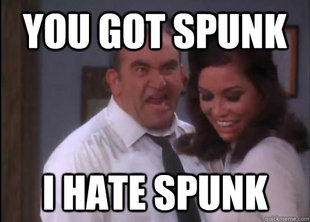 te to Mary. The normalization calmed their fears, and made people realize that they could relate to a drastic social change.
When Mary Tyler Moore died last week, I thought a lot about the contrast between how we are dealing with the vast social and economic changes of today, as opposed to then.
It’s frightening to those who want to cling to the world as it was. And yet at the same time, we don’t want to give up our ability to access pretty much anything we want online, order it with a click, and have it delivered to our door within a few days. What we don’t see is that we’ve stopped shopping in stores .. and so those jobs and stores no longer exist.
 We want to pay as little as possible for any given thing. Corporations heard us; they outsourced manual labour to countries where they could pay lower salaries. And so those jobs, which we used to do here, no longer exist.
The reality of climate change, and the shifting of energy resources are, of necessity, pulling focus away from oil and coal, and putting the spotlight on renewable energy. Sure, there are more jobs available now in renewables, but what do you do if you’re a career coal miner? The mine’s been shut down, and those jobs are never going to come back.
Widespread automation is in our future; Oxford University predicted that 47% of all jobs – of every kind – will disappear in the next 25 years.
“The Trump campaign ran on bringing jobs back to American shores, although mechanization has been the biggest reason for manufacturing jobs’ disappearance. Similar losses have led to populist movements in several other countries. But instead of a pro-job growth future, economists across the board predict further losses as AI, robotics, and other technologies continue to be ushered in. What is up for debate is how quickly this is likely to occur.
Now, an expert at the Wharton School of Business at the University of Pennsylvania is ringing the alarm bells. According to Art Bilger, venture capitalist and board member at the business school, all the developed nations on earth will see job loss rates of up to 47% within the next 25 years, according to a recent Oxford study. “No government is prepared,” The Economist reports. These include blue and white collar jobs. So far, the loss has been restricted to the blue collar variety, particularly in manufacturing.
…
Unemployment today is significant in most developed nations and it’s only going to get worse. By 2034, just a few decades, mid-level jobs will be by and large obsolete. So far the benefits have only gone to the ultra-wealthy, the top 1%. This coming technological revolution is set to wipe out what looks to be the entire middle class. Not only will computers be able to perform tasks more cheaply than people, they’ll be more efficient too.
Accountants, doctors, lawyers, teachers, bureaucrats, and financial analysts beware: your jobs are not safe. According to The Economist, computers will be able to analyze and compare reams of data to make financial decisions or medical ones. There will be less of a chance of fraud or misdiagnosis, and the process will be more efficient. Not only are these folks in trouble, such a trend is likely to freeze salaries for those who remain employed, while income gaps only increase in size. You can imagine what this will do to politics and social stability. “ (http://bigthink.com/philip-perry/47-of-jobs-in-the-next-25-years-will-disappear-according-to-oxford-university)
Now, the thing is, good leadership would have been following up on this inevitable trend and coming class shake-up. And some countries have been following the curve, and are placing more emphasis on careers outside of the previous generation’s scope.
However, several countries have instead taken the opposite approach – the one known as sticking your fingers in your ears, closing your eyes, and chanting ‘la la la la la’ in the hopes that this will all go back to the way it used to be, when you reopen your eyes.
Sadly – that’s not in the cards. The genie is not going back into the bottle. Long term solutions need to broached immediately, if we are not to find ourselves in a Soylent Green world.
The economy will expect middle aged, middle class, workers to retrain or be left behind. There will be resistance to that idea, especially amongst those who have laboured under student debt from their previous career.
 And what role will self-driving vehicles play in a future economy? Long haul truckers, cab drivers and couriers will find themselves out of work – not tomorrow, but within the next decade. And that’s a whole lot of drivers.
These are real, valid concerns that must be addressed. A guaranteed basic income might be the only solution possible for as many as half of all country’s populations. We could be on the verge of a complete societal breakdown – or a future Utopia, a world in which people are free to pursue their interests, instead of working at jobs that just pay the bills.
Be that as it may, one thing that will NOT help to move countries or the economy forward is isolationism or pathetic jingoism. Time and again, this type of “America First” pseudo patriotism has proved a failure.
 When Trump said, “For many decades, we’ve enriched foreign industry at the expense of American industry; subsidized the armies of other countries” while depleting our own. And,: “The wealth of our middle class has been ripped from their homes and then redistributed all across the world, ” he was outlining ” a world in which foreign relations are collapsed into a zero-sum game. They gain, we lose. ” (http://www.nationalreview.com/article/444321/trump-foreign-policy-isolationsim-america-first-allies-nato-trans-pacific-partnership)
He is wrong. He is appealing to the petty, the un/ and under-educated, the greedy, and the small minded who can’t understand why they can’t have all of the goodies of 2017, while living in a rosy coloured Disneyland complete with talking animals, and perfectly behaved women and children. A world where America does whatever the hell it wants, any time and anywhere.
A perfect example of that kind of mentality was shown on the weekend as Trump’s knee-jerk executive order targeted citizens from seven predominantly Muslim countries, forbidding them entry to U.S. soil – AND also targeted U.S. legal residents from the named countries — green-card holders — who were abroad when it was signed.
 The order was signed as many were on planes, en route to America.
When those enforcing these bans, as dictated by the Department of Homeland Security, were asked by citizens or their lawyers to whom they must address their concerns, they were sneeringly told to “Speak to President Trump.”
This should make Americans frightened. These actions throw out not only the Constitution, but democracy itself, with Trump as the ultimate arbiter for all charged with any offence he makes up on the spot.
The thing is … it’s not just Trump’s fault. It’s the fault of all of the governments and political parties all over the civilized world that have ignored the economic reality that has been creeping up on us for decades. Political parties that stirred up fear, painting a picture of a dystopic land, as Trump did when he described America as akin to a Hieronymus Bosch painting of ” American carnage,” with “mothers and children trapped in poverty in our inner cities; rusted out factories scattered like tombstones across the landscape of our nation; an education system flush with cash, but which leaves our young and beautiful students deprived of all knowledge; and the crime and the gangs and the drugs that have stolen too many lives and robbed our country of so much unrealized potential.”
That is not a true picture of America, though it may well be the carnage he leaves behind after his time as President is over.
Americans were not being told, “you’re gonna make it after all.” Instead, they were being told that the only way to make it is to take it from others.
 Political parties that relied upon cutting taxes rather than shoring up their infrastructures and their citizens needs, just to get re-elected, are to be blamed. Every party, every country, big and small, passed that big buck along to their successors, enriching corporations and themselves in the process, while ignoring and angering their constituents, who had trusted them to explain what they needed to know and understand about their future.
They COULD have worked with the education system to update what is offered in order to live in a modern, automated society. They COULD have worked with scientists warning of the dangerous effects of climate change, and put into place safeguards that would have saved lives. They COULD have told corporations that they would not be allowed to hold consumers or governments hostage in order to raise corporate profit, but instead would be taxed at a rate that allowed the country to replace what was being taken from them.
But that would not have gotten them re-elected.
 And so, there were no television series like The Mary Tyler Moore Show, that allowed citizens to normalize a changing present and a very different future. Instead, there was a rise in conspiratorial, dystopic, dramas, and a rush to fairytale land, that deified cartoon superheroes, and fantasy characters. Reality shows, that weren’t really reality, appealed to the minority and the niche groups. And an entire genre of television catered to the needs of ‘preppers,‘ those that would stand alone and defend what little they had when the inevitable (to them) collapse of society occurred.
This is a tearing apart of society, a sorting process that places each individual into smaller and smaller groups, separating and dividing. Rather than a coming together of people to work with, rather than against, change, to accept globalization and automation as a positive advance, ‘disrupters‘ have chosen to tear nations apart, to pit citizen against citizen, for power, for wealth, and for their own self-aggrandizement.
I don’t miss the past; I’ve been there, and it wasn’t all it’s cracked up to be. But I will miss the days when politicians worked with and for the people, rather than for their own self-interests, and on the backs of the people they have forgotten, to whom they owe their jobs.
(originally published at bobsegarini.wordpress.com/2017/01/29/roxanne-tellier-where-is-mary-tyler-moore-when-we-need-her/)

 And certainly, there were good times to be had in the 60’s and 70’s, and I have tons of fond fuzzy memories of elephant pants and go-go boots, Sassoon haircuts, and Mary Quant and Twiggy makeup tips.
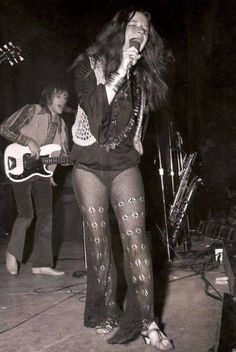 One of my favorite memories of my own misspent youth is of the first and only time I saw Janis Joplin perform live. The Montreal Forum, November 4, 1969. It was every thing I had hoped for – and more. I was first struck dumb by her presence and energy, and when that had passed, I rushed, like the thousands of others in the audience, to the stage front, to try and capture just a hint of that glorious essence by being closer to her.
 And in that time, we who were actually young when Janis was young, who first heard these songs on our radios or our portable record players or were in the audience when she toured, bottle firmly in hand, and wailed her way into our hearts, were able once more to revisit a time when everything seemed possible.
 But the gift that Kudelka gave us, by channelling Joplin’s spirit and music, was a chance to go back to our adolescence in our minds, to forget momentarily that, while we may be wiser, we are also greyer, stiffer, and a lot less supple than we once were. This Janis, then, a Janis Joplin that survived, and was celebrating a 74th birthday by once again sharing her talent .. this Janis relit the candle that aging, politics, and a general societal malaise seeks to extinguish in our hearts.
 For me, this year has begun differently than many I’ve experienced in the past. Selling the house and moving into the city has brought a lot more freedom into my life. That light at the end of the tunnel turned out to be not an oncoming train, but rather a beautiful fat moon, always just out of reach, but wonderful to see.
 e able to relax into your life and appreciate what you’ve got. Enough to be in control of your own life, but not so much that you seek to control others.
 But I do have a sneaking suspicion that many in government are not who or what they seem. Remember that Outer Limits episode, Dead Man’s Switch, where a lowly soldier mans the button that controls activation of a final revenge weapon that will wipe out the earth should invading aliens turn out to be hostile? The final scene reveals that aliens are indeed parasites controlling the actions of those in charge, while the earth lies in ruin.
 It seems odd to me that bars and restaurants are content to open around eight p.m. ish, or be open during the day, but empty, until some mythical magic time when bands appear out of the mist. There’s money to be made in the feeding and entertaining of people who start the day early, and are ready to rock by dinner time.
 There’s a lot of room at the table, and a place for everyone, regardless of what time they want to listen, or what flavour they want to feast upon. Toronto’s got the musical munchies .. feed it!
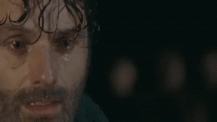 This was the year I finally gave up on The Walking Dead .. Season Seven, filmed as even more brutal than the graphic novel from whence it sprang, just took it too far for me to stomach. After episode one, I gave episode two a cursory glance, but the emphasis on a demagogue bullying and humiliating his ‘people’ felt too much like what I imagine Americans will experience under their new alien overlord.
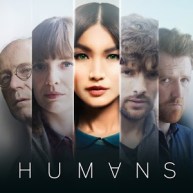 Humans, a British series, took another tack; a future as mundane as our own, where ‘synths’ took over all the tasks people no longer wanted to do – in effect, a new slavery. The flaw in that ‘dream’ was a computer code able to bring consciousness to the synths.
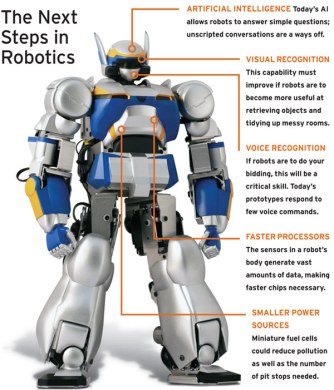 I don’t think we’re close to the sort of realistic, humanistic synthetic beings either series portrayed, but automation and robotics – computers taking over most of the jobs humans currently do – is projected to be an issue affecting the planet within the next two decades.
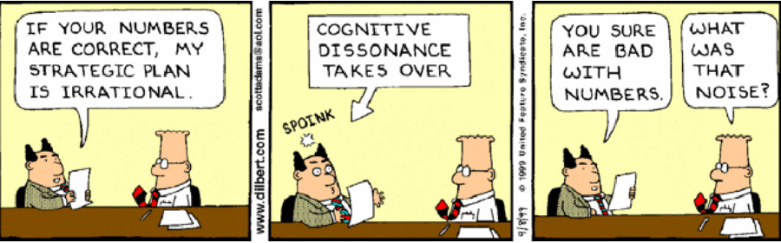 We are already in a frightening economic time, when the wealthy are pedestalled for no more reason than their wealth, and where those who cannot find work are despised. We’ve been conditioned for centuries to believe that our work defines us, and that hard work builds character. We’ve been trained to believe that those with wealth, no matter how it was gained, are our superiors, and that their wealth somehow magically imbues their character with all of the traits we claim to respect; charity, kindness, empathy, intelligence and the like.
 Massive unemployment caused by automation must be met with new, thoughtful, empathic intelligence. If it is instead met by rampant greed, coupled with a loathing for any criticism or accountability, the clay feet of the rich and powerful will finally be exposed.
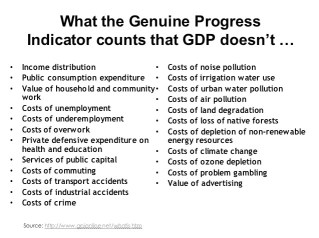 Imagine if, instead of defining the wealth of a nation by it’s Gross Domestic Product (GDP,) it was instead known by it’s Genuine Progress Indicator (GPI.) The GDP has no conscience; it cannot tell if a dollar is spent on progress or destruction, and it neither knows nor cares about a future impact on the people. As Paul Hawken, an American entrepreneur, environmentalist and author, once said, “We are stealing from the future, selling it to the present, and calling it Gross Domestic Product.”

 There really is a delicious irony in the GOP’s recoil and revulsion at Trump’s latest faux pas – oh, sorry what I meant to say was, admission of serial sexual assault.
 And it’s not because they’re embarrassed at his vulgarity. No, I think it goes way deeper than that. Trump just put into words what they have been putting into practice and law for at least a decade.
 And, just as in the Bible, those most viciously condemned and punished are women. The Republican Party has effectively taken one giant step backward for mankind, a giant step forward for a Christian form of Sharia law.
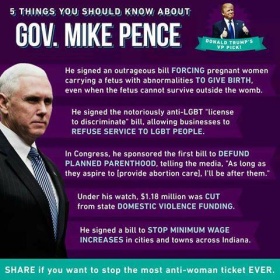 And Mike Pence, Trump’s running mate for VP, has, as Governor of Indiana, been a huge proponent of controlling the pussies of Indiana’s women, insisting upon invasive medical procedures, (forced transvaginal ultrasound before having an abortion; state rape by any ones definition) while ensuring a lack of access to the morning-after pill or abortion options. And as recently as March 2016, he signed a bill that required that aborted fetuses receive what amounts to a funeral.
 So spare me the pearl clutching, Republicans. Spare me the supposed indignation over Bill Clinton‘s CONSENSUAL if stupid fumblings with a starry eyed intern, and your belief that Hillary Clinton was his enabler, who should somehow have been able to control her husband, who was at the time the most powerful man of the land, and thereby disqualifying her from being President herself, two decades later.
 See, that’s the thing, Republicans … women are people, not stereotypes. Sure, you can point to a woman or two that seems to embody the qualities you’re decrying, but that’s got as much relevance as saying that you saw a dog with three legs once or twice, so all dogs with four legs are anomalies. Stereotypes are personal observances rushed to judgment, nothing but ” a widely held but fixed and oversimplified image or idea of a particular type of person or thing.”
 It makes his repeated insistence that, “there’s nobody that has more respect for women than I do,” a cause for serious alarm.
 His entire campaign has been built around a fairytale of his own making, insisting that America is “in such a desperate place that a wild card like Trump is worth the risk. Trump fans talk like they live in a western town, where the banditos are so out of control, only a maverick gunslinger can save them. A man with no tax code, the fastest tweet in the West, covered in man tan. ”
  Trump’s vision of America resembles a zombie apocalypse, where the good townsfolk do battle against the bad zombies, killing with impunity, taking what they want or need when they find it, and yes, treating women as disposable chattel that the most powerful can have without any niceties.
 As the denunciations from his former supporters, and calls for him to quit the race continue to stream in, I’m fairly certain we can expect more of that doubling down that Trump does so well.
 A few weeks ago, I was having lunch with friends in the Market, when Molly Johnson came bopping along. Molly may be a Canadian icon – a singer, songwriter, broadcaster and philanthropist – but that day she was a woman on a mission, distributing posters and postcards to the local shops, in aid of her latest project – the first annual Kensington Market Jazz Festival. It was the first I’d heard of it. When I asked how I could help, she asked if my friend Barbette and I would volunteer to handle door duties at some of the gigs.
 Don Cullen was the Pied Piper of Possibilities, of that first break, when the world was wide open to the new. New music, new sounds … whatever could be dreamed up, this was a place where it could be showcased.




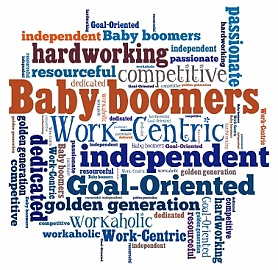
 For boomers, aging is a bit like puberty; we don’t know what’s next, and we’re both eagerly anticipative and terrified of what’s to come. Often simultaneously.
 So when the idea of retiring comes along, whether because we’re closing in on 60 or because other factors, like failing health, or a kick out the door from long time employment, play a part, it can be a bit of a shock. It doesn’t matter whether your retirement is because you want to, or have to .. it’s gonna be a ride.
 Will I be happy and relaxed, comfortable, with plenty of time to pursue my hobbies, living the good life, traveling for pleasure, or to visit family and friends? Or will I be scrambling to make ends meet, worried I’ll outlive my money? Some will never feel secure, no matter how much money they have, while others struggle with very little in their pocketbooks, but are rich in friendship and emotional support.
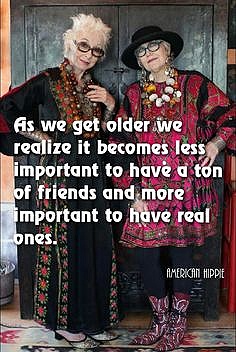 As my friend Barbette Kensington says, “Aging is about how bright your light glows…. keep up the energy level; the more you do the more you can do. Watch your friends and environment; don’t let anybody or anything break your stride…“
 Planning for a decent retirement from full time work goes way beyond financial, by the way. Even those retirees I know, that have salted away a good nest egg, have much more to deal with than just money. There may be downsizing involved, which in itself is horrifically conscious altering. There may be health issues, relationship issues, or, just to complicate matters, the health issues of those you’re in a relationship with.
 Volunteering may never have been something you’d thought of as ‘work,’ but it is, and it can be a lot of fun, as well as a benefit to your community. Sharing your knowledge of what you’ve learned in your field can be another way to not only keep your mind ticking over, but of giving those just starting in your turf a leg up.
 While I see others, who have ‘retired’ by retreating from life, and waiting for death, sinking deeper and deeper into the anaesthesia of pills and booze, ‘self-medicating’ the pain of their losses, kept housebound, fearful of their surroundings, and interested only in their own aches and pains, and needs and emotions. Addicted to quasi-medical shows that sensationalize the dangers of everyday life, and media that fattens its ratings by appealing to their fears of a world that feels increasingly more dangerous, they wrap themselves in cotton wool, unable to trust anyone, spiralling down into a paralyzing world hell bent on picking their corpses clean before they’ve even been buried.
 What I’m talking about is reframing the experience of moving through time, so that as we do grow older we can step out of these age-based associations that can keep us in a cage. “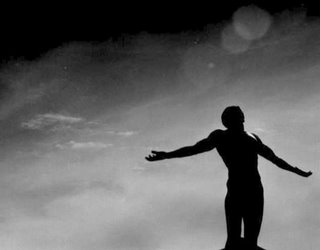


 My faith, if that is what it is, lies in gratitude. I’m thankful for so much around me, most of which is unearned except by having been born the person I am, in the society I live within. There is nothing remarkable about me. Some parts of my life have been very difficult, but, at other times, life has been very good. The me that lived through all the parts of my life is always grateful, whether it is for a little or a lot, of whatever I’ve got.
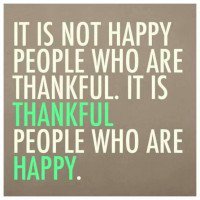 Stuff doesn’t create happiness. Happiness cannot be bought. The feelings of comfort, joy, and community rise from not just an acceptance of who and what you are, but from thankfulness for the people you’ve chosen to surround yourself with, who accept you for who and what you are, wherever you are, whatever the conditions.
 frustratedboomers