If You’re Canadian – It’s Hard to Laugh


emperor HarperIt used to be so easy to mock the North American political process. Comedians had a field day, lampooning gaffes or silly political correctness amongst candidates and politicians seeking or in office. Most pols can be counted on to screw up at some point. The joker outing the naked Emperor poked fun without fear of reprisal.

That all changed for Canada, yesterday. Bill C-51 – the so called “Anti Terrorist Act,” was overwhelmingly approved by the Senate, despite vocal opposition from everyone from Margaret Atwood to Ralph Nader .

Harper secrecyOver nearly a decade, Canadians have seen Canada’s world image plunge from a once lofty high the envy of the free world, to a race to the bottom. Since 2006, the Harper government has governed with an iron-fist, hidden public information and political subterfuge in cumbersome omnibus bills or simple denials, and has become the most secretive administration in Canadian history.

How do you find anything funny about an increasingly militaristic and confrontational police presence that ‘serves and protects’ only those steely, unsmiling, hand-picked minions to the Prime Minister?

before-after-tar sandsWhere’s the laughs when our scientists have been muzzled, and precious and irreplaceable environmental books and documents have been trashed? Where’s the irony in watching the Boreal Forest, which represents more than half of Canada’s landmass, and which plays a critical role in mitigating global climate change, be threatened by logging, hydrodams, mining and the tar sands? (Industrial development and forest fires in Canada’s tar sands region has cleared or degraded 775,500 hectares (almost two million acres) of boreal forest since the year 2000.)

Aboriginal Affairs Minister Bernard Valcourt remained seated, silent, and cross armed while others broke out in a standing ovation at the conclusion of the six year study of the Truth and Reconciliation Commission to address the “cultural genocide” of Aboriginal peoples through Canada’s residential school system. The commission pushed for a national inquiry and adoption of the UN Declaration on the Rights of Indigenous People, and requested 94 wide-ranging recommendations. Valcourt seated

“Federal Conservatives have suggested they will reject calls from the Truth and Reconciliation Commission (TRC) for both a public inquiry into missing and murdered aboriginal women and Canada’s implementation of a landmark United Nations document on First Nations’ rights.” (Huffington Post)

It’s very hard to find something even vaguely funny about such overt contempt.Harper editorial cartoon Jeep splashing natives

gmo_appleAs people become more concerned about the very food they eat, the Conservative Party continues to support genetically modified foods and Monsanto, fighting tooth and nail against every citizen action requesting even so much as the labelling of foods. (Canada and the United States are the only two nations in the Free World that do not require GMO labelling.)

And then there’s Bill C-51 itself, an act so heinous that everyone from former prime ministers, to constitutional lawyers – and hundreds of thousands of Canadians – have begged, cajoled and screamed for it’s demise.

C51 6 waysThe Bill allows the police to ignore Canadians’ rights, and rides roughshod over civil liberties. It eviscerates the Charter of Canadian Rights and Freedoms, and inherently stomps on Canadians’ constitutional rights.

It defines ‘terrorism’ as “activity that undermines the security of Canada.” Those activities include advocacy, legal protests, threats to “public safety” and the “economic or financial stability of Canada.” It also creates a new speech-related criminal offence of “promoting” or “advocating” terrorism.

And it allows information sharing across very broad areas, from the Department of Immigration, to the financial sector, from the Department of Transport to your own doctor and Public Health, besides the usual suspects (the police, RCMP, CSIS, or Border Control.) Bill C-51 effectively neuters the core protections found in the Privacy Act, and also permits additional use and disclosure of information “in accordance with the law…to any person, for any purpose.”

Let me put this even plainer. If, for some reason, a conversation yoC51 Naderu have – in person, by email, or on social media – triggers the interest of ANY government official … or even a spurned lover or a miffed colleague with a grudge … you could be arrested and detained for up to seven days without charges on mere suspicion of future criminal activity.

“Bill C-51’s gives powers of “preventive detention,” which means jail time for individuals even when there isn’t any suspicion criminal activity has taken place.”

So, I’m finding it a little hard to laugh, or even smile. In what dystopia would these dictatorial and fascistic measures call for a chuckle?

Rick Mercer HarperOh, sure, we’ve got Rick Mercer’s weekly jabs and rants, but honestly – how do you poke fun at a Canadian government blindly led by an evangelistic dictator set on destroying the country he rules with an iron fist?

Our only hope for a re-discovery of our political comedy mojo under such an oppressive regime is a resounding “NO!” to Stephen Harper and the Conservative Government in the coming election.

Indiana – The Sting In The Tale


It almost seems redundant to once again revisit the events in Indiana of several weeks ago. And I wouldn’t even bother, except that I’ve seen several items on the television and in the media that miss a very important part of the story.

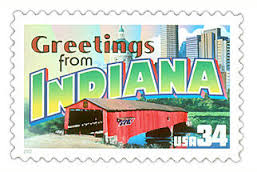
indiana stampIn a nutshell – Indiana Governor Mike Pense signed SB 101 into law on March 26, 2015. The bill, the Religious Freedom Restoration Act, was a variation of a similar bill that 19 other states had enacted. There was a slight difference with Indiana’s version, however, since the bill carried with it a significant risk of discrimination or refusal of service state wide to the LGBT population.

Before the bill had even been signed, several large companies with business in Indiana threatened to withdraw from any further dealings with the state. The bill was signed despite those protests.

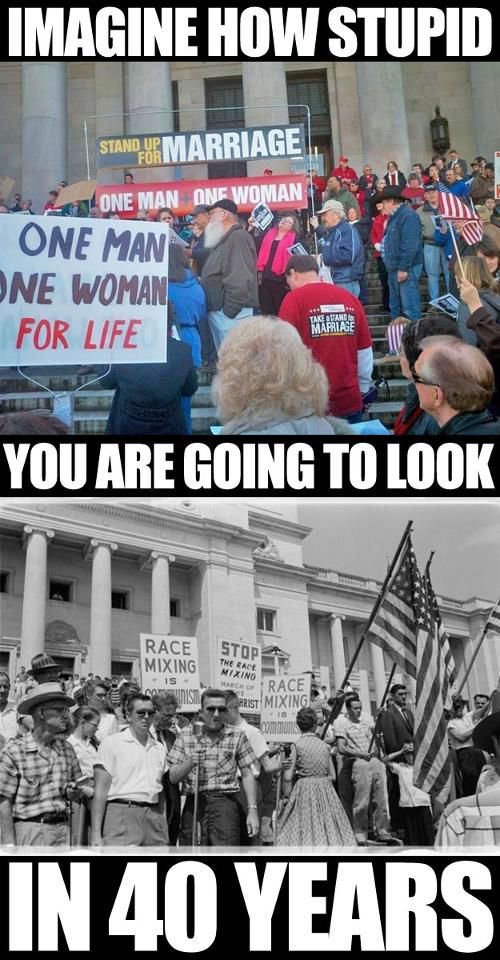
indiana how stupidWithin hours, social media had erupted in fury, and businesses and other municipalities began to announce a boycott of the state, including CEOs from Angies’ List, Salesforce Marketing, Apple, PayPal, Anthem Inc., Eli Lilly, Cummins, Emmis, Roche, Dow AgroSciences. Mayors of some other American cities would no longer allow their representatives to visit Indiana on the jurisdictional dime.  As the potential loss of income and taxes mounted into the hundreds of millions of dollars, the Governor began to back pedal on his decision, first announcing that the bill was simply being misunderstood, and then admitting that they would be putting amendments into the act, in an effort to calm the troubled waters.

In the midst of this chaos, a video was released that quickly went viral on Youtube. The owner of a small mom and pop pizzeria was filmed saying that their business would refuse to cater gay weddings.gay wedding pizza

The story was that ABC-57 reporter Alyssa Marino  walked into a random shop – Memories Pizzeria –  in the small town of Walkerton (Population 2,300),  and asked owner Crystal O’Connor how the business felt about Indiana’s new Act. Her reply was that she was in favour of it, noting that while anyone could eat in her family restaurant, if the business were asked to cater a gay wedding, they would not do it. It conflicted with their biblical beliefs. The question was entirely hypothetical, as the business had never been asked to cater a same-sex wedding.

The backlash was immediate. Within 24 hours, after numerous emails, phone calls, and threats from bodily harm to bomb threats, the business was closed. memories pizza

But within hours of the reportage, a GoFundMe page had appeared, with donations being sent to the family to offset their financial downfall. The page was shut down after 3 days, when donations reached over $840,000 dollars.

http://www.gofundme.com/MemoriesPizza

At the time, I thought the funding page was set up by a journalist who actually understood and empathized with the chaos that poor couple had been sucked into, based on a response to a hypothetical and malicious question by an opportunistic media. If that was the case, and based on how eagerly the public will turn on anyone for any perceived racism, sexism or other ism, I could only wish the couple well, and applaud the journalist’s actions. It’s the little guy, the Joe Public, who often winds up used and tossed aside in a ‘scandal’ such as this, and my concern was that they not be left penniless for their inadvertent martyrdom to their religious beliefs.

If only that high-minded sentiment had been true. And here’s where so many reporting on the situation have dropped the ball. As it turned out, the entire stunt was cooked up by a contributor to Glenn Beck’s website The Blaze. The contributor, Lawrence Jones, set up the page, and is also a political operative who has worked with James O’Keefe from Project Veritas as an “investigator” who has been involved with other political grandstanding in the past, including an attempt to “expose” fraud among “Obamacare Navigators” in the Dallas-Fort Worth area. the blaze indiana

Lawrence Jones did not altruistically set up the GoFundMe page to help the Pizzeria or its owners; the page was set up to create divisiveness and to establish an “us against them” mentality, pitting religious Christians and their beliefs against the 5% of the country who identify as non-heterosexual.

I learned a lot about the world, and myself, during that week. I learned that most of us who live in a technological world are hyper-aware of events in other parts of the world, over which we have little or no control. knee jerk reactionsI learned that politically inclined, social media addicts – like myself – tend to leap to conclusions, and knee-jerk into a strong left or right position. Some of those addicts will respond to those events with far too much enthusiasm, ramping up from their role of “concerned citizen” to “potential arsonist’ in the blink of an eye.

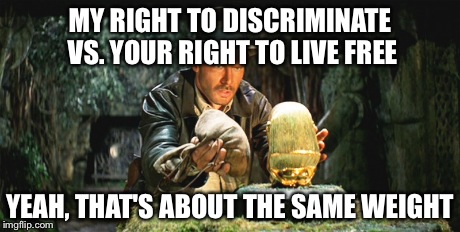
my right to discriminateWe may be brimming with good intentions, and righteous beliefs, but those beliefs have to be tempered with the knowledge that there are human beings being effected by our enthusiasm. It’s a very fine line between standing up for our own rights, and taking rights away from others.

I also learned that those of good hearts have to be constantly on the defensive against those with radical ideologies, whether religious or non-religious,  who seek to manipulate those kind hearts for their own gain, and perceived political support.

Universal-KindAnd the most interesting thing I learned along the way was that many of my friends who identify as LGBT were completely unaware of the bill, or any of the events that followed the bill’s signing. That in itself was sociologically fascinating – it would seem that the most incensed and obsessed torch bearers were not those directly effected by the bill. We who sprang into action were more concerned that those we love or care about, be they hetero or homosexual, be respected for their diversity and rights, as human beings. Human beings are not toys to be used as political playthings.

Define-PoliticsIn every society, there is a wide spectrum of beliefs. The key to an advanced and civilized society is to respect EVERY member who dwells within. Pitting citizens against each other, especially for political gain, is a dirty ploy that should not be rewarded by putting those divisive elements into power.

Canadians Mustn’t Die to Protect Harper’s Ego


Whenever I watch anything about war, be it fiction or non-fiction, featuring North Americans, or any other soldiers on the planet, I am struck by one horrible, indefensible truth.

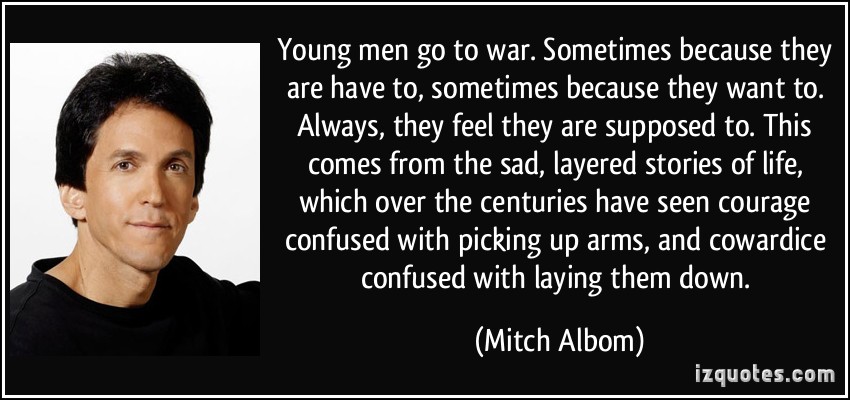
I am long past romanticizing war. The young men … the young and the foolish and brave men, barely past their teens or just into their twenties … believe with all of their hearts that they are acting in the best interests of their tribes. quote-young-men-go-to-war-sometimes-because-they-are-have-to-sometimes-because-they-want-to-always-mitch-albom-206250

Young men, whose hearts are in the right place, but who have yet to achieve total mental maturity, take up arms against others, others that they have been told either have something their country needs, or others who have a predetermined antipathy against their country.

cheneyOld men, men that could not be drafted into service, send these babes out in to the world, armed with little knowledge, but strong prejudices, drilled into them through military exercises, and constant reminders that the most honourable thing they can do is to die for their country.

Those who survive the horror of war, at least since Vietnam, come home not to respect and a grateful nation, but to a country set on denying them timely help in recovering from physical or emotional trauma. Canada and the United States are unable to cope with the wounded from the last several skirmishes. There are veterans of foreign wars living on the streets in North America, while others battle endless bureaucracy to simply get the care they were promised would be available at the end of their military tours. Some of these veterans will kill themselves in despair, willingly or through drug usage meant to dull the pain, before they finally get to the top of the treatment line.

political hypocrisyAnd yet, come Remembrance Day, every politician will be piously doffing their metaphorical hats in respect, a respect in lip service only.

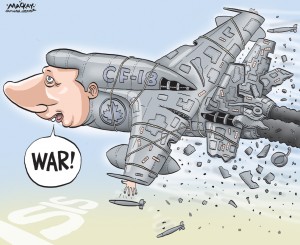
And now, this Easter weekend, Prime unseat harperMinister Stephen Harper, so terrified of losing his seat in Parliament that he will inflate one drug addled, mentally ill man’s assault on the Parliament into terrorist activity, has decided to plunge Canada into what is essentially an illegal war, unsanctioned by the United Nations, and unasked of by the Canadian citizens who will be paying the bill for yet another foreign war, and sending their sons and daughters to be slaughtered to his monumental hubris, and need for power at any cost – even that of the Canadians he was elected to serve.

“”Our last war, in Afghanistan, lasted 12 years. The kill count was 158 Canadian service men and women, one diplomat, one journalist and two civilian contractors. There are some 2,100 Afghanistan veterans trying to recover from combat and other non-battle injuries. In terms of treasure, the total bill to the country is $12 billion. This includes $8.4 billion for the mission itself and $447-million to take care of our veterans.”  http://www.cbc.ca/radio/thesundayedition/why-is-canada-at-war-the-politics-of-fear-listener-mail-school-of-gospel-the-sinking-of-the-lusitania-1.3018334/why-is-canada-at-war-michael-s-essay-1.3018363

He has no right, and no mandate, to take Canada into a war slipped through on the eve of Easter and Passover weekend. His cadre of supporters, more cowed supplicants than devoted fellow party members, voted 142 to 129 to pass this war resolution. It is a shameful, vile moment in Canada’s long history of peace keeping.

“War is the ultimate acknowledgement of collective failure. War means that we don’t know how to confront evil by any means other than killing and dying.” Michael Enright.

In generations to come, Stephen Harper’s legacy will include this decision to side with Syrian president Bashar al-Assad, whose family has been slaughtering Syrians for decades and continues to do so. His reputation in the rest of the civilized world may never recover. But it is we, the Canadians, who will have to live with the shame and our shattered world image.

war is failure

Defining Down


no meat on FridaysI grew up in a time when single mothers were scorned, when people who ate meat on Friday went to purgatory, when interracial marriage was illegal in many parts of the United States … My husband’s mother married a black Bermudian, and most of her family refused to speak to her for years. There were few visible minorities.

Gays did not only have no option to marry, they were closeted and lucky if they kept their sexuality hidden, tormented by local bullies, or prosecuted under archaic laws against homosexuality if found in compromising positions.

But times have changed. Change happens because you care enough to make a difference, when enough like-minded people decide that the guiding principles they’ve been following either no longer make sense, or are plainly unjust.

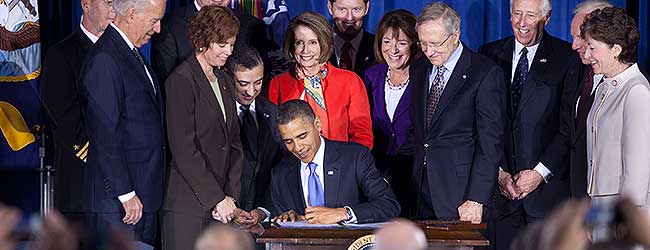
It’s frustrating to watch how slowly organizations and governments move to make change. The people speak, and when their voices shake society’s pillars, those who control power acknowledge a possible problem. In order to defer action until it’s decided if the issue is good or bad for those in power, comObamaSignsBillprehensive studies are done, dragging out the questioning still longer. When finally a solution is presented, it’s inevitably a compromise that makes no one completely happy, but which we all hail as a step forward.

There are downsides and upsides to expediting change. While it’s frustrating to wait for the wheels of progress to turn, lore tells us that slow change would be of a “sober second thought.” But in a world that regularly examines and attempts advancements based on new ideas and technological advancements, a less cumbersome process allows opportunities for change that really matters. And if the change is not completely positive, swift movement to curb or perfect that change should occur.

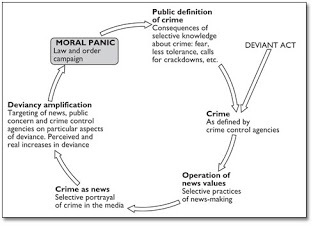
defining deviancyFunny how we absorb change. In 1993, the late Senator Daniel Patrick Moynihan wrote an insightful paper on how American society has coped with massive social change. When deviant behaviours – from births to unmarried women, to violent crime, to a simple rejiggering of our attitudes towards pornography – reach a certain level, we soothe ourselves by “defining deviancy down.” By declaring these behaviours normal, we take the stigma and the sting out of the action.

iatrogenic govtHe had another theory, of “iatrogenic government.” This proposes that some social problems may have been inadvertently caused by government; for instance, the conservative contention that liberal policies produce a culture of dependency. (In the medical field, an iatrogenic ailment is one inadvertently induced by a physician or medicine.)

“The central conservative truth is that it is culture, not politics, that determines the success of society. The central liberal truth is that politics can change a culture and save it from itself.” Politics is an argument about the future.

By defining deviancy down, those who prefer to live peacefully are kept lulled by what they are told by authority figures. While they may sense a problem, they are easily soothed when a mainstream media assures them that this is the ‘new normal.’

When it comes to social mores, they can safely quote authorities who tell them not to worry about the stuffy old ways of thinking they learned from their parents and grandparents; that’s ‘fuddy-duddy thinking now. All the cool people know what’s really happening, and it’s all just fine.

storming the castleHowever, there are bigger issues at stake. There’s a surprising lack of dismay over economic numbers that would have given our recent ancestors cause to storm the Capital with pitchforks. Those numbers get massaged until the public can be assured that all is well, despite what they’re seeing with their own eyes.

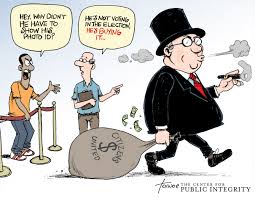
In the United States, the passing of Citizens United completely changed any sense of a level playing field in a democratic government.

“The Citizen United ruling, released in January 2010, tossed out the corporate and union ban on making independent expenditures and financing electioneering communications. It gave corporations and unions the green light to spend unlimited sums on ads andcitizensunited other political tools, calling for the election or defeat of individual candidates.

In a nutshell, the high court’s 5-4 decision said that it is OK for corporations and labor unions to spend as much as they want to convince people to vote for or against a candidate.” (http://www.publicintegrity.org/2012/10/18/11527/citizens-united-decision-and-why-it-matters)

Flash forward just five years, and we have the Koch Brothers, the 7th and 8th richest men in the world, vowing to spend nearly a billion dollars on whomever they’ve decided to back in the next Presidential election. citizensunited 2

Welcome to the oligarchy. Most democratic governments currently in power already appear to be hamstrung by those who have exchanged campaign funding for a say in government policies. Citizens United simply made the manipulation more visible.

(As Katty Kay, journalist and lead anchor of BBC World News America, recently  said, “The Democrats would do it too, if they could. She added, “It is only going to get worse… If I invested $10 million in an election, I would want a return on my investment. I would want to make sure there were votes on the floor.”)

Our cultural instinct is to find those who think like us, a society where we are safe from having to be responsible for caring for all around us, since it’s difficult enough to get through our busy lives. Exhausted at the end of the day, we don’t want to feel obliged to think very deeply about a myriad of issues, each more convoluted than the next.

Our media knows that, dutifully feeding us mere tidbits of real ‘news,’ and filling the rest of the air time with feel good stories and barely concealed infomercials for the products of advertisers who sponsor the show. choose responsibilityWe can choose from a variety of consumer goodies, but are given only a tiny menu of pre-approved opinions and positions on the things that really matter – like how our countries are being run.

Because if we choose, then we are responsible, are we not? Better to define deviance down, to live with a new normal we feel powerless against, than to choose to make changes that matter.

The Politics of Terror


Harper new security Jan 2015“The world is a dangerous place and, as most brutally demonstrated by last October’s attacks in Ottawa and Saint-Jean-sur-Richelieu, Canada is not immune to the threat of terrorism.”

Or so Prime Minister Stephen Harper decreed on January 30th, flanked by Peter MacKay, Minister of Justice and Attorney General of Canada, Steven Blaney, Minister of Public Safety and Emergency Preparedness, and Julian Fantino, Associate Minister of National Defence, and the largest personal protective detail in the history of Canada.

It would seem that Harper sees himself as a ‘war-time’ leader, who, in the run up to the next election, wants to project a manly, statesmanlike image. While cultivating a culture of fear, he is appealing to those who traditionally will cling to the political status quo in times of unrest.

And in one swell foop, the man who spent the Ottawa siege in a closet ramped up the anxiety harper in closetand fear of a nation, while simultaneously putting into place measures that many feel will result in further loss of civil liberties and reduction of freedoms.

By no means am I minimalizing the two horrible attacks . They were horrific, and shocking to Canadians who rightfully believe themselves to be a part of the world’s peace keepers. But these attacks increasingly seem to have been the acts of self-radicalized, troubled and confused young men, with no evidence connecting them to ISIS. Harper’s proposal sounds less like a desire to protect the nation, and more like the fear mongering of a politician desperate to keep his seat in power. MuzzlingScientists

So much for his vaunted and pious defense of Canada’s Freedom of Expression and Freedom of Speech after the recent Charlie Hebdo attack in France. Our Freedoms were already considered under attack, based on his own government’s track record of secrecy, muzzling, sneaky omnibus bills, a disdain for democratic Parliamentary rules, and the misleading of Parliament.

Ottawa Citizen reporter Ian MacLeod called the proposal “the most dramatic package of new laws since the Anti-terrorism Act of 2001.” But .. hang on … who flew into our towers? Three misguided fools in Canada took it upon themselves to mirror the acts of other misguided fools in the Middle East, whom we’ve done nothing but publicize in the media. The same media that attempts to inflame viewers by ramping up anxiety about events in other parts of the world in hopes of getting higher ratings, and very often has the issues completely wrong. fox apologizes

Ironically, terrorism is most effective when it’s target reacts disproportionately to fear. Perhaps those sweeping powers would be better used in policing how media is actually romanticizing terrorism, and making it seem glamorous to impressionable and disenfranchised people who believe they have no voice or impact upon their own democratic governments. There’s a huge difference between planned, organized and directed attacks (terrorism) and a misguided fool whipped up by web sites designed to muster support for a cause.

No matter how often the Conservatives tell us that the attacker of Ottawa’s Parliament was linked to a terrorist network, we’ve still not seen follow up information, or the RCMP background video we are told contains proof of such a link. It’s the politics of fear and terror.

NDP leader Thomas Mulcair was right when he questioned why Harper is proposing new legislation with far reaching consequences without so much as consulting with opposition parties. Canadian rights, already being pecked away by post-9/11 laws, look to be even more constrained under a grantingcsis_record2 of extraordinary power to Canada’s spy agency, the Canadian Security and Intelligence Service (CSIS), with a mandate to “investigate and disrupt” terrorist plots. Canada’s police services will be able to go after online terrorist propaganda.

The line between being branded as an activist or a terrorist is already grey. With these proposals, that line could be even more abused than it currently is, and in fact, simply obliterated. Could a government with a long list of enemies, including labour and environmental movements, simply capitalize upon already existing powers such as restricting the right to remain silent, laws allowing CSIS to spy on Canadians overseas, detainment without charges, and arrest without warrants?

In 2012, Joe Oliver, then Minister of Natural Resources, wrote an open letter to Canadians on the government’s commitment to the diversification of energy resources (i.e. the Northern Gateway, Alberta’s Tar Sands.) In it, he said “environmental and other radical groups threaten to highjack our regulatory system to achieve their radical and ideological agenda.” He claimed that these ‘radicals’ were employing AmeriJOE-OLIVER Natural Resourcescan tactics to “sue everyone and anyone to delay the project,” and that ‘slow, complex, and cumbersome regulatory processes’ were slowing down the government’s ability to push ahead their own unilateral decisions and agenda.

Those ‘radical’ environmentalists were concerned about 50 square miles of tailing ponds full of toxic chemicals, supposedly lined but actually leaking at the rate of 3 million gallons per day. (Pembina Institute.) Cancer rates are 100 times the norm for the First Nations living on the Athabaska River. Over 80% of BC residents have said NO to oil tankers on their coast, and coastal First Nations have declared a ban under their traditional laws. oliver oil sands copy-002Perhaps these are small concerns to Mr. Oliver, but they are of vital importance to those who actually live in the area.

These ‘radical’ environmentalists could now potentially be charged with terrorism.

(In March, 2014, Mr. Oliver was appointed Minister of Finance. Yes, the same Joe Oliver who recently had to delay our next budget, due to the unexpected downturn in the price of oil. The government had banked on a big payoff on the pipeline, but instead, low oil prices are going to cost provinces nearly $10-billion in lost royalties and tax revenue, and see the government lose $4.3 billion in expected revenues. )

Could there be a better time for the government to ramp up fear and politicize terror? Data Mining

When the Anti-terrorism Act of 2001 was due to expire, the Tories’ Combatting Terrorism Act of 2013 reinstated them, with yet more power, and this new legislation would continue to expand on an overbearing and intrusive presence by government controlled security forces , bringing us ever closer to becoming a surveillance state.

On Sunday, President Barack Obama told CNN’s Fareed Zakaria that it’s important “we maintain a proper perspective,” on ISIS, and that they are not “an existential threat to the United States or the world order.” He added that the U.S. needs to see the threat for what it is and respond to it in a way that doesn’t undermine American values. obama isis

“It means that we don’t approach this with a strategy of sending out occupying armies and playing whack-a-mole wherever a terrorist group appears, because that drains our economic strength and it puts enormous burdens on our military,” he said.

Contrast this with Harper’s “Stand Your Ground” stance on Canada’s presence in Iraq. As the opposition questioned if Canada was actually at war with Iraq, and what “advise and assist” actually mean to the Canadian soldiers “accompanying” Iraqi troops fighting against Islamic State soldiers, Harper said, safe_image.php

“Let me be clear. This is a robust mission. We’re there to make those guys effective so they can take on the Islamic State and deal with them and if those guys fire at us, we’re going to fire back and we’re going to kill them, just like our guys did.”

Look – I get it. We’re all scared. We’re afraid of ISIS and Ebola, of extreme weather and IEDs, of Monsanto and dirty bombs and oh my lawdy, what’s next! There’s too much crime, we’re told, and draconian systems of justice continue to be put into place at enormous cost, when in fact, crime rates are falling. While some American states legalize marijuana, those in opposition continue to pump out propaganda against pot, and institutionalizing people where the substance has not yet been legalized.

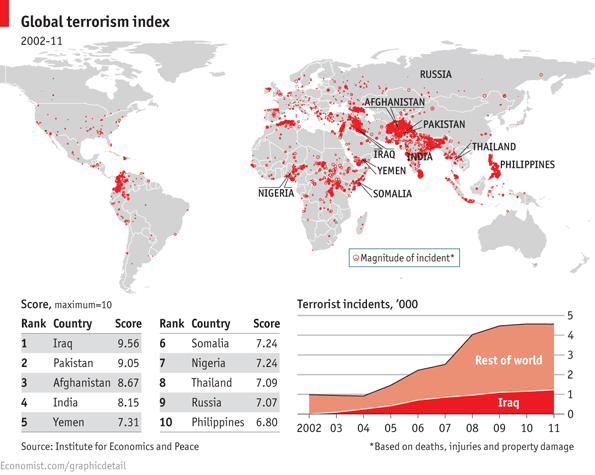
The truth is, “we may be living in the most peaceable era in our species’ existence,” as Stephen Pinker concluded in his 2012 book The Better Angels of Human Nature: Why Violence Has Declined. terrorist attacks globally

Terrorism peaked worldwide in the mid-1980s, and in North America around 1970. If you live in Canada or the United States your chances of being killed by terrorism are almost zero. We’ve been sold an exaggerated sense of danger about conflicts and events in other countries, which has allowed those in power to divide and conquer it’s people, alienate North America from war torn nations, engage in wars that profit only those in the military trade, and snip away at Canadians civil liberties, eroding our freedoms.

There are those who will say, “What do I care? I’m not a terrorist! Go get the bad guys!” Those people should perhaps have a chat with the innocent citizens caught up in the police actions taken against the G-20 demonstrators in 2010. g20protestMore than 20,000 police, military, and security personnel were involved in policing the protests, which at its largest numbered 10,000 protestors. Over a thousand arrests were made, making it the largest mass arrest in Canadian history. There were no ‘innocent until proven guilty’ dispensations; in fact, Toronto Police and the Integrated Security Unit (ISU) of the summit were heavily criticized for brutality during the arrests. harper controlling

You cannot hermetically seal a democratic society to protect it from violence; doing so actually reduces democracy. Despite the self-inflicted threat fear that Harper is trying to sell us, it’s our own government limiting our rights, not jihadists.  

Use Your Power – Vote!


CANADA-2030Even those amongst us, who are tired of hearing about, and arguing about, politics and the economy know, deep down, that we must take responsibility for how Canada will be governed and represented to the world. It’s no longer enough to whinge and moan about the issues that have snuck up on us while we struggled to keep up with the cost of living; Canadians need to decide what sort of Canada they want to live in. And that means we have to vote.

10.-Represents-the-peopleWe have the right and a duty to vote, but voter turnout has been steadily declining in Canada and the United States, as well as in Western Europe, Japan and Latin America. The world’s highest voting rates, at 95%, are in Belgium, which has compulsory voting, and Malta, which does not.

(Other countries with compulsory voting include Australia, Argentina, Brazil, Chile, Greece, and Luxembourg.)

Voter turnout among Canadians is at an unprecedented low, and has been declining since the late 1980s. Voter turnout in the most recent election, at 61.4%, was the third lowest in Canadian history. Young voter turnout was 39% in the 2011 federal election. Canada’s youth will often say that there is little in politics that relates to them. If an issue catches their attention, they are more likely to participate in boycotts and demonstrations, groups with like-minded views and passions.
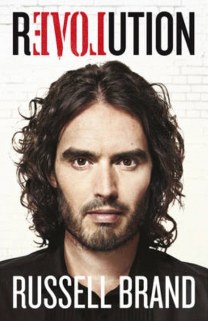
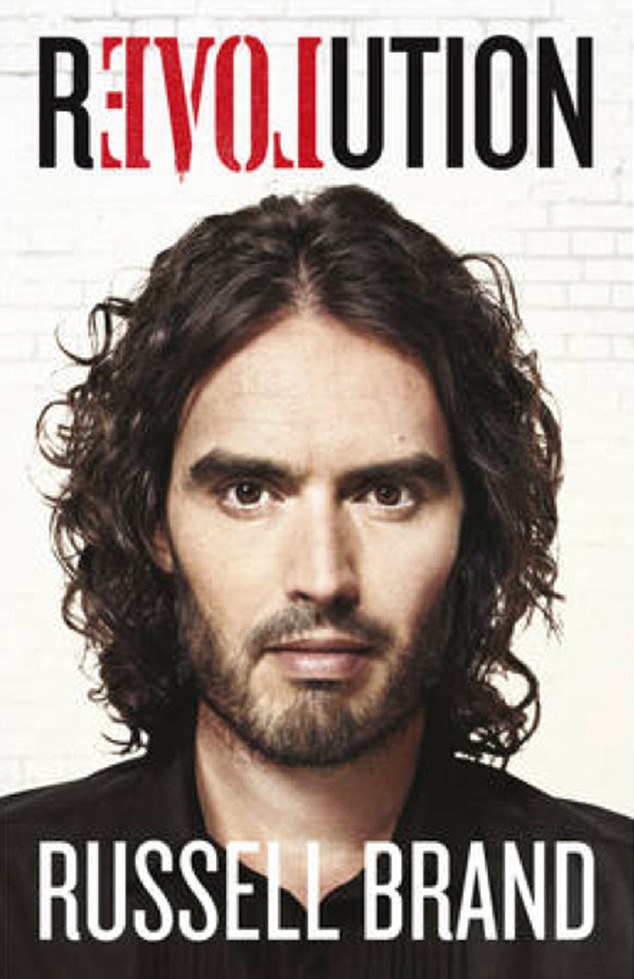
Screen shot 2014-10-23 at 14.12.48.jpgThere’s a general malaise about voting. As much as I adore the witty and eloquent Russell Brand, I find his disdain for voting appalling and unhelpful to his more impressionable followers. Even that old reprobate Johnny Lydon of the Sex Pistols, once famed as an anti-establishment rebel, has called Brand’s refusal to vote “the stupidest thing I’ve ever heard,” adding “You have to vote, you have to make a change. You’re given lousy options, yes, but that’s better than nothing at all.”

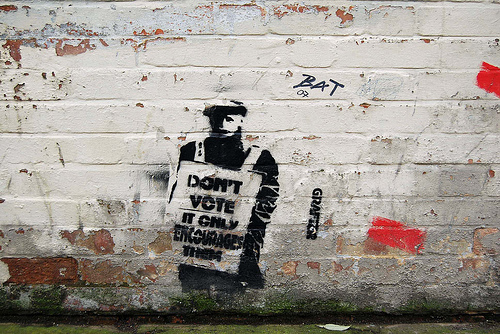
In 2013, Brand guest-edited Britain’s “New Statesman” and wrote at length about his views on politics, saying “I have never voted. Like most people I am utterly disenchanted by politics… I will never vote because, as Billy Connolly said, “It encourages them.””dont-vote

He has since moderated his words. “What I said was, ‘There’s nothing worth voting for.’ If there was someone worth voting for, I’d vote for it and I’d encourage other people if they think that there is a political party that represents their views; if they think there are politicians that are speaking on their behalf, by all means vote for them.”

We’re exhausted with the process. We’ve also lost interest in civic and social participation. Pre-1980’s, more of us were involved with our churches and schools, and we were more likely to be involved with professional or fraternal organizations. Before televisions and computers were available in every home, we met our friends and neighbours socially, to play bridge, or to pit our skills against each other physically in pickup sports and bowling leagues.

When pressed, those who can’t be bothered to vote will say that they’re just too busy. It may feel that way, but studies have consistently shown that we have the same amount of leisure time we have always had – we’re just using it differently.

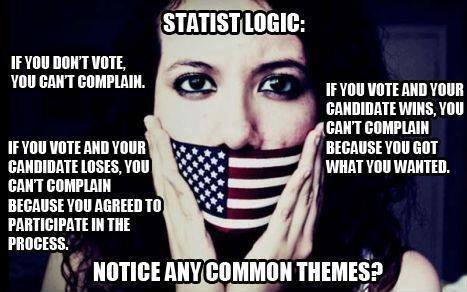
Statist-voting-logicOthers will say that voting makes no difference; we’re only exchanging one self-serving politician for another. Since the early sixties, we’ve had less trust in government and in politicians in general. The rise of ‘attack ads’ and smear campaigns has left voters with a foul taste in their mouth about politics in general.

There’s an actual formula for figuring out the likelihood of someone voting.

PB + D > C.

P is the probability that an individual’s vote will affect the outcome of an election; B is the perceived benefit that would be received if that person’s favoured political party or candidate were elected; D is for democracy or civic duty, or any social or personal gratification an individual gets from voting, and C is the time, effort, and financial cost involved in voting. (Wikipedia.org)

One of the issues affecting voters in Canada and the States has been a sneaky tinkering with that C; in the name of efficiency and a feigned attempt to curb ‘voter fraud,’ politicians have made it more difficult for some groups to be heard.

election-fraud-for-dummiesVoter suppression, the ‘dirty tricks’ dreamed up to intimidate, or to make it inconvenient or impossible for citizens to vote are illegal activities. After the Canadian Federal election of 2011, the Conservative Party was accused of having used live calls and robocalls to tell voters that their polling station had been changed. Voters were directed to false addresses, often several hours away from correct stations. These calls claimed, illegally, to be from Elections Canada.

A federal court was asked by The Council of Canadians to look into allegations of Conservative Party voter fraud. The court concluded that fraud had indeed occurred, probably by someone with access to the Conservatives databases, but said that there was no direct proof that the Party or any successful candidates were either directly involved or profited from the fraud. Although the Conservative were criticized for making “little effort to assist with the investigation,” the court did not annul the result in any of the six ridings where the fraud had occurred, concluding that the number of votes affected had been too small to affect the outcome. (Wikipedia)

In 2015, changes to Canada’s voter eligibility have a new requirement, that each voter prove his or her physical address on paper. The long accepted practice of having a second person vouch for a voter’s address will no longer suffice.

native voice“The Canadian Charter of Rights and Freedoms guarantees the right to vote to every citizen in Canada who is 18 years and older. While the Fair Elections Act doesn’t trump the Charter and render the right to vote for these groups null and void, the EFFECT of the Act could be just that. The Chief electoral officer Marc Mayrand reported in a CTV news article that removing vouch voting could affect over 100,000 people — particularly those who are Aboriginal and live on a reserve.

homeless votePeople who are homeless, whether on the streets, couch surfing or living somewhere temporarily, are also at risk of losing their ability to vote if voter vouching is dismantled. People who are homeless can experience theft, or sometimes misplace their personal identification because of housing instability. This shouldn’t hold them back from voting.

“Irregularities” have been noted with respect to voter vouching in the last election according to a report commissioned by Elections Canada. These irregularities are being touted by the current government as a reason to end voter vouching, however, the report actually states that these issues were ‘administrative’ and made by elections workers — not by voters themselves. In court cases that preceded the report, both the Ontario Superior Court and the Supreme Court of Canada agreed that, “there was no evidence of fraud or ineligible voters being provided ballots.” (Huffington Post Canada)
bc reserveThis change may also become a problem as physical mail delivery becomes a thing of the past. It will definitely be a problem for many First Nations people, who often do not have regular street addresses, and thus relied on vouching. Elections Canada now requires each person lacking identification that includes an address to have a different registered voter swear an oath as to the technical land description of their home or a letter from the First Nation confirming the location, along with a piece of identification with the voter’s name. Elections Canada will not accept Indian status cards alone.

voter-suppressionIn the United States, elections are locally administered, which has often been found to allow the manipulation of elections. Before the Voting Rights Act of 1965, poll taxes, literacy tests, and grandfather clauses were used to suppress poor and racial minorities from voting. Today, voter suppression is more subtle, but is an integral part of policy for the Republicans, who have championed voter ID laws, voter caging, and felony disenfranchisement. There is also a sad history of physical intimidation at polling stations, ranging from unauthorized security guards, to simply making voters wait for long hours in gruelling weather.

Some countries are working to improve voter turnout by increasing possible voting locations, requiring companies to give workers paid voting time off, or allowing voters to vote over several days, as they do in India. In France, voting is held on the weekend, so that most voters have no need for time off from work.

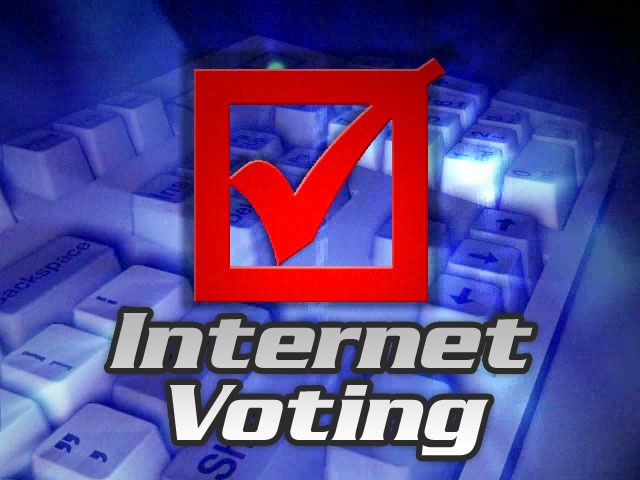
internet-voting1France, Switzerland, Estonia, Geneva and the United Kingdom also allow internet voting. The US Department of Defense has been looking into making internet voting secure, but no decisions have been made.

In Canada, federal elections still use paper ballots. There have been some efforts at the provincial level to allow internet voting, and some municipalities, including Peterborough, Markham and Halifax, provide internet voting as an option. We’re still a long way from being wired politically.

ask questionsNonetheless, and despite the best efforts of those who fear we’ll make the ‘wrong’ decision come Election Day, it’s still imperative that we use our votes to demand the changes we want to see in government. Voting is our power. By not voting, you cede that power to whomever’s voices are louder than the peoples, to further their own agendas and gain.

help wantedUnless we want a democracy in name only, we need to get involved, to seriously look at the candidates in our constituencies, and make an informed judgment on those who are seeking to work for us. Politicians are job seekers; they need to present a résumé and an outline of what they intend to do for us before being handed power. And they must be held accountable if they fail to perform up to their claims and our standards.

powerWhile they vie for their ‘job’ as your representative, you have the power. Once they’ve been elected, it’s out of your hands. So tell those who want your vote that they’ve got to work for it. Choosing not to vote, or to vote without understanding whom you’re hiring, only guarantees that Canada will find itself in the same place or worse by the next time the opportunity to make a difference comes along.

If you don’t vote, you just won’t matter. And all your complaints and demands will only be the wasted breath of the unheard and the unempowered.

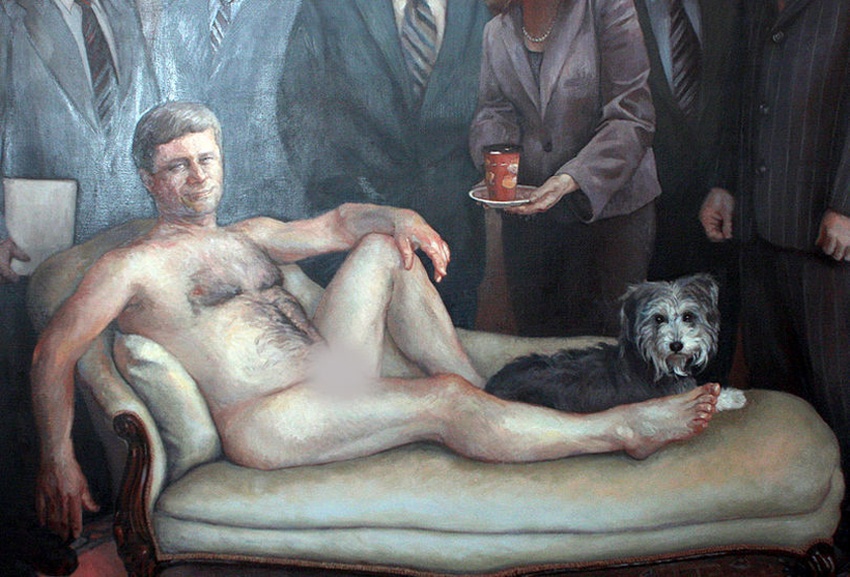
Canada’s Heartaches by the Numbers


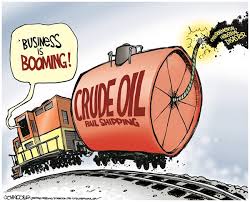
crude oil boomingOur dollar depreciated more than 2 cents on Wednesday, and is now worth .81 of the U.S. dollar, the lowest level since 2011. The Harper government put all Canada’s eggs in one basket by banking on North American crude oil, our top export, but the commodity has plunged from a high of $85 US a barrel in October of 2014, to a low of $46.US on Tuesday.

Finance Minister Joe Oliver announced this week that he would be delaying his budget from the usual February-March date until at least April, due to “market instability.”

Unable or unwilling to admit Canada’s damaged economy, Prime Minister Stephen Harper told reporters yesterday that “These things are creating some shocks that will impact us but they’re not going to throw us off our fundamental growth path or undermine the very strong fundamentals of the Canadian economy.” He added that “The government has complete confidence in the Bank of Canada in the actions that it has taken.”

The Bank of Canada cut the rate on overnight loans between commercial banks by a quarter point to 0.75% on Wednesday, in a response to the recent drop in oil prices. The previous rate had been at 1% since September 2010.  market failure

“The drop in oil prices is unambiguously negative for the Canadian economy. Canada’s income from oil exports will be reduced, and investment and employment in the energy sector are already being cut,” BoC’s Governor Stephen Poloz explained.

Many, including NDP finance critic Nathan Cullen, think Harper is in denial. The Conservatives had hoped to sail into 2015 on a high of oil fumes and the elimination of the$2.9-billion federal deficit , but it looks like their plans may be tanked as predicted federal tax revenues could be reduced by several billions of dollars thanks to global oil price shake-ups.

No worries, though, as Harper is relying on the annual $3 billion contingency fund built into the budget for “unforeseen circumstances.”

He also said that “The oil industry isn’t remotely the entire Canadian economy.” So … what is the Canadian economy?Canadian economy

Our population of 36 million boasts a 6.6% unemployment rate, with approximately 62% employed (16-64 years of age). (The United States, with 316.1 million, is at 5.6% unemployed, and 59.2% employed, while the United Kingdom, with 64.1 million people, has an unemployment rate of 6.0%, and 73% of people are employed.)

In Canada, wealth inequality, while an issue, is not quite as visible as in America; our Canadian 1% holds 12.5 per cent of Canada’s total income. 29 per cent earn $135,000 or more. But our incomes are generally lower – 95 per cent of working Canadians earn less than $100,000 a year. Our definition of ‘wealthy’ begins at $150,000.00 per year – chump change for wealthy Americans.

One of the reasons Canadians have not felt as impacted by wealth inequality is that, beginning in the late 1970’s, women surged into the workforce in record numbers. A household with two incomes could manage quite well. With the inclusion of children into the family, however, things got shakier financially. If one of the two wage earners has to stay home with the kids, they’ve effectively halved the family income, in order to raise children and run the home. As baby boomers aged, that child care burden lifted for a large portion of the middle class.

canadian workforceEducation, and it’s inevitable costs, are a factor. In order to succeed in a technological society, we need workers with complex skills and higher education. 64.1% of adults aged 25 to 64 had post-secondary qualifications in 2011, with women aged 25 to 34 holding a larger share of university degrees. 8 in 10 Registered Apprenticeship certificates were held by men.

In 2011, Almost two-thirds of adult Canadians had post-secondary qualifications, Stemwhile 2.1 million adults had a post-secondary certificate, diploma or degree in STEM (science and technology, engineering and engineering technology or mathematics and computer sciences) but half of STEM university degrees were held by immigrants who have lived in Canada for many years, and Canadian newcomers.

waiterUnfortunately, Canada has the third-highest proportion of low-paying jobs in the world, with only the U.S. and Ireland having a higher percentage of low-paying jobs. Canada is becoming a ‘nation of part-timers’; part-time employment may still outgrow full-time employment for some years as the baby boomers reduce their working hours or retire.

But the big, well-paying manufacturing companies have left Canada to take advantage of lower labour costs abroad. What’s left for those with or without special skills are low-wage service and retail jobs, which generally lack the benefits associated with higher paying positions, and are becomingly increasingly insecure.

StatsCan released this information in January 2015:statscan

In December (2014), Canada lost 4,300 jobs as full-time employment rose by 53,500 while there was a decline of 57,700 in part time jobs… Employment gains in 2014 amounted to 186,000 (+1.0 percent), with increases in the second half of the year accounting for most of the growth. Compared with 12 months earlier, the total number of hours worked increased by 0.7 percent.”

“There were 24,000 fewer women aged 25 to 54 employed in December. Their unemployment rate was unchanged at 5.2%, as fewer of them participated in the labour market. Employment among men aged 25 to 54 increased by 23,000 in December and their unemployment rate declined 0.2 percentage points to 5.5%, their lowest rate since 2008.”

This month, however, it was announced that five large retail companies will be closing Canadian operations. Lured to Canada by massive tax breaks, cuts and incentives, they’ll be leaving more than 21,000 unemployed by March or April.

Stephen-Harper-CowboyIn Alberta’s tar sands, Suncor cut 1000 jobs last week as oil prices crashed. They also announced that they’d decrease their capital spending program by a $1-billion, and reduce operating expense s by another $200 million.

Canada’s largest growth sector in jobs has been in service and retail industries. Only Alberta has seen respectable job growth. Mr. Harper’s blithe suggestion that the current oil crisis will fail to impact the economy as a whole, sounds very much like a man whistling past the graveyardcanada bleak future

Update Jan 24/15: Last week on Global TVs The West Block, Jason Kenny (MP, Canada’s Minister of Employment and Social Development and Minister for Multiculturalism) told host Tom Clark, “We won’t be using a contingency fund. A contingency fund is there for unforeseen circumstances like natural disasters.”

But during an interview for this week’s episode of The West Block, Canada’s Finance Minister, Joe Oliver told Tom Clark, “The contingency fund is there for unexpected and unavoidable shocks to the system and, you know, the oil price decline – which was a dramatic one – would fall in that category. I’m speaking as minister of finance so I’m sort of current on the thinking here.”

Target Canada Fails To Hit The Mark


Target Canada launchA mere 681 days since Target Corp. arrived in Canada, the discount retailer announced that the Canadian experiment has been a disaster – they’re taking their finery and going back to the United States.

Fashionistas are torn; on the one hand, Canadians who had enjoyed shopping in “Tar-zhay” in U.S. outlets were delighted to have the option to purchase brands like Merona, Xhiliration, Mossimo, and Up and Up. On the other hand, customers complained that the prices were too high, and selection was limited. Target never really seemed to make an effort to update the former Zellers locations they operated, and failed to include an e-commerce site for Canadian deliveries.

Target, after just two years and an overall $7-billion investment, expects to close all 133 stores within 16 to 20 weeks, with 17,600 employees losing their jobs.

walmart cartsDon’t look to Wal-Mart to pick up the stores; on Thursday it was announced that Wal-Mart would be closing 127 under-performing stores in Canada, 33% of their 382 stores. At least 525 people will become unemployed during this “revamp.”

Target had a shaky start-up, losing nearly $1-billion in just its first fiscal year in Canada. By the end of January 2015, their pre-tax operating losses will exceed $5.4-billion (U.S.), from an opening investment of more than $7-billion since 2011.

Beyond the inconvenience to those who need their shopping fix, that’s a lot of people – over 18,000 – who are going to be looking for new jobs by the beginning of summer … when students will be competing for those same jobs.

wal-mart-sad_-face_When you consider that Canada created fewer than 175,000 net jobs in all of 2013 (not including December 2013,) I wouldn’t be counting on seeing a lot of Wal-Mart happy faces come May 2015.


Added Jan. 21/15:

Before firing Gregg Steinhafel as CEO earlier in 2014, Target’s board cut his pay and slashed his severance package. He would only get $15.9 million as a golden handshake, or so said a recent regulatory filing. But according to Fortune magazine, his actual severance, which includes profit sharing and stock, will amount to $61 million USD, greater than the severance package for all 17,000+ Canadian Target employees combined ($58 million USD).

Both Sony and Mexx have announced they will be shutting down their retail operations. Sony is, closing all the Canadian stores over the next 6 to 8 weeks, involving 90 layoffs, while Mexx, the fashion chain, are liquidating all 95 of their stores. Reitmans announced in November 2014 that it would close 107 Smart Set stores, but will convert 76 locations into other banners. Jacob, the womens’ store , announced in October 2014 it would abandon restructuring efforts and close 92 stores across the country. Holt Renfrew, a luxury retailer, will be closing stores in Ottawa and Quebec City at the end of January 2015. (no figures yet given for the soon to be unemployed.at Mexx, Smart Set, Jacob or Holt Renfrew)

Should Obama Veto the Keystone XL Pipeline?


kpIn the United States, the battle has raged for 6 years over the Keystone XL pipeline, meant to carry crude oil over 1700 miles from the Alberta tar sands to Nebraska. Canada, and especially Prime Minister Steven Harper, has held its breath as the Democrats, led by President Obama, and the Republicans, have debated the issue.

With the Republicans now holding a majority in the Senate, they’ve decided to make the decision a top priority. Obama has already threatened to veto any such action.

The Keystone would not be the only pipeline Canada has that crosses from Canada to the United States … there are already four major pipelines in existence, with lots of other smaller pipelines crisscrossing through most of the country.

So why the long deliberations? Could it be the ‘dirty oil’ being wrenched from the earth is worse than both the crude oil and tar sand oil already being conveyed?

Wet-tar-sands-537x358Environmentalists have protested Keystone since 2011. The Republicans have told us that having energy coming down from Canada instead of from other oil rich nations prevents the States being held hostage for oil. The Democrats, on the side of the environmentalists have dubbed the tar sands “Extra Lethal.”

But the demand is there. Despite the existing pipelines, oil is being distributed by other means as well – trucks, trains and barges traverse both countries. So, why not this pipeline?

Well, amongst other things, the government has already stopped the North American Free Trade Alliance (NAFTA’s) environmental oversight commission from investigating environmental damage caused by tailings ponds in Alberta’s oil sands twice, this past year alone. Public complaints that Canada is ignoring its own fishery laws have brought the trade organization’s environmental oversight commission on board in an attempt to protect the Athabasca River from industry pollution.

Dale Marshall of Environmental Defence says the Harper government is “blocking” science from getting out information about the oil industry’s harm to the watershed.

watershed“There’s compelling evidence that [industry contamination] is happening and that the federal government is denying it, and not allowing that information to be known to Canadians and the people who live in that area. “It’s disheartening. The Canadian government is more interested in protecting oil sands companies,”

So, it would seem that oil sand protestors, whether led by Canadian musician Neil Young or not, have valid points that are not being addressed, but rather, suppressed.

Recently, Mark Little of Suncor, one of Canada’s largest oil sands producers, denied that the company’s tailings ponds were leaking into the Athabasca River. The executive even referenced historic “Voyageur” accounts of naturally occurring oil seeping into the river to back up his position.

“Oh, no. Oil goes into the Athabasca River, and it has been for hundreds of years.  There is an enormous amount of oil in the sand, and the river runs across the sand.”

But renowned water scientist, Dr. David Schindler of the University of Alberta begged to differ.

“That’s totally untrue. One reason I know industry is responsible for some of [the river pollution] is there’s a 1982 well documented spill for Suncor. They watched as it made its way down the Athabasca to Athabasca Lake and caused the fisheries to be closed for two years.”

deformed fish AthabascaAfter the incident, highly deformed fish, never before seen by locals or scientists, began appearing in the watershed.

Schindler also believes that the Canadian government is likely opposed to the NAFTA‘s investigation because it is “worried about more bad press.”

So, with environmentalists and scientists opposed to the project, it’s fair to think that the United States should be worried about possible spills involved with the proposed pipeline.

From CBC News Canada, “Through an access-to-information request, CBC News obtained a data set of every pipeline safety incident reported to the federal regulator in the past 12 years. The National Energy Board oversees cross-border pipelines. The data doesn’t include smaller pipelines within provincial boundaries. The documents reveal details about more than 1,000 incidents that have happened across the country from 2000 until late 2012 and suggest the rate of overall incidents has doubled in the past decade.” (http://www.cbc.ca/news2/interactives/pipeline-incidents/)

But meanwhile, the federal government has essentially gone all in on the promise of oil. Natural Resources Canada spent $438.3 million on programs to support the oil and gas industry — it spent $41.6 million more, or nearly 10 per cent extra, than the amount it was allotted for the 2013-2014 fiscal year. As well, an additional $24 million went for an ad blitz in the U.S. Yep, bullish on oil.

environment-1-612x336But what about the $300 million for “environmentally responsible” programs Parliament approved last year? Somehow, Natural Resources Canada failed to spend $298.6-million on programs for “green” programs such as renewable energy development and technology innovation.

The government put all of Canada’s precious eggs in one basket.

And, in Alberta, “the economic promise of the oil sands and their accelerating development are coupled with a curse. The waste gases are flared into the atmosphere, while the waste fluids are pumped into immense tailing ponds. These waste streams contain significant quantities of heavy metals and persistent aromatic hydrocarbons.

As a consequence, human health and local pollution issues are starting to become evident. Democratic governments are entrusted to ensure human health. Economic growth and environmental impacts are balanced in a pragmatic and evidence based manner. But our post-democratic society permits corporations to dictate policy and our government has acquiesced. Laws are now repealed,  allowing low cost development, free from environmental safeguards and at the lowest royalty rates in the world.” (read more here: http://www.vancouverobserver.com/opinion/oil-sands-promise-and-curse)

With the recent drop in oil and gas prices, Ottawa is also expected to lose $5 billion in revenue, and the provinces even more. OPEC, in a zero sum game, is dropping the price of oil, and that drop is creating a net loss for Canada.

Research, education, public broadcasting, and the future of national health lie in the balance as energy subsidies in Canada top an incredible $34 billion each year in direct support to producers and uncollected tax on externalized costs. And still the price of oil drops, down 57 per cent since last June.

The pipeline is truly a lose/lose proposition.

boehner-ryanBUT – the Republicans will push forward on making it happen. Not because it is a good idea, or good for the United States. But because 6 years ago, on the night of Obama’s inauguration, a group of top GOP luminaries gathered to create the outline of a plan for how to deal with the incoming administration. They would fight Obama on everything. And after three hours of strategizing, Senate power brokers Jim DeMint, Jon Kyl and Tom Coburn, and conservative congressmen Eric Cantor, Kevin McCarthy and Paul Ryan vowed that none of Obama’s presidential aspirations would succeed, if they had anything to do with it.

For Americans, the road to a national health care plan was nearly derailed, and the work may still be demolished, should these politicians continue to follow their path. The pipeline, also potentially lethal to citizens, will be steam-rollered through, regardless of environmental effects. All to stop one man, President Obama. Whether you are a Democratic or a fan of Obama, it must be admitted that this relentless attack on a legally elected sitting leader is abhorrent and incredibly self-indulgent.

Six years later, America and the world still dangles from these puppeteers’ strings.

generation against oil

Has Democracy Become A Luxury?


With the onset of computers and advanced technology, the lines separating the haves and the have-nots have grown so far apart that 1% One Percentof the wealthy elite essentially controls the fate of 99% of the rest of the planet. The development of robotic manufacturing techniques has reduced the number of people necessary to run factories and plants. Access to cheaper labour in third world countries increases a corporation’s bottom line, at the expense of jobs in the corporations location. The rich get richer. But at the expense of the middle and lower classes.

Capitalism is a funny thing; at its best, capitalism should promote economic growth, as measured by a standard of living enjoyed across the whole of its extended reach. Proponents would argue that this give and take would bring about a better availability of food, housing, clothing, and health care, better education for children, and the ability to provide for the elderly and less fortunate. Capitalism assumes a level playing field, where more opportunities exist for individuals to create their own businesses or new professions.

99 percentBut in practice, “capitalist economies prioritize profits and capital accumulation over the social needs of communities, and capitalist enterprises rarely include the workers in the basic decisions of the enterprise.” (Tom Brass, author and academic, University of Cambridge.)

Modern day capitalism has its origins in slavery and indentured servants; “when historians talk about the Atlantic market revolution, they are talking about capitalism. And when they are talking about capitalism, they are talking about slavery.” (Greg Grandin, Historian.)

Politicians have pandered to the wealthy for decades. “Reaganomics,” or “the trickle-down theory,” posited that “tax breaks or other economic benefits for businesses and upper income levels will benefit poorer members of society by improving the economy as a whole. “ (Wikipedia)Trickle Down

It’s a lovely thought, but just a theory, I’m afraid. Corporate and personal greed eclipsed the high-minded ideals, and by 2008, after the spectacular 2007 global collapse of the banking system, economist Alan Greenspan admitted to the United States Congress that, “The whole intellectual edifice collapsed. I made a mistake in presuming that the self-interests of organizations, specifically banks and others, were such that they were best capable of protecting their own shareholders. … I was shocked.”

In 2013, Pope Francis issued an 84-page paper describing unfettered capitalism as “a new tyranny” and calling upon world leaders to fight rising poverty and inequality: “Some people continue to defend trickle-down theories which assume that economic growth, encouraged by a free market, will inevitably succeed in bringing about greater justice and inclusiveness in the world. This opinion, which has never been confirmed by the facts, expresses a crude and naive trust in the goodness of those wielding economic power and in the sacralized workings of the prevailing economic system. Meanwhile, the excluded are still waiting.” (Wikipedia)

crashSo, on the one hand, capitalism has the potential to benefit both the job creators and the workers, while raising the overall standard of living for society. On the other hand, capitalism can create economic and social instability, fiscal inequality, endanger or destroy the natural resources of its own or other countries, and has only to hold its own self accountable for how profits are distributed throughout that society, whether through payrolls, donations, or taxation.

Ah, what to do, what to do? In 2010, in the United States, politicians decided that giving even more power to corporations would benefit their parties.

“Still, for decades, candidate elections remained free of direct corporate influence under federal law. Only money from individuals and groups of individuals — political action committees — were permitted in federal elections.

citizensunitedThen came Citizens United, the Supreme Court’s 5-4 First Amendment decision in 2010 that extended to corporations for the first time full rights to spend money as they wish in candidate elections — federal, state and local. The decision reversed a century of legal understanding, unleashed a flood of campaign cash and created a crescendo of controversy that continues to build today.

It matters not, the court said just this year, that some speakers (corporations), because of the money they spend on elections, may have undue influence on public policy; what is important is that the First Amendment protects both speech and speaker, and the ideas that flow from each.” (http://www.npr.org/2014/07/28/335288388/when-did-companies-become-people-excavating-the-legal-evolution)

CRONYISMIn exchange for receiving personhood, corporations sponsor politicians. And the politicians slash tax rates and offer tax credits and benefits in response. It’s a perpetual motion machinery that keeps power and money in the hands of those already in politics or corporate businesses, and gives an unfair monetary advantage to the wishes of the wealthy, while muffling the voices of socially conscious citizens who believe in a democratic government.

In Canada, under the law, a corporation has the same rights and obligations as a natural person. It can acquire assets, go into debt, enter into contracts, sue or be sued, and even be found guilty of committing a crime. A corporation’s money and other assets belong to the corporation and not to its shareholders.

Our politicians, well aware that corporations have money to burn, have adopted similar tax cuts and incentives. Corporations are taxed at 38% of taxable income, which drops to 28% after federal tax abatement, and then drops again after general tax reductions. The net tax rate for corporations keeps falling, from 18% (2010,) to 16.5% (2011,) to 15% ( 2012,) For Canadian-controlled private corporations claiming the small business deduction, the net tax rate is 11%.

taxesContrast that with your personal tax rate for this year, which is 15% on the first $44,701 of taxable income, 22% on the next $44,700, 26% up to $138,586, and 29% of taxable income over $138,586.

Most Canadians believe that those with higher incomes ought to share a bit more of the tax burden than those with low incomes, especially businesses and corporations which rely on public infrastructure to do business. Taxation lawyers argue, however, that wealthy corporations taxed more than poorer ones will simply split themselves into smaller entities to avoid the higher taxation. And a smart high-income person with good lawyers and accountants will form small corporations to shelter their income.

The harsh reality is that Harper’s government has given businesses an extra $50 billion in tax cuts and credits in the last few years. And due to cuts to the GST, personal and corporate taxes, Ottawa now collects about $45 billion less revenue per year. Meanwhile, plans are in place to cut public health funding by $36 billion over the next 10 years. Retirement age will be raised to the age of 67. Education and child care are low priorities, and our veterans are disrespected by the very people they protected during foreign wars.

InfrastructureThe rate of economic growth, government revenues and employment could be raised by investing in infrastructure like mass transit, but where can you find the funds to do so when you’ve already spent the taxpayer’s funds on corporate incentives, security, policing, corrections, spy agencies and multimillion-dollar taxpayer-funded ad campaigns designed to get Canadians to vote Conservative in the next federal.election?

Capitalism appears to be trumping the objectives of democracy; the voices of the people are unheard, while money and power remain in the hands of the rich and the powerful.

It would seem that true democracy cannot co-exist with unrestrained Capitalism.

buyDemocracyStrip