
In June 2012, Amazon picked The Age of Miracles by Karen Thompson Walker as one of the month’s best reads. A combination coming-of-age story and apocalyptic page turner, the novel focused on how people would react to a changed world, where “the Earth’s rotation slows, gradually stretching out days and nights and subtly affecting the planet’s gravity. ”

The book outlines how a young girl, along with her family and friends, cope with this adjustment, as the planet wobbles off to it’s slow demise. Meanwhile, the best laid plans and schemes from governments fail to make much difference in how the Earth’s denizens cope with the disaster.
And that’s kind of where we’re at these days, isn’t it? We’re in a vague malaise, unable to confidently say what the weather will be like today or tomorrow, while hapless governments, even if they agree that there is a problem, struggle to find bandaid solutions to the earths’ sores that have been left to fester for too long.

Except this guy .. this guy thinks he knows better than anyone on the planet, be they incredibly educated scientists or those who have spent their lives dedicated to studying the effect of climate change on people. This guy is an asshat.
It must really be pointed out how completely insanely and selfishly Trump and his band of reverse Robin Hood Merry Men are behaving. They’re hooting and hollering like ignorant hillbillies as they seal the environmental fate of those fools who voted for them to make life altering decisions, in the name of ‘economic change.’ These corporate raiders of the environment are convinced that money and power will save them from dying from a lack of clean air and water. But just them. The rest of us? Dream on. We’re all going down with this ship.
Remember when the first rumblings about a change in the planet’s clime began to hit the middle class consciousness? Those who could see the bigger picture were worried about how even a slight shift in warming could damage our environment, the least of our worries being an increase in natural disasters, as melting polar ice caps brought about flooding, and extreme weather swings were tempered with more frequent and deadlier droughts.
Others smiled at the thought of palm trees growing down the main streets of large northern cities. With a thorough lack of understanding of the fragility and interweaving of climate and landmass, some hoped this warming would bring about new tropical beaches in heretofore frigid areas. These foolish humans thought they could somehow control where and when climate change would happen, and bend it to their wishes.
All of their fantasies depended upon where they were located, and hinged upon a lack of empathy for those who would see the opposite of these desires. In order to have the tropics brought to your front yard, many countries would have to be completely displaced or disappear from their current sites. In order to have Floridian temperatures in Boston, New York or Toronto, you first have to lose Florida.
But, of course, they were attempting to take a world problem, and make it into a personal triumph. Still, Man proposes, god and the environment disposes. You’ve only to look locally, to the disastrous flooding on the Toronto Islands and the economic battering Toronto is taking on this matter alone, to see that we have no control whatsoever when Mother Nature gets pissed off. Instead of a tropical beach, you have land masses swept away, along with coastal areas being eroded, possibly never to be returned in our lifetimes.
I wonder what Trump will think when his precious Mar-a-Lago is swallowed up by the sea? It will happen, and I can only hope it will happen sooner than predicted. Right about now works for me.
 And when I think about those who continue to claim that our actions are too miniscule to have any sort of immediate impact upon the planet, I’m struck dumb by the hubris, and the inability of some to look at the damage we all regularly inflict upon the planet, and not see how integral each and every living creature’s actions are to maintaining this delicate balance. Where once we knew, instinctively and intuitively, that the lowliest butterfly snatched from our timeline could have an impact upon the food chain, we now struggle to throw off responsibility for the most damaging of indignities and raping of natural resources ever seen in human history.
But don’t we love to talk about the weather! Talking about it, singing about it, trying to forecast what might be on the horizon, and molding our protective coatings around what we hold precious … this is what we have always done, since caveman days. Through the centuries we learned more about how the planet moved through it’s cycles, and how the sun and moon determined how best we could use the land and waters around us.
We learned to measure how precipitation complicated the times when seeds could be planted, in order to feed our populations. We began to understand that chemicals, seeded into the lifeblood of the planet, the very earth and air, could and would damage the reproductive cycles of all living creatures. We learned how to forecast what the weather might be in coming days, and when we would need to protect our bodies with clothing that would keep us warm, or sunscreen that would fend off the increasingly irradiating rays of the sun, which were no longer impeded by the thick coating of ozone we had taken for granted.
All of these things we learned over time, through observation of the repetition of the seasons, we now blithely toss aside in favour of commercializing and exploitation of resources, an exploitation that seems less inclined to profit humanity, but certainly enriches corporations with no concern for the actual ‘owners’ of the lands they rape.
We looked to the seasons as metaphor for our lives. The cycles of the seasons echoed the natural order of life. Spring reflected our callow youth, and Summer mirrored the fullness of being an adult. We understood that the fall indicated a slowing of days, and winter … dark, cold, unforgiving winter … symbolized a time of aging, and eventual death. The days have the same length, but there are fewer of them.
When the natural order of the seasons is displaced, when you can no longer count on April showers bringing May flowers, our human minds have difficulty grasping that which we’ve always taken for granted – the flow of time reflected in our environment.
The impact of climate change doesn’t end with the physical damage that’s being inflicted on the world. Now, those who study our psyches are beginning to see a change in how humans respond emotionally to the trauma and shock of weather events. Even if we try to avoid focusing on the earthquakes, tsunamis, droughts, floods and landslides which now occur more frequently, our minds are aware of these catastrophes, and our ability to absorb these disasters is lessened. Our empathy is impacted, leading to a rationalization of isolation, and of a need to protect what we have from those displaced by events beyond their control.
We are, in effect, living in a state of post traumatic stress and shock. Some might feel a low grade sense of depression and anxiety, while others, perhaps more sensitive to this imbalance, may have behavioural issues, ranging from substance abuse, to interpersonal and job-related difficulties. Other symptoms can include a heightening of violence and aggression towards others. It is no accident that the rate of suicide has risen in the last decade, as some decide that there’s simply no reason to carry on, in a world so out of balance.
Climate change on our planet will eventually impact every one of us, wherever we live. In recent studies (Bryant et al., 2014,) (Simpson et al., 2011,) it was noted that,
“ Changes in climate affect agriculture, infrastructure and liveability, which in turn affect occupations and quality of life and can force people to migrate. These effects may lead to loss of personal and professional identity, loss of social support structures, loss of a sense of control and autonomy and other mental health impacts such as feelings of helplessness, fear and fatalism.
Extreme temperatures in their own right have a unique influence on behavior and wellbeing. As research by Craig Anderson (2001) and Simister & Cooper (2005) has shown, aggression increases as temperatures rise. Thus as summers get hotter, so might our tempers — likely due, the researchers explain, “to the impacts of heat on arousal, which results in decreases in attention and self-regulation, as well as an increase in the availability of negative and hostile thoughts.” Heat can also impact our ability to think clearly, they add, “which may reduce the ability to resolve a conflict without violence (Pilcher, Nadler, & Busch, 2002).” Higher temperatures have also been found in other research to increase the risk of suicide (Lee et al., 2006).

Add to this mounting fear and anxiety derived from watching the world around us change in irreversible ways — coupled with the helplessness of feeling as if we cannot stop or reverse global warming— and you have another effect of climate change on mental health:
“Watching the slow and seemingly irrevocable impacts of climate change unfold, and worrying about the future for oneself, children, and later generations, may be an additional source of stress (Searle & Gow, 2010),” the authors write. “Albrecht (2011) and others have termed this anxiety ecoanxiety. Qualitative research provides evidence that some people are deeply affected by feelings of loss, helplessness, and frustration due to their inability to feel like they are making a difference in stopping climate change (Moser, 2013).”
While it may be expedient and profitable for climate change deniers to continue on the path to ecological destruction, those who deny what is happening to their own psyches are impeding any kind of healing for the rest of us. Seasons change, and we must change with them. But more gently.

 The Na-Me-Res (Native Men’s Residence) lucked out with the weather for the annual traditional Pow Wow held Saturday, June 24th, at the Fort York historical site. The day was sunny, yet breezy, and very well attended.

 We’d run into Vicki and Bill Wood (the Woodies, Eye Eye) on our way in to the Pow Wow, and spent some time chatting with them. Now it was time to begin our walkabout through the 50 craft vendor and information booths on site, chatting with old and new friends.
 With lunch on our minds, we were happy to see our friend Shawn Adler‘s Pow Wow Cafe was represented with a food booth on site. From the moment the Cafe opened, the foodies were lined up for blocks; the food IS that good. So we were lucky to see the multitalented artists, Annalee Orr and Nancy Beiman, close to the head of the very long line up for his Indian Tacos. They asked us to join them, and with little persuasion, and some apologies to those we’d line cut, we did, and soon had our plates of bannock smothered in beef, vegetables, salad and sour cream clutched in our hands.
 Dancers in full regalia drifted through the crowds, brilliant visions of colour and sound as the jingles attached to heels rang.
 And it is always a joy to encounter David DePoe, community activist, retired teacher, and Kensington Marketeer, best-known for his activities in the late 1960s as an unofficial leader of the Yorkville hippies, and founder of the Diggers movement in Yorkville.


 You’re as addicted as any junkie jonesing for a fix. You’re hooked on news, man, shucking and jiving and slapping your arm to pop up a vein.
 You want to hear more, more, more – but there’s a danger in this addiction. Networks have their own politics, and trying to keep viewers tuning in is their quest. Regardless of how ‘fair and balanced’ these behemoths purport to be, their real bias is to finding what angle will bring in the most viewers, and pump in those yummy advertising dollars. Rachel Maddow may love her cheap blazers, but the execs are wearing much more expensive apparel, and that’s just the way they like it.
 The 24 hour news cycle presumes that every issue has only two sides to it, and only one side is right. Of course, that’s neither true nor tenable. You are allowed, and even encouraged, as part of your civic duty, to understand the issues that preoccupy your nation and government. A news network, supposedly neutral, does not have the right to impose it’s own morality and biases upon it’s viewers. Your choice of network should not also be the source of your ethics and morality.
 But this is all too much. It’s deadly. We’ve go to get off this treadmill of constant political madness. We have to ignore the tweets and calls to action that are destabilizing not only America, but most of the world.

 When we sold the house last fall and moved into a suite of rooms, it was with the fervent hope that we could stay put for a while. But it was not to be … a girl needs her kitchen and her ‘things’ around her, and my poor cats were traumatized by the presence of another cat in the residence. It was all too much.
 And with all of the stress around packing and moving, rehearsing a reunion of the cast of the musical “Hair,” and the putting together of the Segarini Riddock Band to debut today (Sunday June 11th) for a dear friend’s memorial/wake, my health decided to take a left turn, requiring a stream of doctor’s appointments. With rehearsals literally every second day, I was a tad pressed for time, but I handled it all with grace and … oh, who am I kidding?
 On the plus side, the Hair gig was a joy on the day. The original Toronto production of the musical Hair began in 1969, and ran for a sold out 52 week run. The Tribe, which included original cast members Paul Ryan, Clint Ryan, Kid Carson, Frank Moore, Jim Peters, John Stainton, Harriet Teear, Amber Wendelborg James, and Shelley Somers, was filled out with vocalist Debbie Fleming and myself for this incarnation.
 Everything was everywhere, and on top of that, whatever boxes I’d carefully set aside to be safely brought to the new place by car, somehow wound up on the truck and under hundreds of other heavy boxes.. And so I spent another week in flip flops, unable to find my shoes … or my orange clogs … or my hair dryer …
 It is Day Eleven of the move that will not die, and we are still tracing a crooked path through an obstacle course to get from the front to the back door.
 But right now, it’s a rat’s nest. Here’s my view from my desk chair.
 Please join us if you can – it will be a rockin’ sendoff to a good guy gone too soon.


 As the tidal wave of inevitable legalization sweeps over North America, it’s illuminating to watch the different factions argue over how this potential cash crop can be best exploited. For sheer capitalistic greed, look to legislators who foresee that shaking this particular money tree will fill not just tax coffers, but their own pockets, and focus solely on how they`ll spend those yummy new tax dollars.
 To my mind, appointing Bill Blair, the ex-Toronto police chief who’s tasked with shaping the legislation as the Chairman of the Committee, was a giant mistake. It’s inevitable that a man who spent his entire life and career policing drug offences is going to have a different spin on legalization. His mere presence at the table draws a pall of doom and gloom over the very idea. And his dour focus on law enforcement over potential benefits reinforces social and racial biases over who exactly gets to indulge, or profit commercially from sales and distribution.
 Research, mostly conducted at street (grass roots) level, and over many years of advanced cultivation by dedicated growers, has not only produced more effective highs, but highs that can be calibrated as efficiently as high end pharmaceuticals. Not having kept up on my cannabis education, I had no idea that the both the homegrown and imported versions now came in different grades and strengths.
 There were schools offering accredited course programs in Quality Assurance for Medical Marijuana, and Management Quality and Laboratory Certificates.
 And yes, there were a few exhibitors who rocked the old hippie spirit, focusing on rolling papers, hookahs, black lights and groovy accessories.
 And on the Sunday, seminars discussed everything from pet-proofing your stash and avoiding possible risks and hazards to household pets, to the growing essentials of good cannabis cultivation , and the medical effectiveness of cannabis in treating veterans for PTSD.

 Since our search for housing has begun, I have passed through all the stages of grief; denial, anger, bargaining, depression and acceptance. I now accept that my entire life is on hold, and that I will be a quivering mass of anxiety and frustrated tears until this home hunting issue is resolved. Or one of us kills the other.
 As glad as I am that we are now ‘Former Scarberians, ‘ I did feel a pang at the sight of the rubble.
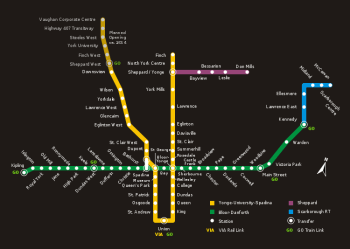 We made up a wish list of what we could and couldn’t accept in housing. Accessibility to amenities, shopping, libraries, etc was priority number one, since I don’t drive. So this palace had to be close to the subway line, and roughly west of Woodbine station, and east of Ossington station.
 Our first forays into the rental world were fun and interesting. Thirty years of home ownership had us lulled into a false confidence. Hours were spent burning out corneas, sifting through Kijiji, Craigslist, ViewIt, and countless other rental sites. We were ready and willing to explore what was out there.
 Landlords today are the Gods of the past. They can drive a grown man to tears, never mind a small French girl. They are merciless. They can not only demand more private and confidential information from you than your doctor will, they can gleefully skip over rental/tenants agreements willy nilly, banning everything from smoking, to small pets, and cooking smells. They can demand thousands of dollars in certified cheques be handed over, before they’ve even looked at your 11 page rental application.
 I no longer look forward to viewing living spaces, nor do I mentally dress them in my mind. I have no reason to expect that finding anything more than four walls and, hopefully, a roof, await me. To quote an old Monty Python sketch, I’m beginning to realize that I may soon be living in a cardboard box in the middle of a busy street. In the game of apartment hunting, I have had my tenant heart broken.
 Nor does the temporary flush of money, money, money help the landlord when he discovers that he’s rented to someone willing to cough up the extra dough so that the space can be turned into a grow op or a crash pad for six other friends. Good luck evicting bad tenants .. that’s one place where the law not only comes down heavily on the side of the resident, it’s actually followed to a fair thee well. Your squatter may be around for a very long time.
 Anyone who falls through the cracks, economically, is hopelessly disenfranchised in this battle. Kids in college, or right out of college coping with short term employment contracts, or gawd forbid, unpaid ‘internships,’ are right out of luck, along with the disabled, the elderly, the vulnerable, and those who don’t pass the scrutiny and whims of landlords. Demoralization and often, homelessness, loom in their futures.

 It’s such a treat to just walk up the street to a good restaurant, or to pop into a local bar to hear friends playing. I no longer have to pack my purse with overnight supplies before heading out to do groceries, or to visit my chums in the downtown core.
 a comfy place for those who’ve been bruised by life to relax, meet other people of like minds, or to simply sit quietly, knitting or colouring, without fear of being asked to ‘move along.’
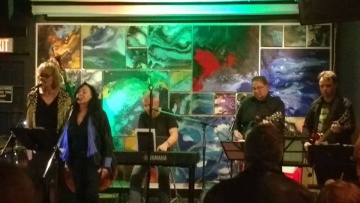 Musical Director Peter Kashur brought together Bob, Drew Winters, and a motley crew of Kid Carson, Craig Riddock, Connor Walsh, Annette Shaffer and myself for a rollicking 45 minute set that grew, like Topsy, into an hour and a half of bluster and blather.
 The singers, ably accompanied by pianist Michael Shand, performed for an appreciative crowd in a private home in the Annex. These salons are a wonderful way for musicians to make a living, performing in a comfortable setting, where the attendees are fans, grateful for a chance to capture an intimate moment in time with their musical icons, and even have a conversation with them after their show at the reception.


 We giggled even as we gagged, and blew the smoke out of my bedroom window. I felt very grown up, as she showed me how to ‘french inhale.’
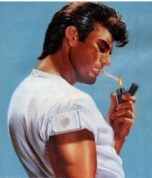 At that time, 50% of Canadians over the age of 15 smoked. I’m guessing it was closer to 80% in Quebec, where no macho, hockey playing, swaggering boy would be seen without a fag hanging from his lip, and a deck tucked up inside his white t-shirt’s sleeve.
 But there had been rumours coming from the United Kingdom (where 80% of males smoked) as early as 1950, that a Dr Richard Doll had discovered a link between smoking and cancer, while pursuing a possible link between the tar in road construction and patients with lung, stomach, colon, or rectal cancer. Over a period of several years, he interviewed patients, and over 40,000 British physicians, and came to the inevitable conclusion that smoking was a main factor in lung disorders, cancer, and cardiovascular disease.
 tors said Camel cigarettes were ‘toastier,’ while dentists recommended Viceroys! Clearly your health and safety concerns were just a question of finding the right brand.
 And then, about four years ago, I heard about a paid research study on nicotine addiction being done by CAMH, (the Centre for Addiction and Mental Health Care,) and decided to give it a go. They’d pay me to be in a double blind study that focused on the use of Zyban, a nicotine replacement medication. AND they’d give me the medication for free. Only thing was, I wouldn’t know if I was on the actual drug or a placebo. Still, I was game to give it a whirl.
 When I’d talk to other smokers, the males would commonly exhibit bravado about continuing to smoke, despite health concerns, while most of the women would agree that sneaking a cigarette break really meant allowing themselves to stop the world and it’s unending demands for a minute. Even though we intuitively knew that we were doing physical damage to our bodies by smoking, we still had a “this I do for me” attitude about the habit.
 However, with the clinic’s support, and a constant supply of free nicotine replacement treatments, (patches, lozenges, gums, inhalers) I struggled through the next four years, promising myself and my mentors that I would indeed quit .. soon. Just not today.
 When I returned to the clinic last fall to begin yet another six months of treatment, I desperately wanted to get off the addiction treadmill. I was sick of being sick, of seeing the effects of years of nicotine use etched on my face, and in it’s detrimental effects on my health. It had almost become a joke that I had been attending the Clinic for longer than some of their staff.
 For all my good intentions, however, and even while wearing nicotine patches that added up to 63 milligrams of nicotine replacement to my blood, I still found myself smoking to ease tensions and relax. I could tell myself that the stress of selling the house and moving gave me an ‘out.’ I DESERVED the occasional cigarette, dammit!
 I stopped smoking that day, nearly four months ago, and haven’t had a cigarette since. The tests came back, and although I’d done a lot of damage to my lungs with the smoking and the coughing, I did not have COPD. With care, and time, the damage would repair itself. All I had to do was not smoke.
 darkening sky and wonder if I have enough cigarettes to last through a snow storm. I don’t have to calculate the cost of cigarettes into my budget.

 I haven’t been to the parade in years, though I did get to be one of the rabbit stole wearing girls waving from the back seat of a convertible many years ago as the “Miss Irish St Augustines,’ in Montreal.
 as well as Catholic. Prejudices ran deep in the north and could be seen in newspaper cartoons depicting Irish men as drunkards and Irish women as prostitutes. Many businesses hung signs out front of their shops that read “No Irish Need Apply“, or “NINA” for short. The initial backlash the Irish received in America lead to their self-imposed seclusion, making assimilation into society a long and painful process.”
 ey stumbled off the boats, fleeing famine and political strife. Many of those marching in St Patrick`s Day Parades today have no interest or stake in the politics of modern day Ireland, but the urge to celebrate their heritage remains strong.

 Everyone has one – that opinionated, though largely under informed, relative, friend, or acquaintance, that we dread having a conversation with. Our kinder, gentler side tells us we need to play nice with the crazy person, after all, who else will put up with them? And so, inevitably, an occasion arises where Drunk Uncle is pity invited to join the family to dine, and somehow and inevitably, ends up commanding the room.
 And Drunk Uncle has a shit ton of things he finds offensive, everything from immigrants to the government (regardless of which party is currently in power,) to taxes, and to bicyclists. He’s angry about how much everything costs ‘these days,’ and doesn’t believe anything he hears on the ‘so called lame stream media.’
 Everything Drunk Uncle believes comes from suspect sources, and even when he does get his news from a credible source, he’s prone to disbelieving what they say. If their information disagrees with what he feels to be true, he will simply label their facts ‘fake news.’
 And so a ‘discussion’ of how immigrants are taking all of the jobs, and receiving perks far and above our own seniors or disabled citizens, resonates and resounds to Drunk Uncle, and no refutal or rebuttal can penetrate his cocoon of incensed resentment.
 Not only are the new facts rejected, even the suggestion that those in need should be treated with compassion is received with derision. For Drunk Uncle, it is not enough to proclaim dissent with his pronouncements as ‘stupid,’ the rebuttal represents a wonderful opportunity to imply that any and all generous, warm, connected, or creative suggestions are childish and foolhardy, and worthy of contempt.
 Drunk Uncle is ideologically committed to a world in which his privileges and entitlements are protected, but everyone else’s are suspect.

