Running for Election in Ontario


by Roxanne Tellier

On running for election … TWICE … in two months … 😉

This crazy political Winter/Spring 2025 started when I was asked to run for the Green Party of Ontario, in the Provincial election, in Windsor-Tecumseh … very stressful, not knowing what you’re doing, with hardly a soul to tell you what to do next. Scary.

But there were a couple of local people who gave me moral support; Henry Oulevey – my financial agent, Kendal McKinney – volunteer, and Nick Kolasky – the Green for Windsor West, who became my friend as well as a fellow candidate.

Then the call came in to run in the Federal election, for the Green Party of Canada … we Greens can do that, run in the provincial and also in the federal. And really, the provincial, as stressful as it was, was a trial run for a newbie candidate. And if I had had little guidance in the provincial, I had pretty much zero help in the federal. I was on my own.

But again, I had my local people … Henry, Kendal, and Nick – who put his own plans on hold to help me get my signatures in on time, and to generally ‘hold my hand’ as I tried to navigate the storm of events, debates, and interviews. Owen Smith, my volunteer. And Shawn O’Shea – husband and ‘chauffeur’ for the month. Shawn was really great; helpful, supportive, and patient when i lost my temper when things or people didn’t work properly. No one runs alone – this was my ‘pack’ for the month.
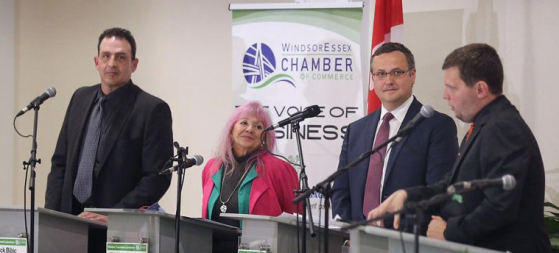
But I think I did okay. There were many that liked what I had to say, and some that liked ‘me’ … I had a couple of women tell me that they wanted to be ‘just like you‘ when they grew up … ahem … got older.

I got 830 votes when I ran in the Provincial in February… pretty typical, across the board, for Greens. For the Federal … only 799. But really, it was a two-party race. I think I did okay, all things considered.

People kept telling me that I was ‘brave’ to run … at my age, with little political capital, and fairly new to the arena. But I never thought of it as ‘brave’ … I thought of it as giving back, to a country that’s given so much to me and my family, and to the nation.

When I started hearing from friends that they were excited to vote for me, that they’d never voted for someone they actually knew … I began to realize that this was an opportunity unlike any other. I’m very real, utterly transparent. Open mouth, and pray what comes out isn’t tooo crazy. If you ask me a question, about myself, the party, the platform, I will tell you. If I don’t know the answer, I’ll look it up, and get back to you. And there were so many times when I realized how many questions asked involved specific groups … groups that had been ignored in party platforms as ‘negligible’ in terms of voting blocs.

But of course, all groups should be heard. If people are excited, angry, or depressed over the actions of our nation, those actions have to be addressed, like it or not, and no matter what thin-skinned corporations or entities are involved. The people must be assured that their concerns are being heard. Too often, those questions go unanswered … and there’s another person, another family, another group that we’re not helping, which results in people, families and groups that will never trust another politician of any party. You never win those people back; they will distrust you, and pass that distrust down through their families, for generations.

There were so many moments when I knew, with great certainty, that the people are not being heard or served. Too many of the politicians that have been in power for years or decades are too afraid to anger anyone in their district, so they say nothing that will upset anyone in that district. That’s just cowardly. Stand up for your beliefs, or get the hell out of politics. We don’t need or want cowards who are too afraid to stand by what they claim to believe.

And if your party disagrees with what your heart is telling you is right … then maybe your party is wrong for you.

After winning election or re-election, legacy politicians seem to care less about what the people want, and more about their own legacies and pocket books. No politician whose net worth soars from $1 million prior to election, but is at a net worth of $50 million after his first 4 years in office, got that money without some fiddling. Period. As the expression goes, “All great fortunes begin with a crime.” If your local politician is suddenly driving a Jag and living in a mansion … it’s very unlikely that fortune came from their salary. And we should know where that fortune came from. We need to know who can or cannot be trusted to keep their fingers in their own pockets.

I think the most important lesson that I learned from these elections is that we need more people – ordinary people – to run for office. There’s simply nothing like voting for someone you know, someone that you trust. There’s a tendency, amongst the winners of elections, to suddenly pedestal themselves, to stand away and back off from the problems their constituents want them to address. Maybe we need a system whereby everybody gets a crack at running for something, and even winning and learning what’s entailed in each of our systems – municipal/civil, provincial and federal. Because gawd knows too many people direct their anger for systemic failures at the wrong entities.

Add to that, the undemocratic behavior of some politicians, who, under the ‘guidance‘ of their leader, refused to publicly answer questions from their constituents, whether in media interviews or in ‘All Candidate’ debates and forums. If they lack the courage of their convictions, they don’t deserve your vote. And yet … votes they got. Many, many votes rewarded these candidates, despite their shunning of public accountability.
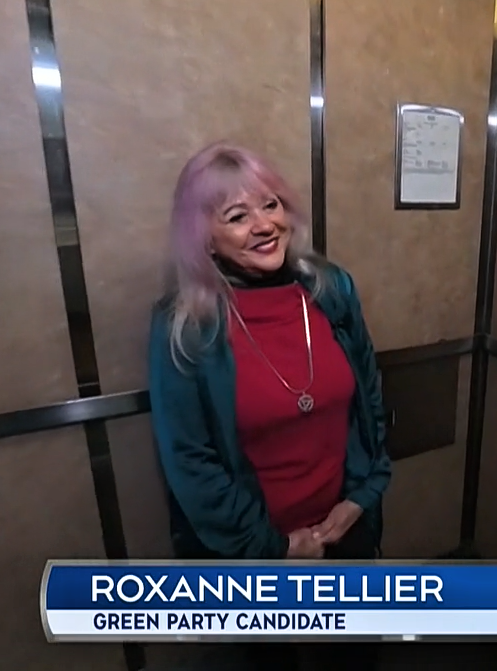
I’ve already decided that I won’t be running in the next elections … that’s 4 years away, and I’m already at the tipping point for age. It’s time to let the young’uns make the mistakes that all politicians make on their way to making good decisions. But I’ll be watching, learning, and my hope is that I’ll be able to mentor the next group of ‘tributes’ that throw themselves into the ring.

I believe in those that have the stamina, courage, and patriotism to choose to serve their nation. And I’ll do whatever I personally can to help them succeed, now, and in the future.

I think … I hope … we made the right choices this election. But Canada needs every single Canadian to care about the nation like it was their own home. Because it is. And if you don’t feel that way, you’ll have to look into your heart and ask yourself “What can I do to make Canada the best place it can be?”

And then do it.

Thank you to everyone that supported my two runs – and to those that voted for me, a special thanks. We gave it a good go. And learned so much in the process.

Roxanne TellierGreen Party of Ontario, Green Party of Canadasigning off.

It Was 40 Years Ago Today …


by Roxanne Tellier

When you are smack dab in the middle of massive change, it’s nearly impossible to parse what is going on all around you.

Baby boomers have been there a few times. The chaos of the sixties, when the world suddenly went from belonging to your parents, to belonging to you and your like-minded friends – remember that?

That same sort of overturning of the norm happened between 1981 and 1984, and most of us just rolled with it, not realizing how irrevocably our world was about to change. Once again, the world was being handed over to a new generation, and those who wanted to keep current, were about to be sent back to school or risk being considered a dinosaur.

Facebook buddy, Walter Frith, posted something that I can’t stop mulling over in my mind … how is it that I lived in the middle of a complete technological upheaval, and never felt so much as a tremor?

Walter wrote, ” I’m watching the first season of The West Wing again for the zillionth time and having begun in the 20th century (September 1999), it’s a hoot seeing the occasional typewriter, enormous video cameras, referencing the Encyclopedia Britannica with no mention of smartphones, Facebook, YouTube, Wikipedia and Twitter, all of which had not been invented yet. Watching a political drama series without ANY reference to social media seems almost absurd now but the times were what they were back then, 19 years to be exact.

… mind … blown …..

… not a cellphone to be found …

I was actually working in tech back then – first at Oracle, then as a writer and sales person for the Canadian rags Toronto Computes, then The Computer Paper, and finally We Compute!

I had a cell phone in the early nineties, but it was enormous, and cost hundreds of dollars a month to service. Very few people, beyond those who could write it off as a business expense, bothered with cell phones back then.

We moved to Scarborough in 1998, and I found a new career selling collectibles on eBay (which had debuted in 1995.)  Most of my transactions were done by cheque or money order, until PayPal launched in 1999, and forever changed international commerce.

There was no Wikipedia prior to 2001, and though it may feel like you’ve always been on Facebook, that site launched in 2004, eventually burying MySpace, which had launched in 2003.

From Parade Magazine: The Evolution of the Cell Phone

  • 1973 – The first cell phone. The phone Martin Cooper designed for Motorola weighed 2.5 pounds and had a battery life of 20 minutes.
  • 1983 – Motorola DynaTAC 8000X. …
  • 1984 – The Nokia Mobira Talkman. …
  • 1995 – The Motorola StarTAC. …
  • 1996 – The Nokia 8110. …
  • 1998 – The Nokia 5110. …
  • 2004 – Motorola Razr. …
  • 2007 – The iPhone.

YouTube came along in 2005, and Twitter arrived in 2006. Mixtapes were effectively put out to pasture when Spotify debuted in North America in 2011.

And the smartphones .. ohhhh the smartphones! It was 2007 before we began arguing over which iteration of LG, Samsung or iPhone was best. Can you imagine that? In only eleven years, trillions of dollars have been generated for an industry that didn’t even exist before 1973.

It’s hard to envisage how we lived prior to all of this tech. Cast your mind back to 9/11, for instance. At that point, with almost no social media, the North American phone network became impassable in hours, as we all tried to connect with people who might have been affected by the tragedy.

You know what else didn’t exist, even ten years ago? The iPad (2010,) and tablets in general. Uber (2009),Lyft (2012,)  AirBnB (2007,) Pinterest (2010,) 4Square (2012,) Instagram (2010,) and KickStarter (2009.)

And that’s just a few of the apps we think we can longer live without .. and we have no idea what leaps and bounds of thought and tech might be coming down the pipeline to blow our minds in the 2020s or 2030s.

There’s only one way that this relentless tech explosion can be stopped – if someone, so out of touch, narcissistic and megalomaniac were to take over the heart of this tech – the cell phone – and bend it to his needs. That would be a bridge too far, I believe, and might even cause those who rely on that convenience to bury their phones in the backyard ….

oh oh ….

=RT=

This entry was originally posted on September 16, 2018 on Bob Segarini’s “Don’t Believe A Word I Say” blog site.        

Christmas And Snowbound In the Treasured Past


(originally published Dec 13, 2015, on Bob Segarini’s WordPress)

My mum embodied the Spirit of Christmas. She loved everything about the holiday, and she made every one of my childhood Christmas’ as merry and bright as she could.

She’d grown up in the depression, and my family always struggled financially. But mum knew that Christmas wasn’t about money. When times were tough, she’d tell us it would be a “Hoodoo McFiggin” year – that meant the only presents would be things she had to buy us anyway, just to keep us clothed and fed – underwear, socks, boots.  Presents were lovely, but some years, presents could wait. Christmas was about gathering with family, and sharing what we did have, and what we had to share was love.

Grinch xmas means a little more

She just had so damn much joy and childlike belief in the season that it all came naturally through her to us  … the breathless lead up that began months before, when she’d start asking my sister and I what we were going to ask to receive from Santa, and the admonition that we must be very sure of what we’d tell the Big Man when the day came … this was serious business! We were to name only one important item we really, really wanted. If there were other gifts, they would be of Santa’s choosing. We’d spend hours arguing over what toys were best, what we really wanted, and we’d change our minds a zillion times before our visit to Santa’s Kingdom.

Nor were the needs of others to be forgotten. We’d be given a small amount of money, and a list of those we needed to delight with thoughtful gifts. It’s extraordinary how far $5.00 could go back in the sixties. We would have been mortified to not have a gift to give to any of the family who had brought a gift for us. Some years would find us digging through our own stash of precious things, in order to find something we could wrap quickly and present to an unexpected guest.

In the run up to the Day itself, we’d drag out the boxes of carefully packaged ornaments that Mum had collected through the years. She’d linger over the battered aluminum stars made from pie plates, reminding me that she and I had made those together, one year when I was very young, and recovering from the mumps. She’d carefully unwrap the fragile glass ornaments she’d had since she and dad first married, each colorful globe a warm memory. And she’d always linger over a set of orbs, some round, some tear-shaped, so transparent they reflected rainbows, so precious and delicate, “they’re like soap bubbles , Roxanne! Aren’t they beautiful?!”

We had to have a real tree. She felt there was no point in having a tree if it didn’t come with that delicious smell, and the scratchy feel of pine needles under foot. The tree would find a place of honor in the dining room, and strict instructions about its care and watering were delivered. After the tree was set into the metal holder, she’d draw a bright red and sparkly cloth gently around the  base, and then add puffs of ‘angle hair’ to make the tree look like it was floating on a cloud.

57d9e507939d5f9e0dcc1d42451cbb9f

She’d drape the tree’s branches with long strands of tiny glass beads, the beads a little more worn every year, but shining nonetheless. The box of tinsel was precious too; after Christmas we’d gather as many of the used strands as we could and save them for the following year. We had two special toppers for the tree – one, a paper plate collage of an angel adorned with cotton batting that I’d made in first grade, the other , a plastic doll dressed as an angel, it’s halo tipped jauntily to the left.

Christmas songs would be playing on the little record player, and we’d all sing along as we decorated. Jodi and I liked to make up new and naughty words to some of the classics, just to make mum laugh, before she’d chide us to “Behave!  Santa hears and sees everything you do!”

rankin bass productions

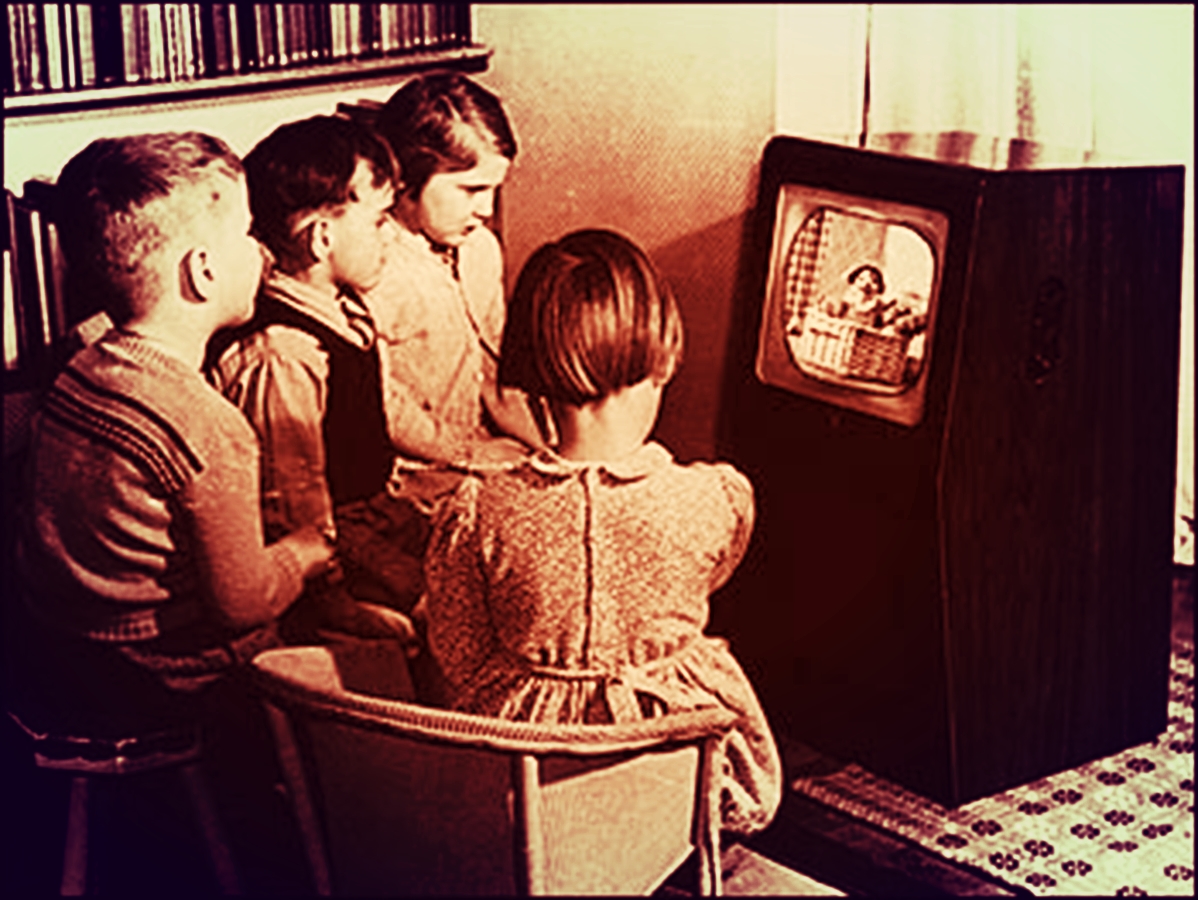
Once the tree was up and decorated, we went into a two week hiatus, where the other 50 weeks of naughtiness were replaced by determined niceness. We’d wait breathlessly for the Christmas specials to appear on the TV; without video or DVD, you had to be home to see “A Charlie Brown Christmas,” “How the Grinch Stole Christmas,” or one of the other animated delights, most of which seemed to be Rankin Bass productions.

As my sister and I got older, we began to appreciate more adult offerings; Jodi loved “It’s A Wonderful Life.” My favourite was “Holiday Inn,” with the moment I waited for being when the heroine posed in silhouette against a giant red paper heart, before dancing through it … and breaking poor old Bing Crosby’s heart.

And of course no Christmas was complete without the scary, but ultimately uplifting, black and white classic … Alastair Sim in “A Christmas Carol.” God bless us, everyone!

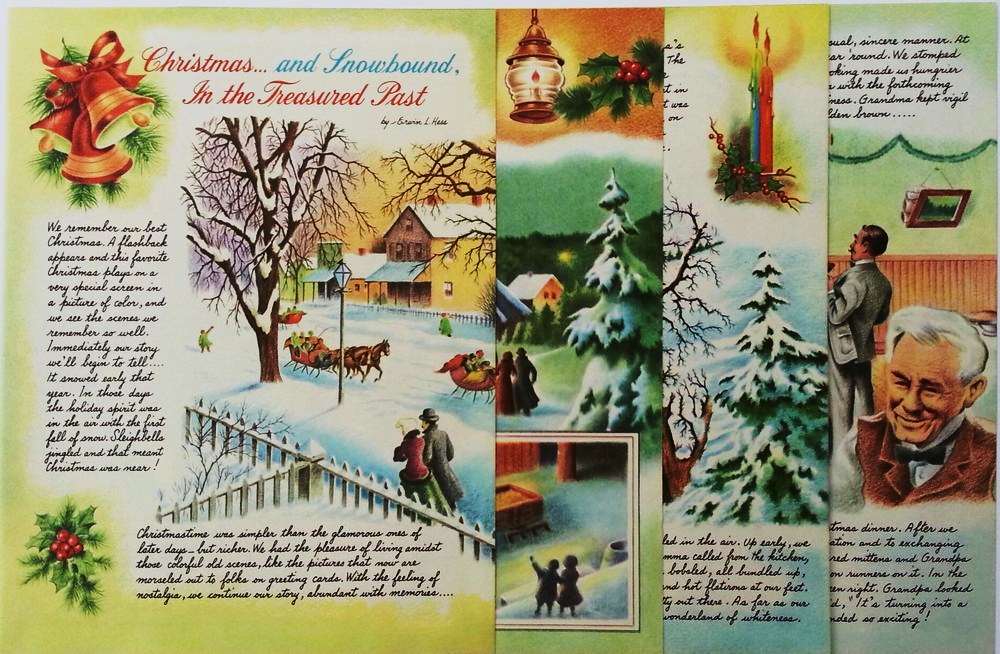
There was also one special box that contained nothing but photos, recipes, newspaper clippings, song lyrics, and a few very treasured books. Our favourite to read and to have read to us was” Christmas and Snowbound in the Treasured Past,” a large full coloured collection of holiday poems, stories, artwork and photos, from 1961.

s-l1000

We remember our best Christmas.  A flashback appears and this favorite Christmas plays on a very special screen in a picture of color, and we see the scenes we remember so well.  Immediately our story we’ll begin to tell … It snowed early that year.  In those days the holiday spirit was in the air with the first fall of snow.  Sleigh bells jingled and that meant Christmas was near!”  Erwin L. Hess

We loved that book; it epitomized an ideal Christmas, one that we’d never had, nor likely ever would. But it held a promise, so much so that the phrase, “Christmas and snowbound in the treasured past” became our family code for how we imagined paradise to be.

First_Snow Jay Maisel

Were winters colder then? Not always … one memorable Montreal Christmas Eve, the family toddled off to church in summer dresses and sandals, only to emerge into a starlit night made brighter by soft, fat flakes of snow gently falling onto the sidewalks. But that was an aberration; most Christmas Eves were ‘see your breath’ cold, brightened by our new knit hats and mittens that Gram had made to keep us warm.

giphy
LahKNKm

Cold, colder and coldest was more often the weather on Christmas day. During my teen years, the habit was to gather at one of the uncles’ house to carve the roast beast.  The best parties were at Uncle John’s big house in Chambly, as there was plenty of room for the kids to play, and even a special room where we could have our own holiday meal, manners and decorum cast aside, while the adults ate, smoked, clinked glasses and laughed about adult matters. We felt a little sorry for them – they didn’t even get to watch TV while they ate!

earth-graphics-200_1080068a

No matter where the party was held, in time the celebrations would wind down, and we’d gather our outdoor clothing, say goodbye to the 14 cousins, and kiss all the ‘grumps,’ (grown ups) before piling into the car for the long ride home, across snowy roads and an ice-laced Pont Cartier, and then along Sherbrooke Street for miles, our bellies full and heads nodding, and inevitably slipping into sleep just before the car drew into the driveway. If we were small enough, we’d even get carried to our beds, where our new pjs and slippers awaited us.

article-2300396-18EFE607000005DC-709_634x800

It was a very different time, and, as with every generation that comes along, we were creating our own version of what Christmas should look and feel like. My mother’s memories were precious, but no more precious than the one’s she created for my sister and me.

Times change, and families are usually smaller than they used to be, and often times, a great deal more complicated. The name we give to that wonderful time of year when we get together to eat and sing and laugh and pray may be Christmas, or Hanukkah, Kwanza, Ramadan, or even Festivus. Heck, call it “Christmahanakwanzika“ if you want to.

What we call the holiday doesn’t matter – what matters is that we take the time to find that small, still place in our hearts, where peace and goodwill live. We gather with our families and friends to join our hearts and hands, to share what we have, and to give thanks that we … together … made it through another year, and are ready to enter another year, whatever it may bring … together.

coexist xmas

=RT=

Spurious George Santos Part I


By Roxanne Tellier

Although I’ve been collecting information and working on this blog for over a week, I still can’t tell you with any certainty that I truly have a handle on who and what kind of person George Santos really is, other than a future Dancing with the Stars contestant, who is currently staying just one step ahead of the Justice Department, who are, it is said, not happy with his fiddling of his FEC paperwork.

Literally every day a new scandal drops, and I have more salacious goodies to factor into all of the craziness that I’ve learned to date.

Is George Santos a victim? A sad, chubby child with glasses who desperately wanted people to like him? He still kinda looks like a kid whose mom drops him off at Congress with a packed lunch.

Is he a grifter, with such sticky fingers that he can’t stop himself from helping himself to other people’s money and property?

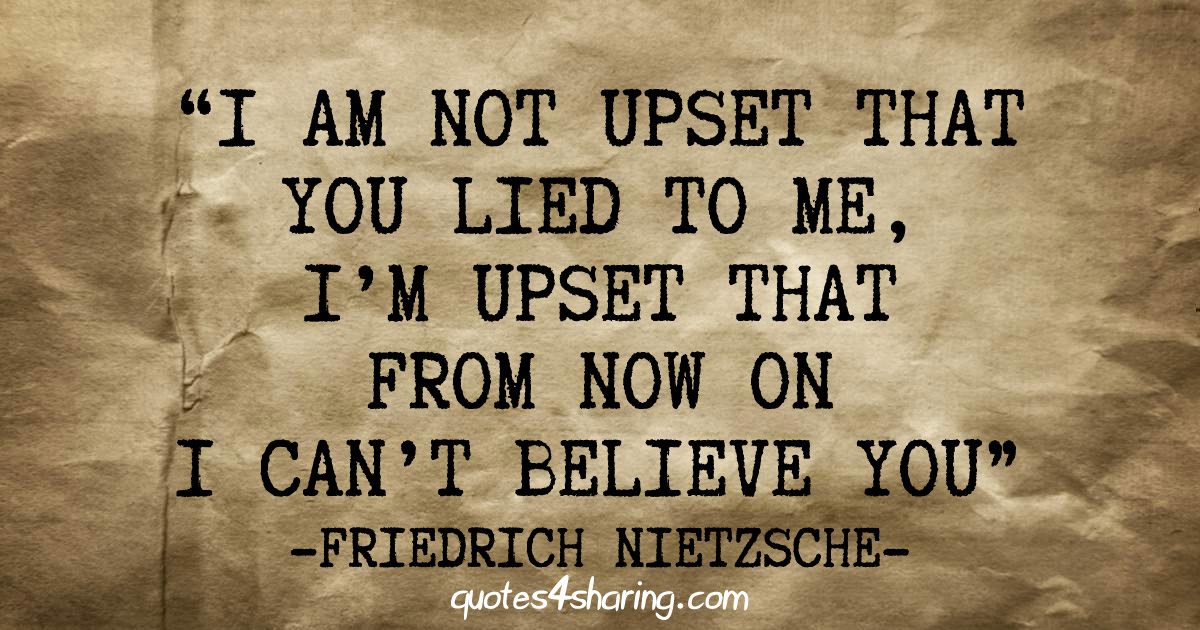
Is he a pathological liar, compulsively and constantly making up stories, and then having to make up more stories to cover up the previous stories, in a web of extensive and elaborate lies, even when all of the lying will eventually be exposed and cause him harm? Santos must believe his own lies, as he lacks the telltale signs and body language, like blinking and fidgeting, that usually accompany mendacities told to cover up wrongdoing.

Is he a cinephile who can no longer differentiate the world of cinema from reality, thus opting to model himself after Leonardo DiCaprio’s character in the film “Catch Me If You Can,” and merging that with Tom Cruise’s slimy pick-up artist and master manipulator in “Magnolia”?

Is he a master of manipulation, who has become skilled at ‘mirroring’ techniques?  In interviews prior to winning his election, Santos is frequently seen mirroring the interviewer, imitating the verbal or nonverbal behavioral characteristics of the other. This technique is often used as a method of manipulation by salespeople, cult leaders, or anyone trying to persuade others to join or support their cause.

Is he a straight-out sociopath, determined to ‘make it’ by any means possible, who, with the former guy, Trump, as his guide, thought that politics seemed like a great place to pad your pockets if you are unable to be shamed or embarrassed, and have no difficulty in saying whatever gets you what you want, when you want it?

Or is he perhaps the sum of all of these things? Maybe he’s living and acting out the role of a pathological liar and kleptomaniac, damaged by an abusive childhood, who lacks any form of self-awareness, and who has banked on the authorities just not being able to catch him before he cashes out and achieves whatever form of fame, fortune, and power he’s believed he has deserved for all of his life.

All I am certain of, is that he chose the right party to worm his way into. Like is drawn to like. Flies to honey. Republicans to charlatans and scoundrels.  

If you were to hang a bad guy fly strip in a Republican convention of GOP wannabees, you’d be amazed at how many con artists, frauds, fabulists, liars, miscreants, reprobates, villains, self-proclaimed victims and martyrs would be stuck to it by the end of the day.

So it should come as no surprise that George Santos, the new U.S. representative for New York‘s 3rd congressional district, was not only attracted to the Republican party, but that the party’s biggest liars and con men have absorbed him into their midst like urine into a Depends. He’s a team player, and this team’s special play is lying with a side order of denying. The conman has already conned his way into Congress, and onto a couple of low-level committees on which he’s laughably unqualified to be of service – the Committee on Small Business and the Committee on Science, Space, and Technology.

With a razor-thin majority in Congress, Kevin McCarthy, who was only crowned Speaker of the House after a humiliating 15 rounds of Mother, May I, apparently only learned after the fact that Sam Miele, a Santos aide, had been impersonating the Chief of Staff of House Speaker McCarthy and sucking down donations for the Santos campaign by pretending that McCarthy was rooting for Santos. Asked how that little bit of shady telephone work would affect Santos’ place in the party, McCarthy claimed that, “It happened—I know they corrected it, but I was not notified about that until a later date.”   

(more breaking news: Representative Elise Stefanik (R-NY), the powerful lawmaker who backed Santos during the campaign, has been drawn into l’Affaire Santos for her endorsement. Donors have been telling reporters that they feel betrayed by Stefanik’s commendation.)

In truth, McCarthy’s hands are tied. He needs warm Republican bodies to keep that tiny majority, and if the price to do so is not being able to believe a single word that flows from the mouth of a member of your own conference, nor of being able to trust what he will be found to have done, or is doing, on a daily basis, McCarthy will take that deal. If he ever had any shame, he lost it years ago, all for the chance to lead a party that has, as Democratic Representative  Ritchie Torres of New York’s District 15 put it, “(House Republicans have ) sunk to the level of self-parody.”

They may be disregarding the slow drip, drip, drip of revelations of Santos’ tales of another life in which he was always the star attraction, and never the sweeper, but as the noose tightens around Santos’ neck, there have been cries of seizing his passport on the grounds that investigations into his financials, from both U.S. and Brazilian authorities, make him a flight risk.

How craven are McCarthy and the majority of Republican leaders who have, for now, decided to treat Santos as they would any other member of the House, knowing that he is a security risk with access to classified briefings?

Fascinating, yes? Let’s take a closer look at this Man who would be – King? Vice-President? President?  Don’t laugh – there’s already been speculations that it could happen, in an America that, only a few years ago, chose a reality TV star to be president of the United States.

In an era of polarized politics, where voters choose political leaders merely in the hopes of defeating the other party, just winning is enough. They will vote against their own interests just for the momentary rush of beating the other side.  

Voters see lying as the currency of politics, everywhere on the globe. The lies just bounce right off the voters, and even when media fact-checkers share the lies and deceit, the voters just don’t care … as long as it’s their guy that wins.

But as used as Americans have become to their leaders lying to them, they must have some idea that there’s a difference between strategically lying and fabricating a life. The hope of winning a race would be motivation for strategic lying but Santos chose to create a character that would be all things to all people – a gay, half-black Jew-ish Republican, who loves his mother, dogs, and whatever else you’re having.  His lies are not debatable – they’re straight out lies. And yet, it’s ingenious; Santos has pretended to be all things to all people and both parties. He is a GOP Frankenstein, a creation of cynicism and lies that are defended with even more fantastic lies.

And all he had to do was hope that no one would care enough, or be curious enough, to lift the lid, and reveal the ugliness hiding under the whipped cream.

Santos says that he’s not a criminal for lying about his resume. Everybody does it. But in the context of a run for Congress, his constant lying and reframing of reality is an assault on a democracy that has been being used as a punching bag for more than half a decade already.

Who is the real George Santos? What was so horrible about his life that he had to invent a whole new life in order to feel good about himself? Did he go to college, did he work, and at what kind of jobs? We’re learning all about the things that weren’t true, but little of George Santos’ real life.

This might take a while, so I’m going to have to split this baby into two or three parts, over the next few days. So let’s end here, and in Part Two, we’ll discuss Santos: How it All BeganThe Early Lies

Duty To Warn


by Roxanne Tellier

Since 2018, Bob Woodward has ridden a second wave of fame through his trilogy of tomes on the Dastardly Deeds of Donald the Trump.

The first book’s title, Fear:Trump in the White House, sprang from something Trump said to Woodward in a 2016 interview: “Real power is, I don’t even want to use the word, fear.”  The book itself is based on “hundreds of hours of interviews with firsthand sources, contemporaneous meeting notes, files, documents and personal diaries.”

Woodward’s book portrayed a grossly incompetent, fatally flawed, likely sociopathic man, hopelessly out of his depths, having somehow risen to the very pinnacle of the Peter Principle. Worse, he’d somehow managed to alienate and ‘cancel’ any potentially competent Republicans, including his first Attorney General, Jeff Sessions, for not agreeing to his hair-brained, knee jerk solutions to global affairs. Trump subjected Sessions to more than a year of cruel personal attacks, and not so privately called Sessions “mentally retarded” and a “dumb southerner” before nastily dumping the man, and briefly replacing him with his own chief of staff, Matthew Whitaker, as acting AG, before William Barr donned the mantle.

2018 was also the year in which Michael Wolff’s Fire and Fury, and Omarosa Manigault Newman’s Unhinged, hit the stands. All three books described Trump’s “chaotic, dysfunctional, ill-prepared White House“. (CNN – Chris Cillizza)

In retrospect, these books, so shocking and titillating at the time, now merit little more than a raised eyebrow. Since then, there have been far too many books – eleventy billion at last count – exploding dozens of bombshells about the ineptitude and corruption of the Trump administration, the office and the man.

Apres moi, le deluge,” is a French expression attributed to King Louis XV of France. “It is generally regarded as a nihilistic expression of indifference to whatever happens after one is gone, though it may also express a more literal forecasting of ruination.” (wiki)

Could the torrent of Post-Trumpian memoirs that followed Woodward and Wolff’s be any more appropriately themed?

duty to warn is a concept that arises in the law of torts in a number of circumstances, indicating that a party will be held liable for injuries caused to another, where the party had the opportunity to warn the other of a hazard and failed to do so.” (wiki)

Those first warning flares alerting the public to the disastrous behavior in the Oval Office acted like a starter’s pistol to a slew of bad actors, fleeing from the stench of being involved in Trump’s administration. Ghost writers made bank on the jumbled memories and stories of chaos in the White House hallways. Punters anxiously awaited each new salacious revelation, whether their goal was to confirm their own suspicions of misconduct, or to search for some misplaced tidbit that could be savaged and held up as proof of the writer’s malfeasance.  

And as tome after tome in the Trump tautology has piled up on bookstands (and in my own library) I have become increasingly concerned that major, dangerously precarious moments in global history were concealed by writers more eager to scoop the competition with an explosive revelation, than to protect American and global citizens from potential catastrophes.  

Bob Woodward’s book Rage revealed that Trump was well aware of the dangers of COVID-19 as early as February 2020, but that he sat on that info until his book was published that September.  

Would more than a million Americans have died had Woodward been more forthcoming about Trump’s concealment of the deadly nature of COVID, believed to be five times more deadly than the common flu.?  

Woodward simultaneously declares that COVID-19 “will be the biggest national security threat you [Trump] face in your presidency“, and then concludes that Trump was “the wrong man for the job.”  Meanwhile, the ‘wrong man’ was telling Woodward that he “wanted to always play it down… I still like playing it down, because I don’t want to create a panic.

Oddly, Trump’s public dismissal of the dangers of COVID is practically an afterthought in the book, as Woodward focuses on Trump’s handling of racial unrest, and his relationships with America’s highest-level official, and the leaders of Russia and North Korea.

Other writers who were active in Trump’s administration at the time were also aware of the dangers of COVID. Mark Meadows, former White House Chief of Staff, wrote in his memoir, The Chief’s Chief about how sick Trump was during COVID, and of how they all knew that he – and later they – had the virus. He talked of how Trump, his family, and their aides, despite knowing that they were infected, attended – unmasked – the Trump/Biden debate. Trump, then 74 years old, was positive for the virus when he faced Biden, then 77, on September 29, 2020.

We will never know if that was a deliberate attempt on the part of Trump and his entourage to knowingly infect his rival.

John Kelly, a retired four-star Marine general, and Trump’s second chief of staff from mid-2017 to early 2019, was alarmed enough by Trump’s actions to be secretly “listening to all” of President Trump’s conversations without telling him. He also secretly consulted the bestseller edited by Bandy Lee, and released in 2017 entitled The Dangerous Case of Donald Trump, a book in which 27 mental health professionals warned that the president was psychologically unfit for the job, then used it as a guide in his attempts to cope with Trump’s irrational behavior. Kelly and many other cabinet secretaries and White House workers believed Trump was a pathological liar, and that he was not mentally stable.

The standard excuse given by every ‘truthteller’ in their post-admin accounts,  is that they believed that all that they could do under the circumstances was to try to manage the situation, in an attempt to try and save the country. Which begs the question of why they themselves believed, like Trump, that ‘only they could fix it,” when it was a problem of gargantuan proportion.

Why did all of these people with first-hand knowledge of the disaster unfolding through those four years not tell the American people these truths at the time?

As the crucial midterms approach, several more books have appeared on the scene, with the works of Maggie Haberman and Peter Baker/Susan Glasser taking the most fire for failing to warn the public of critical information in a timely fashion.

Peter Baker and wife Susan Glasser began interviewing Trump after the election, but prior to the January 6th insurrection.  In The Divider, which spotlights the danger of Trump’s presidency, there is a passage that contains a quote from Trump, captured in the days following the loss of the election.  “Sitting in his dining room, at one point, he saw Biden on the tv screen. “Can you believe I lost to this fucking guy?” he groused.”

Journalist Mehdi Hasan has taken writers to task, noting that, for example, Baker’s quote proves that Trump DID know, and DID concede that he lost, even though he later said that he didn’t believe that he had. Should that information have gone to the January 6th committee, rather than be stashed away in the pages of a book?

Hasan opined that, “One of the rules of journalism is to be sitting in the middle and trying to treat both sides fairly, some would say equally. But is that an appropriate approach when covering someone like Trump? There are no ‘both sides’ to a Donald Trump. There’s never been anyone like Donald Trump.”

Baker countered Hasan’s assertion by saying, “It’s factual to say that there has never been anyone like Donald Trump. I don’t think the rules of journalism require a false equivalence. I think the rules require an unblinking, straightforward, truth-focused look at what is out there in front of us, and no pretending that some things are the same.”

“There has never been a president like Donald Trump. There has never been a president that tried to overturn a democratic election, who told the public, again and again, something that he knew, or at least had reason to know, was a lie, about the stolen election. He was told by his own people, his own Attorney General, his own elections chief, his own campaign manager… All of them told him there was no basis for this, and he went out there and told people this anyway. Not only told people this, he pressured governors and secretarys of state, his own justice department, members of congress, and of course, ultimately his own vice president, to go out and do something that was wrong. So I don’t think we need to flinch away from saying that. I think that it IS journalism to point that out.”

“(During his term) Donald Trump came up with over 30,000 false or misleading statements, all catalogued in the Washington Post. We can’t trust his recitation of the facts. He tried to turn the institution of government into his own personal instruments of power. January 6th wasn’t an aberration. It was the inexorable conclusion of a four-year war on American institutions.” 

Maggie Haberman, aka The Trump Whisperer, describes in her new book, Confidence Man, released in October 2022, times when Trump raised the prospect of bombing Mexican drug labs, how he thought ethnic minority staffers were waiters, and documents a history of homophobic remarks allegedly uttered by Trump.

She also writes that she knew he took top secret documents from the White House to MarALago as far back as the summer of 2021, when he alluded to it in a conversation.  

In another section of the book, she reports that the White House toilet was often clogged with printed paper, and that aides believed he had torn up and flushed documents, which contravened the Presidential Records Act. Perhaps this explains Trump’s long obsession with low-flush toilets.  

The Apprentice producer Bill Pruitt has come to regret his part in the glorification of the businessman’s name. “Trump was as big a narcissistic pig while doing The Apprentice as he’s ever been,” said Pruitt, who spoke to me in defiance of “a Bible-thick NDA.” “Producers like myself helped give him a platform and become a more successful public figure by surrounding him with well-told stories that appealed to 30 million viewers.”
Pruitt called it the “hero-making business.” Producers needed the Trump brand to be massive. “So we sold him like a shiny new car, and viewers bought it. The Trump name was firmly placed by the NBC/[Mark] Burnett team on the Thursday prime-time schedule just as prominently as it was on casinos and skyscrapers, golf courses, and fake universities.”” (The Thrillist .com)

Haberman concludes that most of the affection and respect Trump acolytes have exhibited in the past, and currently, can be traced to the reality show The Apprentice, in which Trump essentially played himself, on a glittering, but fake,business facade put together by producer Mark Burnett, a fan of The Art of the Deal.

Haberman explains: “The series was staged to make the broken-down, eroding empire look magnificent for the screen… But this was the presentation that viewers saw. I didn’t really understand this until I was in Iowa, and I was interviewing voters, during the Iowa caucuses of 2016, and I was asking people at one of the final rallies a very leading question, which was, “Basically, are you here because this is the last time you’ll see him, the spectacle is ending, “ and I kept hearing, “No, I’m caucusing for him, because I watched him run his business. “  And they meant – The Apprentice. By the time he became a candidate, a lot of voters in the Republican base believed he was this hyper-successful tycoon. And that base wouldn’t believe anything else that anyone told them about him.

So, without The Apprentice, which was television, all illusion, there is no Donald Trump presidency.”

When asked how voters should consider the proven lies and misstatements by which Trump, as a defeated former president who demands to be heard, should be judged, Haberman said, “It would not be responsible to ignore what Trump is saying now, post-presidency. I do think it’s responsible to contextualize it.”

“He was (talking about birtherism) way before … 2011 … We all thought we were factchecking him, when in fact, all we were doing was spreading it further.”

Stephen Colbert, while interviewing Haberman about her new book, asked … “So, if you shouldn’t ignore him, and what he’s saying are lies, by checking the lies you REPEAT the lies and drive them further into people’s heads, so they forget the lies, and remember only the accusations… what’s left?”

To which Haberman replied, “At this point, we can’t ignore him. We should have done things differently; I just don’t think we thought about what that meant. He exists in 10 or 20 minutes increments of time, but we exist in 24 hours.”

The debate over a journalistic duty to warn seems unresolvable, under these Trumpian circumstances.

You Are Enough


by Roxanne Tellier

My husband’s grandmother was a darling. She looked like Mrs. Claus, and she had a formidable appetite for hard work and spotless homes. For her, there was no greater joy in life than family, and service – first to the family, then to others. Whenever she’d see her children, grandchildren, or their partners, she took great interest in how they were faring, particularly in how they earned their daily bread.

“How are you! Are you … working!” she’d half-whisper, and you knew that the answer should never be “No.”  To work was to be useful; to work was to be a gift, not a burden.

As a young woman, she’d immigrated from Finland, unable to speak a word of English, with little education, but with a good attitude, willing hands, and a strong back. She made a good life here, raising a family, and never shirking duty. Work defined her life – past, present and future. She worked deep into her eighties, helping to care for other senior women, most of whom outweighed her by a factor of at least three.

She, like so many of our forebears, packed her Bible in her luggage when she immigrated, along with that Protestant work ethic/pre-Reformation Catholic spirit, that tied so nearly into the essence of capitalism, and the development of the New World. The core of those theological philosophies revolved around the idea that hard labour, being a ‘calling’ from God, was in fact a noble vocation, fulfilled through dedication to the work, no matter how humble.

This work ethic reshaped the very idea of ‘work’ in any form as a duty and an obligation to consistently work towards the manifestation of grace in one’s life. Work was the means by which one became a blessing to others. The gathering of riches through hard work and frugality was a sign that the worker had pleased their God. And in time, the people around them became attracted to those qualities, and to strive to be like those burghers.

These concepts – one theological, one economical – are often credited with helping to define our North American societies, as well as those of most of Europe. And it could be argued that the combination of these two concepts is what has led to today’s deification of the rich and powerful, as beacons of what can be achieved by the lowliest of the low, if they could just get themselves right with some magical god that bestows bounty on his best beloveds.

The mindset of the Calvinist Protestant work ethic was largely responsible for Western Europe’s 16th century transition from feudalism to capitalism. With the flight of settlers to the New World, the ethic flourished. The poor needed to work; the rich needed hard workers.

The enmeshing of religion and economic progress is so deep-rooted that it is now an inherent characteristic of American values. Its principles are so deeply embedded that some venal Christian churches preach the ‘prosperity gospel’ as a way to enrich their parishioners, and of course, enrich themselves, all in the name of The Lord.

Politicians wishing to cater to that mindset love to deny the humanity of anyone not deemed to be ‘working hard enough.” If you’re homeless it’s your fault, pick yourself up by your bootstraps. If you’re sick, suck it up, and get back to work. It’s the world of quid pro quo – an exchange of goods and/or services. Something for something.

“if you would just work a little harder.” Happiness and worthiness, we’re told, is always just out of reach, but attainable.

As a rule, the average North America is defined by their position in life, and their net worth. Our meeting and mating rituals start with “what do you DO? What’s your job?” and for many, that’s the only question and answer that matters.

The other day I heard someone describe another person simply by one attribute; wealth. What goes through your mind when you hear someone being described as ‘rich’? With just that qualifier, do you make any immediate assumptions about the character of the rich person? Do you jump to the conclusions that this person must be ‘good/smart/accomplished/worthy’ or ‘kind/trustworthy/fair’ because the possession of wealth is entangled in your mind with the possession of exquisite character?

It’s lovely if you can claim the title of rich and powerful, but for the rest of us peons, the internalization of what it is necessary to do or to own in order to be someone worthy of being admired or loved can rip our sense of self to shreds.

Remember that SNL skit, about the snarky receptionist (played by David Spade) who made all of his boss’ visitors fight to be seen as worthy of entering the office of the Mighty?

That’s how a lot of people struggling with a lack of confidence feel every day – unworthy. Incapable. Not enough. That mentality of feeling can steal away all your hopes and dreams, cripple your ambitions, put a stake through a relationship’s heart, and lead to a life of unhappiness and poor health.

Any number of factors can make people feel that way, though it can usually be traced to earlier times in our lives when we were made to feel unwanted and useless. Those early messages created pathways in our thinking that can lead to a need to prove oneself, over and over, as being worthy of the attention of those we love, admire, or respect.

In a sort of self-bullying, some can begin to feel like everyone else knows what’s going on, and how to do things perfectly, while they themselves don’t even know where to begin.

If everyone around you values a respectable job or a big bank account over the attributes you bring to the table, it can be hard to feel you deserve a seat there.

We learn not to play with fire when we’ve been burned. The pain of rejection will wear a soul out. Just enough of a struggle to find our place will invigorate us, and lead to a healthy self-image.  But if there are too many rebuffs, too many unbeatable challenges, a sense of demoralization can set in, leaving us not in the mood to try again.

“It’s about waking up in the morning and saying: No matter what gets done and how much is done and how it’s done, I’m enough and I’m worthy of belonging and love and joy. “

There’s a bright side, though. Experts say that it’s possible to free ourselves from thinking that we’re not enough, no matter how deeply rooted those feelings may be. It all begins with challenging the not-enough mindset, with doing what it is that makes you – not other people – feel happy.

It’s important to be able to see our inherent self-worth, not in terms of self-importance, but in the spirit of knowing our value, and the stance that we’ll always tackle problems to our very best ability.

“You are enough.” As complex, as difficult, as flawed and as perfect as you are, you are exactly who you are supposed to be. For all your qualities, good and bad, you are normal, and you don’t need anything more to be appreciated as the valuable, one-of-a-kind, worthy person that you already are.

And ‘being enough’ means being able to share that same feeling of belonging with all of those that you meet, live, and work with. It’s not about the job one holds, or the political or financial place they fill in the world, but about what makes that person unique. And enough.

Both Sides Now: Ageism


by Roxanne Tellier

Over the last few years, Joe Biden has had his share of ‘foot in mouth’ moments. This week, he peeled off a doozy.

While speaking at the White House Conference on Hunger, Nutrition, and Health on Wednesday, Biden called out for Rep. Jackie Walorski, asking “Jackie, are you here? Where’s Jackie? I think she wasn’t going to be here – to help make this a reality.”

Unfortunately, Representative Walorski, who had played a big part in advancing the bill, died in a car accident in early August. It’s possible that Biden had her name in mind because he had been briefed earlier on a visit that her family would be making to the White House on the coming Friday, where he would sign a bill in her honour.

So – he made a mistake. Humans do that. I do that twenty times a day. Trump did it maybe fifty times a day, including that time when he called out Frederick Douglas – who had been dead for over a hundred years – for the good job he’d been doing lately. Stuff happens.

And Biden’s been a little busy lately, trying to save democracy, and the world from nuclear devastation and stuff. What else has he been up to? Oh yeah, finally getting that pharmacy bill passed so that the poorest Americans can actually live a little longer than when they had to share their diabetes meds …  giving aid to a disaster shocked Florida, instead of just popping by to toss them paper towels … getting the nation’s infrastructure sorted. He’s been occupied, and not by a weekly golf game.
Joe Biden gets things done because he has more experience at getting things done than almost all other Democrats (and Republicans) combined. That’s Biden’s strength. Knowledge and ability comes with age, time in the job, and real-world experience.

Still, the pundits went crazy, and up the cry went, yet again, that Biden was just too old to be president, and that he was clearly senile. I expect that sort of thing from Republicans, but the frightening thing was how many left leaning, self professed Democrats piled on as well.

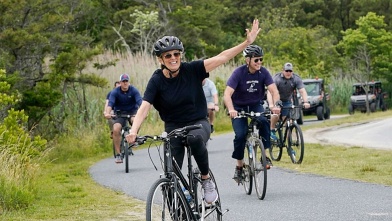
I’d gotten almost used to this constant refrain during the runup to 2020’s election, when Biden – who is three years older than Trump – was continually smeared for his gaffes, and his occasional physical limitations. (Give me a break – Biden rides a bike, Trump barely manages to steer a golf cart.)

But when the ageism starts sneaking in from the sidelines, from those who begged Americans to vote trump out, and Biden in, in 2020, it’s kind of nauseating. I’m looking at you, MSNBC, who never miss a chance to diss Biden. And why was Stephen Colbert parading footage, from last March, of Biden’s fall up the plane stairs, over and over, to his seemingly left-leaning audience, just a few weeks ago? Colbert likes to behave like he’s above cheap shots, but he’s done it enough times that I can only think he’s blind to his own ageism.

Bill Maher has slurred Biden as well, in the past. So I was surprised when he defended Biden’s gaffe this past Friday,

During Friday’s monologue, Maher said Republicans “lost their s—” over the gaffe, “the kind he’s made for 50 years.”

“There’s 535 members of Congress, OK?… I’m not saying it was a great moment. Again, 535 members. He forgot she was dead. The last guy forgot we were a democracy! Can we have a little perspective?” Maher excused Biden before railing against former President Donald Trump for one of his memorable gaffes.

Later during the panel discussion, Maher clashed with one of his guests, The Atlantic staff writer Caitlin Flanagan, who suggested Biden shouldn’t seek re-election in 2024 because he’s “super old.”

“There’s nothing wrong with being old, there’s no shame to it… but there are natural processes that happen and it certainly seems like he’s losing his acuity, which a lot of older men do,” Flanagan said. 

“I’m so disappointed that you, like me, not so young, would say this. It’s such bulls—,” Maher reacted. 

Later, on the same show, CNN contributor Van Jones chimed in, saying, “When Biden’s strong, he’s very strong. And when he’s weak, he’s very weak,” which is “what people are responding to.”

“If the public in 2024 sees what they perceive to be a weak insider versus a scary outsider, a Trump or a DeSantis — that’s a perception… I do think that people have a reason to be concerned if he continues to be perceived to be weak, but the reality is, what’s the alternative to Biden?” Jones asked. “

The reason why there’s no viable alternative to Biden is – ageism.  First of all, there’s reverse ageism, in that no one wants to be the ageist publicly pointing the finger at older people running for office, especially not those people who are themselves nearing the age of retirement.

Yet, continually re-electing senior statesmen, well into their eighties, and mostly due to name recognition and brand loyalty, means denying youngbloods their chance to have a kick at the Congress Can.  

Ageism is a little like ableism; you don’t really think it’s a problem until you yourself get old or disabled, at which point, you’re not generally in a position to do much about it.

Historically, North Americans have given respect to a sector of our older citizens, but most often only to those who fall neatly into our category of being worthy of such respect, based on their ability to acquire wealth and power throughout their lifetimes. Some have risen to the top of their field, and so are deemed to be filled with knowledge, history, and wisdom. But often, that longevity was just the good fortune of surviving longer than their peers.

America took that thinking a little too far. Solid gold health care plans have kept a bunch of reps and senators in power far past their best before dates, and Congress doesn’t have a mandatory retirement age.

Mitch McConnell is older than Biden, at 80. His current term ends on January 3, 2027, when he will be 85.

Dianne Feinstein, 89, filed the initial Federal Election Commission paperwork in January 2021 that was needed to seek re-election in 2024, when she will be 91. “Because of her age and reports of mental decline, Feinstein has been a frequent subject of discussion regarding her mental acuity and fitness to serve.” (wiki)

Chuck Grassley, 89, is running AGAIN in November, against a Democrat who will turn 65 on November 8, election day. If he wins re-election in November, Iowa’s longest-serving senator would be 95 years old by the end of another term. And if Grassley is re-elected and Republicans regain control of the Senate, he will once again become president pro tempore, making him the third in the presidential line of succession after the vice president and Speaker of the House.

You can’t really blame Feinstein or Grassly for not wanting to retire. Life is good for Senators. They have a solid base salary, as well as access to many other opportunities to make bank. They have gold plated health, dental, and medical plans, and if they become ill, they can be assured of gold star treatment, as they are, in effect, ‘government property.’ Their days are spent surrounded with aides, assistants, and security, who handle their every need. Their names are known, they get special treatment in restaurants and shopping places, and they’re invited to all the best parties. If there were to be a terrorist or homeland security scare, they’d be first into the safest places to hide.

Why on earth would anyone ever want to give all of that up – and have to live like the peons they actually are supposed to be representing in Congress?

But with every year, these elders, who have always been, by dint of being above the fray in power and wealth, distanced from the hoi polio, also become less able to relate to the needs of the majority of the tax payers, who are thirty or forty years younger.

Worse still, the clog in the Congress pipe for senators and reps is so dense, based on the serial re-election of the incumbent, that it doesn’t allow younger politicos to get into the game, and get the knowledge and experience that would potentially shape these neophytes into future presidents or vice presidents.

Amongst the masses, aging is very different, and it wields a harsh sword. At some point, especially as technology ever sharpens, our education and experience in many fields will become irrelevant and obsolete. Simply living long enough to have put in twenty or thirty years in your field will not be enough; there’s always some young kid that just graduated who has more up to date information, and who will work for a fraction of what you’re being paid.

Women, and those in the entertainment business, feel ageism earlier, and much more cruelly. We have to learn to conceal our age, lest we segue from the ‘up and comers’ to the ‘once was-ers.’

Men over 50 become a liability to companies, because they want to be paid what they believe they are worth. Women become invisible.

If you’re over 50, you know all this stuff. You’ve felt the sting of ageism, and you’re rolling with the punches, because you have no other alternative. For most of us, ageism can be a killer, especially financially.
Age-based attacks are so common that they’ve become internalized, and shape how we all feel about the aging process. In reality, most North Americans will live longer than their parents did, and often at their maximum cognitive ability, far into old age. Your actual age is not a good indicator of what you’re capable of doing, either mentally or physically, since so much is dependent on our genetics, and how well or poorly we treated our bodies during our youths.

On one level, we all know that; we can see it for ourselves, in our older relatives, and in friends a little older than ourselves. And yet, these negative stereotypes, and the accumulation of continual small insults, can trigger anxiety and depression amongst seniors.

The COVID-19 pandemic didn’t help, as older people, more susceptible to the disease, died in large numbers, thereby reinforcing ageist beliefs in the fragility and vulnerability of seniors, and, in many cases, painting these victims as a burden on society. That same prejudice mentally encouraged many older workers to retire early, rather than risk their health by mingling with other people daily.

In truth, we all age at different paces. Some of us will fight valiantly against the overt signs of aging, choosing instead to keep colouring graying hair, and seeking out cosmetic surgery for a youthful appearance. Others will not seek out the dentures, hearing aids, or cataract surgery they need that would ensure a better daily health experience, because to do so would be acknowledging the effects of old age.

Studies have shown that these ageist attitudes actually impact younger people who accept ageist stereotypes as fact, making them more likely to experience development of plaque on the brain (Alzheimer’s Disease) and cardiovascular events. One study showed that ageism led to ‘significantly worse health outcomes in 95.5% of the studies, and 74% of the 1,159 ageism-health associations examined.

Biden’s detractors underestimated him, based on his age, despite the fact that Biden’s first two years have been more successful politically than nearly any other president in history. Nonetheless, that stereotype is rampant in society and the business world.

This is the double-edged sword of ageism; we need to respect those who are aging, while simultaneously understanding that we must at some point gracefully give way to allow the future politicians and potential world shakers to enter the playing field.

Should Biden consider another run in 2024? That should be up to him, and his doctor, as they would be the best judges of his physical and mental ability to do the job … not the media, or the rank and file.

We have to beware of underestimating others based on their age. The lucky will eventually grow old, and the messaging that is currently being broadcast will shape how they expect their own aging to happen, and how well they will be treated by others, when it inevitably is their own turn on the hotseat of senior citizenry.

Modern Motherhood


by Roxanne Tellier

Over the years, I, and many other writers, have written columns thanking our mothers for being our beloved mothers. The overall tone of these columns tends to favour the sappy and romantic notions we see in greeting cards, and in Hallmark movies. And that’s great! Mom’s put up with a lot dealing with their kids and being a mom, and they deserve at least one day a year in which their hard work is acknowledged. 

The other extreme, not as often found, are the sad stories of the children of the bad mothers, who struggle with their feelings about their feelings towards someone so integral to the formation of their lives. Motherhood has always been framed as essential to the very fabric of society. These children wonder what was wrong with them, and why they got the wrong end of the stick, mother-wise.  Their memories are not rosy. In truth, their memories are cruelly dissimilar to the generally maudlin tone of the day.

The day can be problematic for those who have only memories -good or bad – to cling to. Memories can be complicated.  It’s a difficult day for many, for varying reasons.  Some women struggle with getting pregnant; some women struggle with being pregnant. Some women have chosen not to have children; others have had children of their own, and children of their heart. No one’s ‘motherhood’ is exactly the same.

There’s a horrific symmetry in today’s celebration of motherhood and the leak that seeped from the Supreme Court this week, seeking to bring about the end of a woman’s reproductive rights in America. Social media pages extolling the virtues of mothers’ past and present vie with the rants and cartoons of those who are livid at the very idea of overturning these constitutional rights.  

Judge Samuel Alito’s screed tears at the heart of women’s rights. And his argument already shows that the Court will not stop at just disenfranchising women; next up will be a prohibition on birth control, attacks on the LGBTQ/transgender community, and the ending of the right to marry a person of your choice. All civil rights granted since the 60s are up for grabs under his judgment. The path to these assaults on civil rights are already outlined in the wording of this draft, and the arguments presented.

I grew up in the very beginning of the struggle for womens’ rights. Abortion has always been an option for me, and for my friends. No one I knew ever burned a bra, but everyone I know remembers what it was like to fight for equal rights, equal pay, and a toehold on the career ladder. We all remember what it was like to fight for the right to be considered ‘equal’ to men.

Will those become the ‘good old days’ of womens’ rights?

Statistically, one in four women will have an abortion in their lifetime. Most of the women choosing this path are already mothers. All will be women who are making the hardest decision of their lifetime, a decision often made harder by the attitudes and protests of people who would be appalled at the very idea of anyone having the nerve to tell them what to do with their own bodies. 

Motherhood should never be an honour only enjoyed by those forced to give birth by government decree. It’s an abomination of everything we believe to be encapsulated in the act of ‘mothering’. And yet – that could well be the future our young women will have to live within.

There’s much to consider this Mother’s Day …

But for those who identify as mothers … May you enjoy a lovely day.

What’s Normal Anyway?


by Roxanne Tellier

People are funny; they want their lives to be interesting and noteworthy, but most of us are good for about 24 hours of novelty before we’re pining for ‘the good old days.’

What’s ‘normal’ anyway? Normal is whatever you believe it is, in your mind, in your life, and in your world. Normal is ‘the usual,” “my regular,” the commonplace, the typical thing that you like to do or say or eat or whatever it is you do in your spare time; I’m not judging.

What it isn’t, is exciting. It’s waking up at the usual time, having my regular breakfast, and then going to work or play in the way I do on a typical day. It’s going to the same places over and over, because you like what they serve, and it’s where “everybody knows your name.”

Before we moved in January, normal for me would have been reaching out to touch the odds and ends that used to live in and on my missing bedside table. Where it’s gone, nobody knows.

But in the bigger picture, on a scale of one to earthquake, my life, and the life of many others, has been less than normal for some time.

We have just celebrated the second anniversary of the onset of COVID-19 regulations, worldwide. Though I’m not sure that ‘celebrating’ is how most of us felt when we thought about two years of fear, discomfort, and hand sanitizer.

Brides Magazine says that “The traditional second-anniversary gift is cotton, making this the prime time to splurge on upgraded bedding or a cozy throw you can use when snuggled up together on the couch.”

Sounds about right. That was pretty much all that anyone did for at least the first twelve months of the plague: overeat and binge watch Netflix. Remember those heady first days, when we all masked up, avoided each other, sterilized anything that didn’t wiggle away from the Lysol spray, and prayed for a vaccine?

In those first few months, that was normal. It was also normal for us to bang pots and pans every night around dinner time, to encourage those health care workers that were (and still are) literally sacrificing their own health to take care of us.

In January 2022, a load of frustrated truckers formed a convoy and honked their horns 24/7 to protest for what they believed to be their rights – which included their right to NOT receive a vaccine – and THAT became normal, for the poor souls in Ottawa who had to deal with what the Convoy wrought, bouncy castles and all.

Over the last half decade, we’ve normalized things which we could never have dreamed of having to deal with. In this I include the disastrous tenure of Trump; a poor beginning to the handling of a once in a century pandemic, and the subsequent whining once a life-saving vaccine became available; an attempted overthrow of the American government in January 2021, followed by something quite similar, if veiled under a web of candy flossed hot tubs, masquerading as ‘freedom’ while demanding a parallel overthrow of the Canadian government in January 2022; and then topped with a drizzle of a Russian attack on Ukraine, completely with threats of nuclear war, that sent many Boomers scurrying to find a school desk to cower under.

So what’s normal, exactly?

Many of life’s aspects, that we would have considered normal pre-COVID, have shown themselves to work for some, but not for others.  For a while, it seemed like people realized the importance of community and mutual aid. When we were all pulling together, it did seem like we might be working towards a better normal.

But then, one day, that spirit of working for the common good began to splinter; some leaned into science, embracing vaccines, eager to see a world where everyone could be protected from a virus, while others opted to refuse the serum approved for use by every governmental and health agency in favour of quack cures and unproven placebos.

That was a normal that I really didn’t see coming.

For the majority of North Americans, normal is a world in which we’ve normalized one set of laws for the rich and powerful, and another set of far more extreme laws and punishments for those who are not white, cis, males.

All over the planet, normal is women knowing that they have to dress and behave in approved manners, if they want to avoid being attacked for the crime of being female. And normal is knowing that, if they are beaten, or raped, they cannot be assured that their story will be believed, or that their attacker will face any consequences. Normal is police stations filled with rape kit tests that pile up in storerooms, but are never prioritized for analysis.

Normal is people of colour knowing that there is nowhere that they are completely safe from assault, even in their own beds, in their own homes. Even if they are fleeing from a war, normal is knowing that white citizens will be prioritized in the rush to safety.

Normal is a complete lack of action or attention to the future of a planet where the Arctic temperatures are now routinely higher than the temperature in downtown Toronto.

Normal is watching the world’s richest individuals get richer during the pandemic, while the world’s poorest individuals fell further behind.

What we call ‘normal’ today is what we have decided to call normal. It wouldn’t be normal in any other space or time, but it’s what we’ve become used to living in and with, in order to be part of our society.

The unemployment rate in the United States, at 3.8%, is the lowest it’s been in history. Canada’s rate is 4.2%, and has traditionally been higher than in the U.S. or Europe, mainly because we have a higher proportion of seasonal industries, as well as a higher proportion of population in smaller, more isolated communities.

No matter where we live, there are many who are very nervous about returning to life, as it was defined, pre-COVID. The pandemic and our isolation revealed that our routines of commutes, office work, water cooler small talk, and the like weren’t necessarily conducive to a better quality of life. We discovered that many of us – mostly white collar workers – could work from home, in less rigid conditions that allowed those with physical or mental issues the space to thrive.

This year, 47 million people, mostly millennials, have joined the “Great Resignation” in search of better careers, with higher wages, remote options, and greater flexibility. It must be noted that they are privileged to be in higher end careers; these options are not available for the bulk of those who labour in minimum wage positions.

But for those that have this option, they’ve discovered that time is too precious to spend commuting, and that they want to work for a company that is as committed to finding a work-life balance as they are.

We have collectively learned that the ‘normal’ we are returning to, may not be so normal after all. Some things we can change, but many broad social problems are simply beyond our grasp at this time. For social change to happen, we will have to find a communal force of will in which we all refuse to return to the harmful systems that were highlighted by the pandemic.

To do that, we will need to re-learn the art of working together for a common good.

If we don’t or won’t demand change, we will have wasted what might be our last great opportunity for a societal re-set.

World Class Bullies and Where They Live


by Roxanne Tellier  

Last week I wrote about local bullies, and those that terrorize the citizens that elected them locally and nationally. More often than we might have thought, those elected bullies, unsated by the billions they suck from their people’s coffers, opt to extend their reign indefinitely. When they do so, they morph from being barely restrained autocratic bullies, into full-fledged, unrestrained, dictators. 

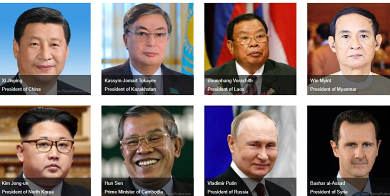
Let’s look at a shocking reality: based on the definition of a dictator being a ruler of a land rated “Not Free” by the Freedom House[1], there are currently 50 dictatorships in the world. There are 19 in Sub-Saharan Africa, 12 in the Middle East and North Africa, 8 in Asia-Pacific, 7 in Eurasia, 3 in the Americas, and 1 in Europe.

From Afghanistan to Yemen, and 48 places in between, these monsters hold the power of life and death over millions of human souls. Dictators not only do not love the people that put them in power, they don’t even see their people as human. Men, women and children are just numbers to be juggled, creatures to serve them and to be subjugated.

Class of 2022

We can reel off the names of some of these men (and they’re all men;)  Putin, Xi, Ortega, Maduro, Kim Jong-Un, el Assad, Erdogan … what they all have in common is the need to not just dominate others, but to crush them, to own their very souls. They are cruel, world class bullies, who have perfected what they likely began in the school yard … insulting, hurting, threatening others who are weaker, smaller, less powerful and more vulnerable. They seek to destroy any vestige of freedom or pride in anyone who dares try to stop them.    

North America’s 24/7 ‘breaking news’ media has kept us soaking in the bullying actions of Putin as he wreaks hell on Ukraine. But even as we gaze upon the horrors of Mariupol being pummelled into dust, dictators around the world have not stopped their assault on their own people.

As The Atlantic said recently, in an article entitled, “Dictators aren’t Pretending Anymore,”[2] autocrats now openly steal elections, stage coups, and invade other countries.

In the February 2022 Freedom House report on the state of democracy in the world, they stated that the world has entered the 16th consecutive year of what the political scientist Larry Diamond has termed a ‘democratic recession.’

“Democratic institutions and civil rights deteriorated in 60 countries, with Afghanistan, Nicaragua, Tunisia, and Sudan experiencing especially precipitous declines. At the beginning of the democratic recession, about half of the world’s population lived in a country classified as “free.” Now only two out of every 10 people do, while four in 10 live in “partly free” nations like India, and another four in 10 live in “unfree” nations like Saudi Arabia.”

In most of the last century, the enemies of democracy embraced the use of political violence, seizing power at the point of a gun. However, in the last few decades, dictators have generally first come to power democratically, winning seemingly free and fair elections, which they used as a jumping off point to concentrate power into their own hands, and eventually manoeuvred into a situation in which they could no longer be removed from office by democratic means. 

In the last few years, however, there has been a return to violence, with the number of military coups worldwide jumping to seven. Over the past year, Myanmar, Sudan and Mali, military officers have used force to install their leaders into dictatorship positions.  

The slow weakening of democratic norms, the slide into ‘fake news’ and ‘alternative reality’ has allowed those in high positions to kick away the illusion of a democratic legitimacy, and behave as ruthlessly as they wish. Laws meant to stop powerful people from abusing their power and authority have been so attacked and bowdlerized that it is increasingly unlikely that, even in a democracy, any elected official need fear an overlong prison sentence, if a sentence is given at all.

As we witnessed on January 6, 2021, social media worked alongside former president Trump and his enablers to ramp up allies when they attempted to overthrow the results of the free and fair 2020 election. More than a year later, Trump is preparing to run again, in 2024, despite laws that forbid anyone who was involved in an insurrection from seeking public office. And if he’s elected again, the path will be clear for him to ascend to dictatorship in the United States.

(*Section 3 of the 14th Amendment prohibits anyone who has violated their oath of office, by engaging in insurrection or aiding in a rebellion, from running for federal office.)

Canadians had a near miss this January with another sort of coup, an epidemic of full-scale bullying, when the Trucker Convoy blasted and blared their way into the news, and the downtown heart of Ottawa, with a headline concern of “Freedom” and a much longer manifesto that demanded, in small print that their supporters would never read, that all of the current federal government step down and be replaced with a governance of their convoy leaders’ choice.

These attacks on democracy are far too close for comfort. The enemy is not just on your wide screen, the enemy is at our gates. 

Putin has attempted to keep NATO and other countries friendly to Ukraine at bay by holding the threat of nuclear war over our collective heads. Many fear that appeasing his appetites at this time will merely sacrifice Ukraine, while enabling him to then continue gobbling up the rest of Europe. Certainly, it would appear that he is determined to win at any cost.

In June 2020, Putin signed a decree—the Basic Principles of the Russian Federation’s State Policy in the Domain of Nuclear Deterrencethat specifies two conditions under which Russia would use nuclear weapons. The first is unsurprising: “The Russian Federation retains the right to use nuclear weapons in response to the use of nuclear weapons and other types of weapons of mass destruction against it and/or its allies…” But that sentence ends with an unusual statement: “… and also in the case of aggression against the Russian Federation with the use of conventional weapons, when the very existence of the state is put under threat” [emphasis added].

In his February 24 speech, Putin echoed that unusual language to describe his Ukraine invasion.  The United States, he claimed, was creating a hostile “anti-Russia” next to Russia and in Russia’s historic land. “For the United States and its allies, it is a policy of containing Russia, with obvious geopolitical dividends,” he said. “For our country, it is a matter of life and death, a matter of our historical future as a nation. This is not an exaggeration; this is a fact. It is not only a very real threat to our interests but to the very existence of our state and to its sovereignty” [emphasis added]. Putin has defined the current situation as one in which, in line with the principles of its deterrence policy, Russia retains the right to use nuclear weapons.” [3]

That’s some world class bullying, right there.

But does all of this sabre-rattling lead to the conclusion that the only way to stop a bully is with a bigger bully?  That would depend on how we define our systems of justice.

Post World War II there were consequences for Hitler and his party. But the process of the Allies seeking justice in response to the atrocities of Nazi Germany were intended to establish a precedent that they hoped would prevent war crimes from ever occurring again. We’ve seen, in Putin’s criminal actions in the Ukraine, that the rules and laws will not stop a determined warmonger.

Nonetheless, democratic systems of justice, and criminal sanctions are not bullying; they are the way societies are governed, in order to protect all members of nations.

Without a crystal ball, I cannot say what will happen next in the Ukraine/Russian war. I do feel though, that whether we are ready to admit to it or not, we are already part of the launch of World War III.

“As Russian troops advance toward Kyiv, democracy is no longer the only game on the global stage. And so the coming decades won’t just pit democracies against autocracies in key territorial battlegrounds like Ukraine. They will also pit the defenders of democracy against those who blatantly reject the supposed decadence of popular self-determination in the sphere of ideas.” (The Atlantic, Feb 2022)


[1] https://planetrulers.com/current-dictators/

[2] https://www.theatlantic.com/ideas/archive/2022/02/democracy-crisis-autocrat-rise-putin/622895/

[3] https://thebulletin.org/2022/03/read-the-fine-print-russias-nuclear-weapon-use-policy/?utm_source=Newsletter&utm_medium=Email&utm_campaign=MondayNewsletterPost03102022&utm_content=NuclearRisk_ReadTheFinePrint_03102022