by Roxanne Tellier
My family has a tiny burial plot on Mount Royal, in the Cotes de Neiges cemetery, and that’s where the bones and ashes of my ancestors have been interred for over a hundred years.
It’s been two months since my aunt’s passing. The clan will gather this week to bring her ashes home.
“Patricia Donovan, daughter of Freda (James) Donovan and Denis Patrick Donovan, the last of her generation, died March 29, 2019 in Ottawa. Born in Montreal, Patricia lived most of her life there. She enjoyed travel, and worked for a time in Washington, D.C. She moved to Toronto and cared for her mother until her mother’s passing.
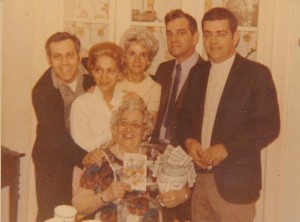
Patricia was a writer, painter, and sculptor who pondered life’s big questions.
Auntie Pat had fifteen nieces and nephews and enjoyed a unique relationship with each of them. She is survived by the clan, and will be missed by them.”
My family has always had an easy relationship with death; when I was young, my mother would often take my sister and I to the mountain for a picnic in the graveyard. We’d loll on the well tended grass while we ate lunch, and then wander around the tombstones and mausoleums, looking for famous names.
 I believe that my cousin Michael Leo Donovan, a man who loves the city of Montreal with a fervour I’ve never seen excelled, wrote a book about one of the cemetery’s denizens, the statesman Thomas D’Arcy McGee, after repeatedly seeing his tomb on family visits.
 “In 1867 he became a Father of Confederation. It was said that if Sir John A. MacDonald of Ontario and Sir George Etienne Cartier of Quebec were the architects of Canada. D’Arcy McGee was its prophet. He was murdered on April 6, 1868, in Ottawa, while returning home after a session of the House.” (A Shamrock in the Snow, 1996)
Other well known Canadians resting in peace at this, and the neighbouring cemetery, include the Reverend William Squire, the first person buried in Mount Royal Cemetery, who died of cholera in 1852, after performing a religious sick visit to a local merchant; Thomas Lee Hackett, a young Irishman shot during a fight between the Catholic and Protestant Irish on July 12, 1877, the day that the Orangeman had chosen to parade on the streets of Montreal; and Sir Arthur William Currie, Commander of Canadian Troops during World War I, and Principal of McGill University from 1920-1933, whose death in 1933 drew a funeral procession with a crowd estimated at 20,000 people, consisting of politicians, diplomats, military bands and hundreds of veterans. The Cross of Sacrifice, a military monument, marks his grave.
Here you will also find David Thompson, surveyor and explorer, who died very poor with no grave marker. The grave languished for seventy years, until, in 1926, the Canadian Historical Association erected a monument to him with the epitaph, “To the memory of the greatest of geographers who for 34 years explored and mapped the main travel routes between the St Lawrence and the Pacific.”
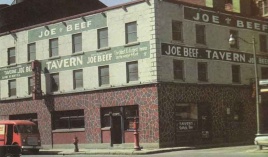 Montreal’s revered Joe Beef has a place of honour. “His real Irish name was Charles McKieman. He owned the famous “Joe Beef’s Canteen,” located near the port. His 3-storey building held a tavern, a restaurant with free food for the homeless, a dorm of 100 beds and a basement full of strange menagerie. He died in 1889 aged 54. His six sons and his wife organized a very impressive funeral for him. Every office in the business district closed for the afternoon, and there were representatives of workers from all classes in the procession.”
Several more souls were added to the site in 1912, when six victims of the Titanic‘s sinking were buried there, including Charles Melville Hays, once the president of the Grand Trunk Railway. (A further five lie in the Notre Dame de Neiges Cemetery, and one in the Baron de Hirsch Cemetery. Montreal was, sadly, well represented in the tragedy.)
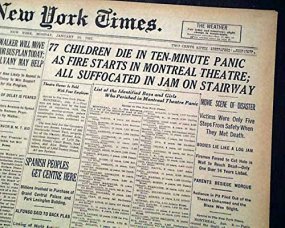 There is also a section dedicated to some of the 76 small children who died in the Laurier Palace Theatre fire in 1927, an event so horrific to Montrealers that a law was summarily passed forbidding the entry of children under 16 to any theatre or cinema screenings. That law remained in effect until 1961
Calixa Lavallée, the man who, in 1880 wrote our national anthem, “Oh Canada,” was born in Verchères, Quebec in 1842, but enlisted as a musician with the 4th Rhode Island Infantry at the outbreak of the American Civil War. He died a respected composer and conductor in 1891, from tubercular laryngitis, in Boston, Massachusetts, where he was buried until 1933, when his body was brought to Montreal for reburial.
More recent interments include Celine Dion‘s husband, René Angélil; journalist and politician, Nick Auf der Maur; Gratien Gelinas, actor; hockey players Doug Harvey and Maurice ‘The Rocket’ Richard; Pierre Laporte, politician, who was murdered by the FLQ in 1970; Robert Bourassa, 22nd premier of Quebec; and Montreal mayor Jean Drapeau, who truly made the city world class, by organizing Expo 67, along with playing host to the 1976 Olympic Games, and giving it an amazing Metro service.
Small wonder the place is considered one of the most haunted spots in Montreal. Often described as a “City of the Dead overlooking a City of the Living“, ghostly spirits are believed to roam the grounds after sundown.
‘Not to be forgotten, other mortal remains lie outside the cemetery boundaries. Most famously, the tomb of Simon McTavish is located in the dark forest above Peel Street. The angry Scottish fur baron died unexpectedly in 1804 while overseeing the construction of a magnificent castle on the slopes. Stories of his ghost tobogganing down Mount Royal in his own coffin terrified Montrealers during the 1800s. To make people forget, city officials demolished his abandoned castle and used the rubble to literally bury his mausoleum. Archaeological work a few years ago disturbed his tomb and now rumour has it he is haunting Mount Royal again.”
 But the most common ghost spotted on the mountain where First Nation peoples were also known to bury their dead is that of an Algonquin warrior.
I’ll keep an eye open for that lonely fellow when I’m there.
I always look forward to visiting Montreal, the city of my youth. These are the grounds I stomped, my neighbourhoods, my restaurants, my mountain, my Canada Life Weather Beacon, first lit up in 1956, that let the city know what weather was on the way. It is and ever will be the city of my heart, no matter where I roam.
I miss my city, but it is inevitably, my family ties that pull me back when I have been too long gone. You can’t stay away from Donovans for very long.
“Oh, ‘céad mile fáilte’ they’ll greet you down at Donovan’s
As cheery as the springtime, as Irish as the conovan
The wish of my heart is if ever I had anyone
That ev’ry luck that lightens life …. may light upon the Donovans”
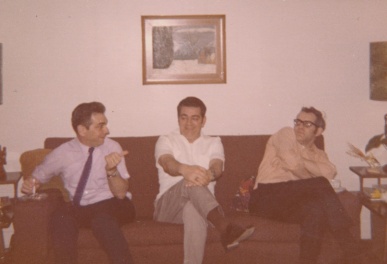 Growing up, I think I always took my family a little for granted. Maybe I just assumed that all families were graced with so much talent, in so many fields. We grew up with my uncle Dennis , co-creator and writer of The Beachcombers; my uncle Leo, whose majestic land and seascapes graced our homes; my uncle John, who was possessed not only of great writing skill, but also of a deep, radio friendly baritone speaking and singing voice; my aunt Pat, a writer, painter, and woman of enormous intelligence; and my own mother, who was a superb dancer, writer, and editor.
 With that sort of heritage, it is almost a forgone conclusion that the 15 children they brought into the world also possessed many talents, not only in the arts, but in social and computing skills. We just never thought that we wouldn’t be able to do whatever we wanted to do with our lives.
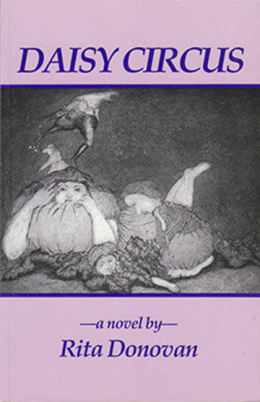 Many of us write. I mentioned Michael, above, but there’s also Kieran, the poet and singer-songwriter; and Rita, who has won multiple awards for her nine books, short stories and essays.
Michael also wrote and produced a fine video series on the origin of Montreal street names, now available on youtube. (And yes, those are his kids getting in on the act as Ms Kayleigh and Complete Stranger. )
 We all sing. Dianne toured with a Harry James tribute for years before settling down in Austin, Texas with her husband, where she also hosts Classical Austin on KMFA radio, produces a weekly vocal jazz show, “Voices in Jazz” for CKUA Radio in Edmonton, and has a new CD release, “A Musing,” featuring mostly original compositions. She also teaches a cooking class with her jazz trio, The Beat Divas. (dianne donovan beat divas.jpg)
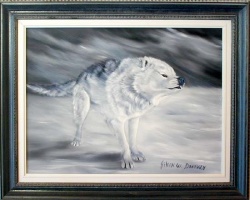 Some of us draw, sculpt and paint. My cousin Aileen took her dad’s painting skill and crafted it into a long career as a well known animal portraitist during her years living in the North West Territories with the Inuit peoples. She now focuses mainly on past life regressions for both pets and people.
I could literally go on and on, listing the accomplishments of this talented group. I’m extremely proud of my family, with good reason.
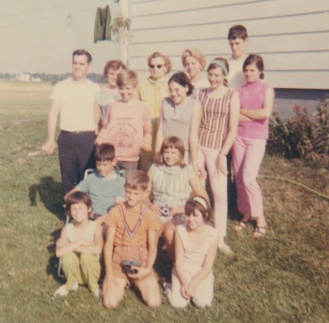 And I’ll get to see some, though not all of them, this week. While the occasion is solemn, visits to my city and my family are never terribly formal for more than a few minutes. We are a group that cannot be repressed for long – laughter, good humour, and our love for each other guarantees a boisterous reunion.
The passing of the last of our parent’s generation seems so final, and yet there’s a part of me that can’t believe that my cousins and I – even as we develop deeper ‘laugh lines’ and grey hair – will ever really age enough to become the ‘grumps’ of the family.
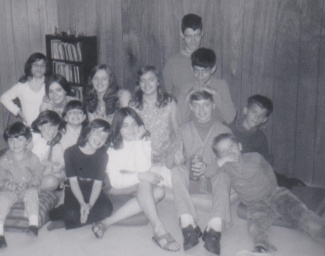 I’ll bring that up with the clan at the wake next week, and see if anyone’s pencilled in a date for when we can get to the ‘growing up‘ part of life. With any luck, we can keep putting it off forever.
So far, so good.


 Because, whether you knew it or not, whether you liked it or not, a very large percentage of Canadians have been quietly enjoying pot in one form or another for decades. World didn’t end. Won’t from this either. That’s not how we’ll go.
 On October 10, the American Supreme Court ruled to uphold a decision by the state’s courts that requires a residential street address in order to vote in North Dakota’s elections. Since much of the state’s Native American population, which lives largely on tribal land and whose IDs typically feature P.O. boxes, cannot comply, the decision is expected to steal away the right to vote of thousands of Indigenous North Dakotans, along with those who share their residences.
 If that’s not enough to make you howl in frustration, Canada actually one-upped that stance, when our own Canadian Supreme Court ruled that politicians do not need to consult First Nations when drafting new legislation that may affect Indigenous rights.
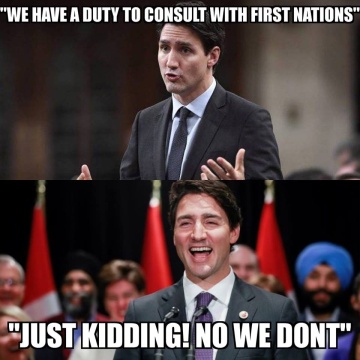 Now .. is it just me, or does that not sound an awful lot like the democracy and the civil rights are being drained out of Canada’s interaction with First Nations people?
 And in Febuary, 2017: ” Prime Minister Justin Trudeau abandoned his promise to reform Canada’s electoral system on Wednesday, claiming no consensus has been found on an alternative system.
 But we in Canada seemed to be talking a better game; our image involves mountains, lakes, lumber jacks and mounties, for pete’s sake!
 So here we are, then. A stalemate where our self-interests outweigh what would seem to be our possible demise.
 And, c’mon … be honest … no matter how virtuous and outwardly concerned we are about the planet, or about the morality of investing in Kiddie Koncentration Kamps, or about the ethos of denying Indigenous people a voice on the discussions on how best to destroy their land …
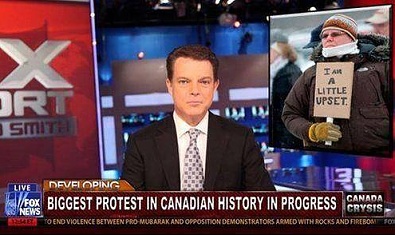 Canadians … we love our country, but that’s never stopped us from having our beefs with how it’s run. Unlike many other countries, we feel free to speak up about what angers us. For all our reputation of being a polite and respectful people, we reserve the right to disagree with those who would impose their will upon the nation.
 Many were angry at the direction we took in the last decade, under the Conservative prime minister . We now have a Liberal prime minister, and likely just as many have issues with his party. In our Canadian way, we will protest against what we dislike, and in due course, vote for the direction we would like to have in the future.
 The First Nations people have been here for over 13,000 years, and for many, the celebration of Canada Day amounts to ” celebrating resource extraction of our territories. The Indian Act is still in place. The government is not allowing First Nations to have a voice. So why would I ever celebrate?”” (Anishinaabe traditional storyteller and teacher Isaac Murdoch.)
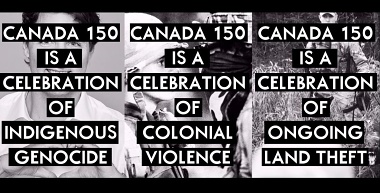 Their resistance movement was developed to inspire other indigenous people to reclaim what they lost during colonization; their land, language and traditional ways.
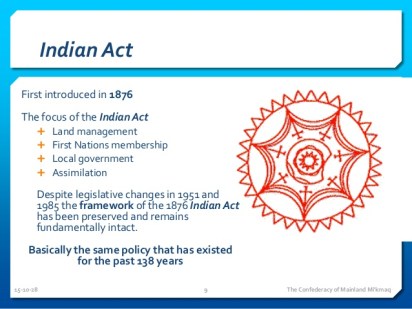 On top of sounding the alarm over how resource extraction and pollution is hurting the environment, Murdoch said the #Resistance150 movement is also calling for the abolition of the Indian Act, which was first introduced in 1857 by the British colonial government, and reads very much like a treatise from the Southern Baptist religionists banning dancing in the 1984 film Footloose. Cruel, vindictive and petty, the Act aimed to crush the people and their culture, by any means available.
 I am proud of my country, but I know that my country has to include ALL of it’s people – those who came before us, and those who will join us in the future – to be strong and united. As a country, we can do so much better. And I have faith that we will work towards being a better, stronger, fairer country in the coming years.
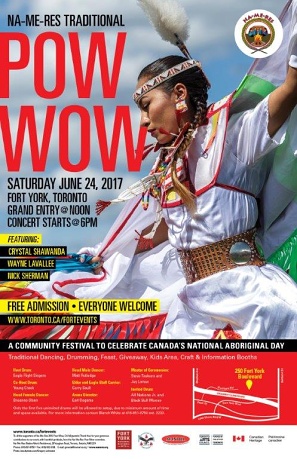 The Na-Me-Res (Native Men’s Residence) lucked out with the weather for the annual traditional Pow Wow held Saturday, June 24th, at the Fort York historical site. The day was sunny, yet breezy, and very well attended.
 We’d run into Vicki and Bill Wood (the Woodies, Eye Eye) on our way in to the Pow Wow, and spent some time chatting with them. Now it was time to begin our walkabout through the 50 craft vendor and information booths on site, chatting with old and new friends.
 With lunch on our minds, we were happy to see our friend Shawn Adler‘s Pow Wow Cafe was represented with a food booth on site. From the moment the Cafe opened, the foodies were lined up for blocks; the food IS that good. So we were lucky to see the multitalented artists, Annalee Orr and Nancy Beiman, close to the head of the very long line up for his Indian Tacos. They asked us to join them, and with little persuasion, and some apologies to those we’d line cut, we did, and soon had our plates of bannock smothered in beef, vegetables, salad and sour cream clutched in our hands.
 Dancers in full regalia drifted through the crowds, brilliant visions of colour and sound as the jingles attached to heels rang.
 And it is always a joy to encounter David DePoe, community activist, retired teacher, and Kensington Marketeer, best-known for his activities in the late 1960s as an unofficial leader of the Yorkville hippies, and founder of the Diggers movement in Yorkville.
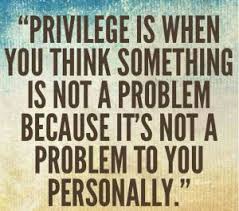
 I know that’s a dirty word to many. “If I’m so privileged, why can’t I get a decent job? Why do I struggle just to make ends meet? Tell ME about privilege, when I grew up poor, with an abusive family, and no chance at a decent education!?”
 Just by being born white, in Canada or the U.S., you won a lottery you never knew you’d entered. If you were also born male, able-bodied, straight, and into a family that was financially stable, you lucked into a super bonus. Something you had no say in, no choice, granted certain privileges on you from the day you entered this world.
 One kind of privilege doesn’t add or subtract from another – being discriminated against for having non-white skin doesn’t negate being discriminated against for being female, or non-straight, old, or disabled … all of these factors have bearing, and cannot be minimalized.
 “Christian Duck Chief, 23, is recovering from a broken eye socket, fractured cheek bone, fracture to the back of his head and a broken nose.
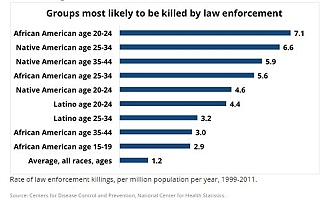 Do either of those scenarios, of the First Nations man in Alberta, or the man in Minnesota who died from a broken taillight, strike you as something that would happen to a white citizen? That this would be the subject of a discussion heavily loaded with justifications to decide if the victims deserved what happened to them? No. Privilege.
 The us-against-them-against-who now? arguments that broke out last week over the actions of BLM-TO (Black Lives Matter – Toronto) at the Pride parade exemplifies how divided even minorities have become, and how quick we are to pick a side. As emotions subside, speakers from both the BLM community and the LGBTQ community have moved to a middle ground of understanding. There have been talks, apologies, and re-commitments to values.
 The CNE has posted the policy change on its website, saying it strives to respect “the dignity and independence of all of our guests, including those with disabilities.” Caregivers can still get in free.
 Nothing is too low for those who use blunt force to achieve their ends. Look to the actions of Canada Post CEO, Deepak Chopra, who has forced his will upon postal workers by refusing to continue talks. He’ll lock out the workers, and impose a stoppage of mail, eventually forcing the workers to take whatever he’ll decide to give them.
 It’s all around you, and tied up in bows that dissolve in your hands, leaving those of visible and invisible minorities with nothing but slime to show for the strident claims of equality and justice for all. Those with privilege point to laws and regulations designed to create a level playing field, and dismiss the cries of those who note that those fields are often studded with landmines, and protected from access by the high cost of pursuing justice in the courts.
 Until then, it seems we’ll live in a world where ‘tolerance’ is defined as not immediately killing those who don’t look like you.























 frustratedboomers