by Roxanne Tellier
Have you ever bought a car, and suddenly noticed that nearly every car you see is the same colour and style? Or, if you are pregnant, have you been surprised to see that it seems that everybody else is pregnant as well?

This is known as the frequency illusion, or the Baader-Meinhof phenomenon. It’s something that happens thru two separate psychological processes –selective attention and confirmation bias – coming together, that makes us believe that there is more going on around us than what meets the eye.
You’ve probably noticed something similar during the last two years, as we’ve dealt with COVID. Our ‘selective attention’ can force us to overlook a lot of other news that might normally catch our eye, since most of us are hyper-focused on anything new or important to do with the protections necessary to fend off the virus.
Confirmation bias leads us to search out this news, and to find ‘experts’ that agree with our already held beliefs. That’s why those people who are convinced that there is something wrong with the vaccines cannot stop searching out those that agree with them. They are desperate to find others who share their thoughts.

Whether it’s COVID, pregnant women, or the incredible number of red vans that prowl the streets of Toronto, becoming aware of something you hadn’t noticed before can throw you for a loop.
Since my little cat died a few weeks ago, I’ve become hyper aware of how many people have also lost pets recently. But it’s quite likely that my sadness and grief has made me more sensitive to information from those who are also dealing with losses.
It is, of course, the frequency illusion that has concentrated my attention on what appears to be an explosion of ill health amongst furry critters that so many of us have been experiencing. If I were not aware of this phenomenon, I might begin to believe that there is something sinister happening to our four-legged friends. There isn’t; it’s just a coincidence that the time of year, the weather, and the inevitable aging of our pets would have to eventually culminate in their passing on.
Whenever something occurs on which we become focused, there are several roads that appear before us. So it was for me, with my mourning of my long-time furry companion.

While I don’t know how I feel about adopting another animal any time soon, I’m very aware of how beneficial it can be to singles and seniors to have a pet that gives them a focus. We grow so close to our little friends, and they give us so much in return.
But pet love is increasingly expensive, and vet bills can cause pet owners a lot of pain – emotionally and financially. Trying to decide when to let a pet go, or when to engage in an expensive fight for its life, often depends on how much money we can devote to that fight.
Pets are incredibly important in the quality of life for those who spend a lot of time alone. My experiences with seniors and senior pets have shown me that there is a need for organizations to help defray final costs. In the future, I’d like to find a way to work with groups working to make that difficult time a little easier for both the human and the pet.
A few days after Farley died, and in the midst of a flurry of friends dealing with the unexpected losses of their pets, a fellow whom I’ve known for many years suddenly went on a Facebook rampage, in which he posited that there was something wrong with those who deeply mourn their pets. Unspoken but inferred was that the public mourning of a furry friend went beyond odd to possibly immoral. He contended that no one could or should equate the loss of a dog or a cat to the loss of a human child.
Of course, these are two very different kinds of losses; a pet is not a human being that we have brought forth from our own bodies.
On the other hand, many people don’t have children. Some never wanted to have children. And still others have children that they rarely see or have interactions with. Regardless of the circumstances, it seemed odd for someone to feel that they had the right to publicly pass judgment over how other people choose to express their grief at the passing of their pets.
I tried to explain that pets play different roles in different times of our lives; during COVID, many people adopted pets to take the place of people they couldn’t see in their isolation. The loss of a pet that has been a constant companion, that is, in some cases, a reason to get up in the morning, can often be no less painful than the loss of a person whom one loves, but with whom one has less frequent physical contact.
This fellow’s insistence on being the sole arbiter of what qualifies as a justifiable emotional pain felt like bullying to me.

I was not the only breathing creature dealing with the loss of Farley; his long-time feline companion was mourning as well. During Farley’s last days, Lady Jade tried to give him comfort, by crawling into his bed and sharing her warmth. For about 17 years, they shared their beds, their treats, and their lives.
After his final trip to the vet, little Jade, who is 18, blind, and quite small, was bereft. She crept quietly around the house, searching for him. She would silently appear in dark spaces, and was often in danger of being crushed by our feet when we’d fail to realize she was there. The only time she would calm was when either Shawn or I would hold her on our laps.
Since we’re packing and preparing to move house, I was having to choose between doing what was necessary, and comforting my poor old kitty. I needed a solution, and came up with an idea.
I often use an organization called Freecycle to give away items that I no longer need, and to find odd things I’m looking for. In this case, I put up a request for a child wrap, or some kind of carrier, that would allow me to cradle Jade against my body, but still allow me to have movement to do household chores, pack, or even to just answer the door without having to disturb her.
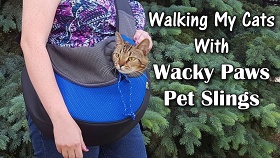
Cat slings – it’s a thing.
Within a few days, I received an email from someone who wanted to know if I’d had any luck with my request. This woman was concerned because she’d had a similar situation when her older dog had passed, and his cat companion mourned him so deeply that a vet’s attention was necessary to prevent the cat from dying of grief.
This freecycler wanted to help, and by the next morning, she had decided that she would buy a baby wrap, called a ‘Cuddle Bug,’ that I could use for Jade, and we made arrangements for delivery.

When the packages arrived from Amazon that evening, I was stunned to see the extent of her generosity. Not only had she sent the wrap, she’d also sent an array of Jade’s favorite foods, and a new cat treat – Squeeze Ups – that I’d never heard of that must be kitty crack, because Jade can’t get enough of it.
I was quite dumbfounded by the kindness of this stranger.
In my mourning, there are lessons to be learned. I clarified to myself that my future would involve somehow being of help to others dealing with pet illness and death. I have seen the ugly side of someone who is unable to empathize with the pain that others feel, but I’ve also seen the beauty of a total stranger who responds with their whole heart to a cry for help from someone in pain.

Funny how life can show us the many ways that we can choose to live and interact with each other. Many paths lead us forward, but nothing is quite as wonderful as being able to grab hold of a hand that helps us in choosing the right direction, out of our pain, and into a shared light.





 We call a fool “asinine” because we believe that donkeys are stubborn and stupid. A hawk, with it’s razor talons and sharp beak doesn’t wait around for prey, and so the bird’s tendency gave the epithet “hawkish” to warmongers, with their aggressive, attack-prone natures.
 We perceive human qualities in non-human beings or objects when we believe we can intuit a human quality that might apply, like when our cell phone suddenly goes on the fritz, right when we’re supposed to make a call we don’t feel like making. Or maybe our car starts making a weird noise and we want to understand what has ‘upset’ the car, and provoked the object’s behaviour.
 In one psychological study, participants were shown descriptions of four gadgets, inventions that purported to make their lives easier. One was an alarm clock that rolled around, so that the waker would have to chase and capture the clock to turn off the alarm. Another was a “Pillow Mate” – a pillow that could be programmed to give you a hug. Another was an air purifier for people with allergies or respiratory problems.
 It turned out that those people who had been thinking about an important and close relationship prior to being asked about the gadgets just didn’t see as many human qualities in the inventions. Their need for social connection having been met, they didn’t feel a need to have a gadget that replaced human contact.
 A lamp cannot be sad, but people can be lonely. Loneliness is when we deny our human need for companionship, and if we can’t find another human to bond with, to care about, and to share our lives with, we’re far more likely to see a reflection of humanity in the chromed smoothness of a toaster or the sly sideways glance of a fox.
 “If music be the food of love, play on!” Like food, music can be comforting. It can also be stimulating, annoying, or cloying. Music releases dopamine, the ‘feel good’ hormone, just like sex and actual food. Music can arouse feelings of euphoria and craving. Dopamine release is at “peak emotional arousal” during music listening, so you really ARE getting a bang for your musical buck.
 Complex changes occur in our brains when we hear our favourite songs. We can be unconsciously manipulated through sound; studies show that listening to sad music can lead to a wide range of complex and partially positive emotions, like nostalgia. Listening to particularly sad or happy music can change the way we perceive the world.
 The sort of music we want to hear at a given moment has much to do with what we’ve heard before, the sounds that we’ve absorbed through our lives, the sounds that feel familiar, that work within the tonal range that defines what is ‘popular’ in our culture. Which is why Britney Spears’ music has been used by the British Royal Navy to scare off Somali pirates.
 If your pet has a tendency to overeat in stressful situations, or suffers from separation anxiety, quiet music playing on the radio may calm their anxieties, relax muscles, improve digestion and increase restful sleep. Dogs are particularly sensitive to music, with classical music having been shown to actually calm pups prone to epileptic seizures, and stimulate and release endorphins in the brain that aid in pain reduction.
 But there’s a limit to how much repetition we can take. Although hearing a song again and again makes your brain happy, because it’s already done the work to figure out what comes next, after a while, overexposure to songs causes an actual irritation. Like when you can’t bear another chorus of “Jingle Bells,” or break into hives at the ten millionth rendition of “Stairway to Heaven.”
 There’s an actual term for misheard lyrics – mondegreen. It was coined by writer Sylvia Wring, in a Harper’s piece in 1954. She admitted to mishearing a piece of ancient English poetry her mother had read to her in her youth. Instead of hearing, “They hae slain the Earl Amurray, / And laid him on the green,” she heard, “They hae slain the Earl Amurray, / And Lady Mondegreen.”
 Mondegreens work so well, in poetry, music and everyday life, that the misheard can become a new reality. “Spitting image” was originally “spit and image.” (Spit meaning likeness.) It drives me batty when I see a writer refer to an all-intensive purpose, but they’ve come there from ‘for all intents and purposes. “.It’s not ‘tow the line, ‘ it’s ‘toe the line,’ from the early days of the British Royal Navy,(those guys again!) at a time when seamen fell in for inspection barefoot.
 The people of Dumbarton are very superstitious, as befits those who live near this place which the pagan Celts would have called a ‘thin place’ – a place where heaven and earth overlap. While some believe that the dogs’ lemming-like plunges are due to a limited visual perspective, others believe that the dogs are mesmerized by the appearance of a White Lady, which only the canines can see.
 Take the carbon tax policy that went into effect this week. Premier Ford opted Ontario out of the federal government’s Canada wide restrictions. Stern Conservative leaders had themselves photographed on the last day of March, pumping into their gas guzzling SUVs what they claimed to be the last of the ‘cheap’ fuel Ontario had enjoyed under Ford.
 And while our keyboard warriors decried Canada’s plan as being just another useless and toothless tax, William Nordhaus and Paul Romer were accepting the 2018 Nobel Prize for Economics, for their work that proves that carbon pricing is an effective solution.
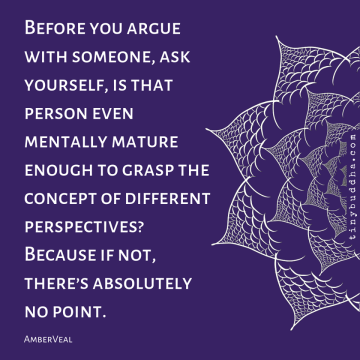 We must ask ourselves why?, when we cannot see our own selfishness in refusing to help alleviate the myriad of problems we face globally, from homelessness, to inequality, and the plight of immigrants and refugees. We need to stop giving in to a negative desire to prevent the placement of even so much as a Band-Aid on the gaping, oozing wounds of the planet’s most vulnerable.
 What actually happens when we demand perfection before we will attempt to aid, is that we shut down ALL aid being given. And by demanding that we wait until there is a free, politically correct, universal remedy for climate change and the control of carbon, we doom our country and our planet to doing absolutely nothing to help ourselves, leaving our kids and grandkids to a future with neither clean air nor water.
 Remember when we were all livid over the attack on actor Jussie Smollette, a few weeks ago? Remember how we all leapt to his defence, instantly believing his version of the story, and how we were furious that the police were not taking it as seriously as we thought they should because … well … this looked very like a racist attack, triggered by Trump supporters?
 Once upon a time, people would read a newspaper, or watch a news program on television, and then discuss the events of the day. Not everyone would agree, but that just meant that each side would attempt to sway the other side by showing facts, statistics, photographs, or charts from reputable sources, to support their beliefs.

 It’s been an interesting week all around. On Thursday, I heard an unearthly yowl coming from the front yard, and raced out to see that the psycho kitty I call BlackAndWhiteCat had pinned Lord Farlsworth against the fence. The Lord is a big boy, a twenty-pounder, but he’s a lover, not a fighter.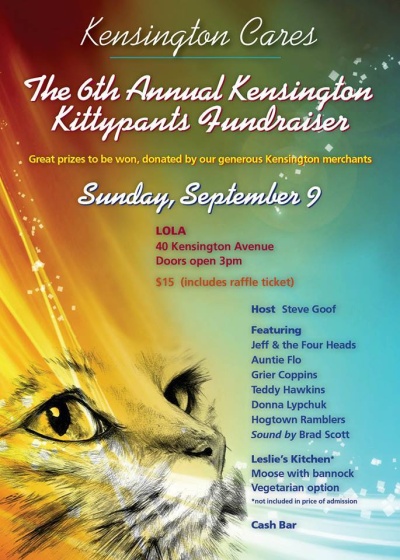



 But I’ve got to question the Messiah complex of the person who thinks that their presence is somehow slowing down the worst possible horrors Trump would unleash on the world without these guard rails.
 Cats, kittens, dogs, puppies, birds, horses, hedgehogs … you name it. The supply of animal pictures seems to be limitless. And nothing can draw an “awww” out of even the most hardened grouch’s mouth quicker than the sight of a tiny, helpless, pink-mouthed baby anything. We are helpless before their innocent charms.
 Silly, happy songs like “Me and You and a Dog Named Boo” (Lobo), Cat Stevens’ “I Love My Dog,” and “Me and My Arrow” (from Harry Nilsson‘s wonderful musical, The Point) celebrate the childlike wonder and friendship that sharing life with a beloved partner – who just happens to have four feet and a tail – can be. I’m constantly finding myself singing Jane Siberry’s “Everything Reminds Me of My Dog,” because I can so relate. “And if you remind me of my dog, we’ll probably get along, little doggy, get along, get along, little doggy.”
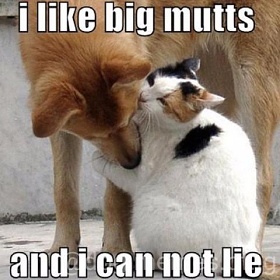 No genre is immune to the call of the wild. In 1968, Johnny Cash’s historic album “At Folsom Prison” contained the novelty song “Egg Sucking Dog.” Pseudo-Spanish cats have the stubble faced “El Gato Volador” to look up to. We all dance to our pet’s tunes.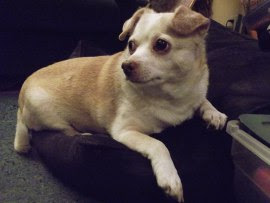


 frustratedboomers