
“Money – get back. I’m all right Jack. Keep your hands off my stack”
Inequality and economic distress – these are the biggest crisis’s our societies struggle with today.
It’s helpful to understand how we got here. We were conned, by some of the best conmen of all time. It took a concerted effort, and a lot of wrangling and wheeler dealing, but in a surprisingly quick and definitely hostile takeover, our 12,000 year old Agrarian Society was overthrown by a small group of people working hand in glove – the wealthy, the church, and the governments – who ushered in the Industrial Revolution somewhere around 1760.
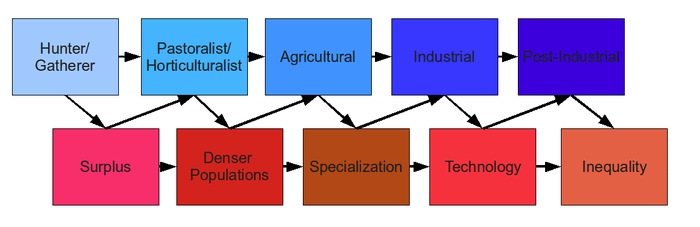
Prior to that time, we’d peaceably lived alongside our crops and livestock, content to track our days with the movement of the sun and the changing of the seasons. We gave no thought to wages, earnings, salaries. Life was not always easy, but for most people, it was simple and understandable, from birth to death.
With the introduction of industrialization, all of that changed. Along came machines, and factories, and overseers, and owners who needed to make certain that the wheels of the machines were kept moving and well oiled. In order to do so, changes had to be made to the lifestyles of workers – the ‘cogs’ necessary to keep the machines – and the economic engine – working smoothly.
 People had to learn a whole new way of life. They had to wake up and be somewhere for a set time, take their meals when a work break was called, and learn to use the bathroom only when their boss thought it appropriate. Decisions on what days should be honoured, for personal or religious reasons, left their hands, and became the prerogative of the owners. All of these changes ensured that there would be work for doctors, psychologists and life coaches for years to come.
Instead of taking care of their own homes and families, workers were made to believe that the only way they’d be happy would be if they earned a wage that increased with their loyalty to the firm. With no health and safety or child labour laws in effect, many families threw their lives, and that of their children’s’, into the machine.
What people could ‘earn’ in a week mattered more than before, because they were no longer tending to their farms and live stock .. now they needed to ‘make a living’ in order to pay for those things which they’d primarily provided for themselves before.
 And the churches played their part as well, by making the concept of work ‘holy in god’s eyes.’ The vaunted work ethic, that became synonymous with virtue, never applied equally to the families of the wealthy, who instead lived lives of ease and indolence, catered to by those who now needed to provide a livelihood for themselves, or their families.
The churches were richly rewarded by governments for their place in manipulating workers’ minds, generally by being made exempt from costly taxation.
(This distinction is why the ‘separation of church and state’ is such an important principle of a true democracy, since governments, often indistinguishable from business, know full well that having religion on your side can ease through a lot of concepts that the masses might not swallow if it just came from a government or a business.)
The Agrarian Society was overtaken by capitalism, when the existing powers – those with capital, religion, and later, governments built around capitalism – made it seem that capitalism was the natural culmination of a human inclination to buy and sell. In fact, capitalism simply replaced the agrarian age with it’s own requirements.
The ‘job creators‘ were deified, while the actual workers were continually judged as to worthiness. And the worthless were ruthlessly cast aside. A new caste system emerged, defined primarily by wealth, and what wealth could buy, be it more education for their own children, more factories, or more funds with which to persuade governments to make laws protecting the continued acquisition of wealth by those who least needed that protection.
 Workers were told that it was only by working hard that they would be proven virtuous, and achieve their just rewards. They were told that they needed to be independent, and ask for no handouts or help from those already successful, but instead that they must forge a righteous path to their own pinnacle of success. They needed to be daring and adventurous, and carve a path to the top, letting no person or soppy sentiment impede their progress.
In time, businesses began to be the unspoken, but overriding, partners of government. Laws and rules, better for businesses than for the masses who elected government, were made palatable by a constant drip of ‘patriotic’ economic theories that always landed firmly on the side of the owner class, rather than the worker class.
“Money, so they say, is the root of all evil today.
But if you ask for a rise, it’s no surprise that they’re giving none away”
“It’s the economy, stupid,” was the rallying cry that allowed businesses to run roughshod over those who toiled in the businesses of the owner class. Inequality grew and grew, and as the world careened from the Great Depression to the Great Recession of 2008, the wealthy moved to the head of the table, while those who did the actual work, were told they had to settle for the crumbs that fell from the tables of the rich and powerful.
 Economic theories that favoured the already wealthy, like the ‘trickle down effect,’ or the tax scam bill recently forced upon the United States, were put into practice by governments who knew very well that the wealth would not only stay where it was, but increase the holdings of the wealthy, at the expense of the middle class.
The US Supreme Court’s decision to define corporations as people just sealed the deal that had been in play for generations – the corporations were now able to seat the government they had always wanted; one run by business and for business, rather than by democracy or the rule of law.
Now, it could be argued that civilization grew exponentially and in a positive fashion, because of this Revolution. It is what we’ve been told was the way it had to be, for the planet to move ahead.
But in every advancement, there is the seed of it’s own destruction. Before factories were built, or mines dug, no one died in either one. Before trains were invented, there were no train wrecks. Before there were cars, no one had ever been run over by an automobile. And before there was capitalism, there was an agrarian society that worked very well on many levels. Not always, and not for all .. but I think the same could be said for capitalism.
As long as the backs and hands and eyes of workers were necessary, capitalism chugged along rather nicely. As the years passed, the workers and owners struggled for their places and for a more equitable pay structure, but workers remained the backbone of the economy. The middle class defined the country.
But then, along came a new technology, one based on information. The need for unskilled workers began to fall, as the need for a new skill set rose. Many of those who found themselves displaced by new technologies simply refused to translate their abilities to what society now demanded, and they, and their jobs fell by the wayside.
 Moving forward into the twenty-first century, those who nostalgically remembered a Golden Age where every one who wanted a job, could find a job, were increasingly threatened by a world where their backs and hands and eyes meant little to the owner class. Even worse, the service industry, once an important part of greasing the wheels of the economy, was increasingly threatened with automation.

And in fact, newer, cheaper technology was intimidating many other professions, including the 1.7 million truck driving jobs that looked primed to be replaced by self driving vehicles. Not to mention the array of jobs that could be better and more cheaply handled by computers, like highly paid research jobs in legal and medical professions.
While the Agrarian Society had spanned 12,000 years, the Industrial Revolution lasted only about 150 years, before being replaced by the Information Age, which began roughly around 1945, and which we’re now exiting as we enter a new Post-Industrial Age.
So what does this mean to us, we who have to live in this Brave New World? Well, if you’ve been following the social media surrounding the January 1st minimum wage increase in Ontario, and the outrage and pushback by service industries who will be impacted by that increase … a whole heck of a lot.
In Coburg, Ontario, the billionaire heirs to the Tim Horton coffee chain immediately issued an edict to their minimum wage employees, decreeing that, from then on, their lunch breaks would be unpaid, they would be expected to pay a larger portion of government mandated benefits, and that they would lose personal benefits granted prior to the increase. The workers were informed that they would have to sign this new agreement, or forfeit their jobs.
 Predictably, the internet went mad. Arguments were made for both sides of the dispute, most of whom wanted to send a strong message to the heirs and the coffee chain that they would not have government regulations manipulated to suit business. It is a tribute to our sense of justice that most Canadians found the Joyce/Horton’s highhanded demands a bridge too far.
But this wage increase, coming after years of employees being asked to tighten their own belts, for the sake of the economy, and to keep their jobs, coupled with the freeze of the minimum wage since 2007, is too little, too late.
The cries from the fiscally conservative, that this increase will decimate employment in minimum wage jobs – is hysterical and completely misses the larger point.
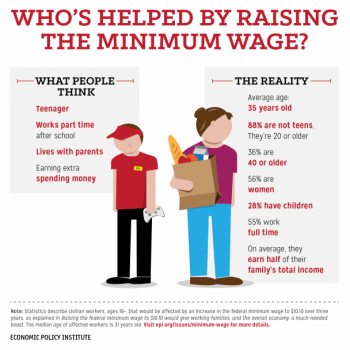 Employees have been treated as little more than inconveniences for decades. Beginning with the corporate raiders of the eighties, who slashed and burned the employee rosters of major corporations in order to enrich stock holders and investors, followed by the well-intentioned, but ultimately cruel hobbling of staff who were asked to eschew wage raises and to double up their efforts as staff numbers diminished, employees were always asked to minimize their own needs in order to further the economic needs of those for whom they toiled.
The economic crisis that collapsed the Greek economy was going on in North America as well, but our governments propped up failing businesses in the name of saving the economy, despite this coming at the expense of the workers. When businesses were told to tighten their economic belts, it was the workers who got smaller trousers, and less money in their pockets, or were dismissed, while upper management and stock holders incomes soared astronomically.
The austerity mentality that decimated the well paying jobs and sent many older workers home years before a well deserved retirement, had created an economy that saw, not value in the workforce, but a sea of gaping maws.
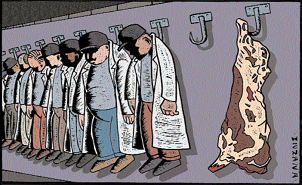 What had begun as a need for willing workers was now becoming an awareness of a glut of workers that wanted the jobs that paid for the basic needs of food, shelter and medical care when they were ill or old.
And when the big bosses looked around, they realized they no longer had the jobs to give them.
Those in power look at the conflicting and conflicted attitudes of the working class, and wonder how they will control the peoples’ needs, and how they can keep the people from recognizing that their needs have become a burden on the amassing of wealth by a very small percentage of the population. The workers have become a liability.
Capitalism is about supply and demand. The workers that were once valuable commodities are now in an oversupply and under demand position, as machinery replaces their roles.
The increase to the minimum wage was a paltry $2.40 an hour, but it might as well have been a rise to $50 an hour, or $100 an hour, because, as each year goes by, our oversupply of workers will increase, and the amount of jobs available will decrease. This long awaited wage hike will not matter in a very near future where most jobs have disappeared to technology.
We are engaged in a sound and fury that conceals the real basis of our fear and anger – we are many, but what is available to us is little. Today we fight for the staff of Tim Horton’s but tomorrow, we may be fighting for our own jobs and lives.
“Look, ” the stern faced keepers of the public purse tell us, “we need to give more money to the ‘job creators,’ so that they can make the jobs that will make you happy. In exchange, we’re going to have to take away the social safety net. That seems fair to us.”
But the job creators always had the trillions of dollars necessary to create the jobs, either in their bank accounts or socked away in some tax haven. They just realized, a decade ago, that there was no reason to spend their own money to do so. They outsource the lowest paid jobs overseas, and patiently await the automation that will rid them of most other jobs.
 In times like this, we have to understand that fighting for the minimum wage of some not very desirable jobs is just one very small part of a problem that can only escalate. There are few solutions to that bigger problem.
So, despite our long term stakes and investment in the arc of capitalism that began somewhere around 1760, and that we’ve built with our own toil and sweat, what we should be contemplating is … what will be done with us when the need for our backs, our hands and our eyes no longer exists?
Can we count on those who hold wealth and power to provide some sort of Universal Basic Income? Or are our days numbered, as our value to ‘the machine’ dwindles down?
I’m just hoping our future wasn’t prophesied in the 1973 post-apocalyptic science fiction thriller, Soylent Green.
(that’s a joke! maybe … )
 Those three weeks fly by. The holidays just aren’t the same since my mum and gram died in 1992. Gram, who had hoped, but didn’t quite get the chance to celebrate her hundredth birthday, always had the gravitas and the gravy, along with the roast beef and Yorkshire pudding, to guarantee that our scattered family would be gathering around her for the holidays.
 In the last several years we’ve lost loved ones, downsized, moved, and had less and less space or time for frivolity. Preparing for the holidays has been less about ‘joy to the world’ and more about ‘just getting through the holidays.” And that’s sad. It’s not so much about aging, as it is about the absent friends, and the growing up and out of our kids and grandkids. The frantic lives we all lead in the pursuit of romance, careers, and the necessary amenities to keep us all in one piece don’t help either. Our non-stop gyrations may be necessary – but they are not at all conducive to keeping families as close knit as generations before us.
 Yay! It’s Tuba Fest! I couldn’t find which schools were participating this year, but just knowing that somewhere out there, someone’s tuning up a tuba, just made me smile.
 Ah, the holidays … the holidaze. However you celebrate the season, I wish you peace, joy, somewhere warm to cuddle with loved ones, and sweet dreams for the new year. If you haven’t a family, it’s never too late to make a new one, with like-minded, good-hearted people. And we’re lucky to live in a city so rife with choice.

 In the Spring of 2013, a nascent concept, based on the visual memory of a 1920’s photo of a group of Harlem musicians, started to tickle Arlene’s fancy. Would it be possible to connect with others in her community, to gather a group of like minds to share ideas, music, and food, and blend those voices into something stage worthy? she wondered. But that first impulse remained undercover until late 2015.
 “Fly” was written right after the presidential election. “‘Fly’ is kind of at the crux of the album, ” Saliers explains. “A murmuration of birds is practically inexplicable to scientists, but it’s a very powerful thing to watch, and I see it happening in our country in an amazing way right now. From Black Lives Matter to the Women’s March to Standing Rock, there are all these grassroots movements starting to coalesce, and I take great comfort in the way people are instinctually moving together to fight injustice and hate.”
 Even in the cases that were adjudicated in the courts, the female accuser would most often be slandered and humiliated, and the powerful male would walk away, legally unimpeded.
 Or cast your mind back to the 2016 Jian Ghomeshi trial. Like Miramax‘s Harvey Weinstein, Ghomeshi’s penchant for sexual harassment was legendary, an ‘open secret’ to most women in the Toronto media biz. Still, Ghomeshi walked, although his reputation was badly smeared.
 I will not take a side on the LeeAnn Tweeden/Al Franken situation; there are simply too many reports, photos and timelines around the event to consider it anything but suspect.
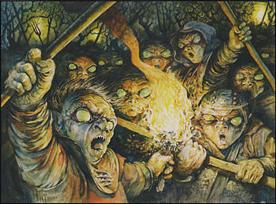
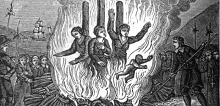 I don’t care how ‘woke’ you are, it’s time to take it down a notch, because right now, this is all starting to look and sound a lot like the Salem Witch trials .. a whole lot of hysteria, self-flagellation, and possibly politically motivated accusations. And when it’s over .. just a lot of red, shamed faces, and the dead bodies of the innocent to show for it all.
 There have always been bad people accused of bad actions who simply chose to deny the claims. Trump did it last year during his run for President. Roy Moore is doing it now. Men like those are the sort that will continue to deny what they have done, even in the face of audio and video evidence.
 It ain’t a level playing field. Don’t pretend that it is.
 Luckily, it is not up to me or to you to figure out the answer to every trouble that lies before us. But I firmly contend that there are solutions for every problem. If we cannot find the answer, it’s not that there is no answer, it’s that the right person has not happened along with the missing piece of the puzzle. I believe that, because I have seen far too many people give up on a struggle without understanding that they are not always the owner of the solution. In fact, that sort of stance inevitably leads to bruised egos, and nothing of any substance being done about the dilemma.
 Too much news, too many words, too many ideas. And too many people willing to tell us how we should interpret each of them. And when your brain hurts from trying to process everything going on around you, too easy to make decisions and take actions that stem from that part of our brain that never evolved past the lizard stage.
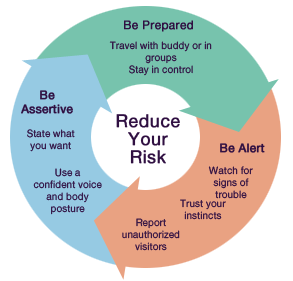 I don’t know. I would like to think that society has evolved enough to realize that there is nothing equitable about having half of the planet essentially living in a chronic state of fear that their bodies will be used by anyone who wants to take it. But then again, I’d think that Americans would be smart enough to realize that gun control would protect them from being killed by mentally ill mass murderers.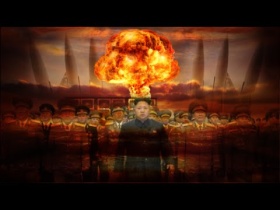

 the constitution .. or the people. The Nuclear Clock edges closer to midnight, and what we’re hoping is dawn’s early light might just be the glare off a pyrocumulus mushroom shaped cloud.
 It is a stunning example of someone who could do so much good for the deluded populace who eagerly put he and the Republican Party into power, consistently managing to stop short of ever benefiting or enriching anyone but himself. His specialty is senseless destruction in the pursuit of profit, and the ripping away of any semblance of a social safety net or security that the people may have enjoyed. His belief is that the people he rules over – no matter how young, old, vulnerable or infirm – deserve nothing unearned.
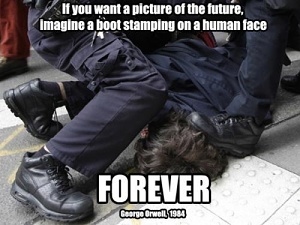 We’ve seen evil morons force their will upon the vulnerable before. Trump’s
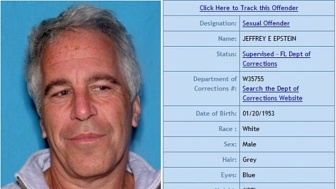 Or billionaire financier Jeffrey Epstein, the child molesting ringleader of a sexual human trafficking ring, who was allowed to freely leave jail during the day and only come back to overnight at his Palm Beach Country jail for the mere thirteen months he served of an eighteen month sentence in 2008. Two felony counts of soliciting underage victims for sex would get the average person twenty years in federal prison. But not if you have money and power.
 And, lord help me, I don’t see it ending anytime soon.
 One of the saddest things I’ve read in recent days was on my own Facebook page, in a thread where the discussion of Weinstein’s abuse of power was inevitably compared to Trump’s, with a meme that quoted Trump’s own words, spoken on that Hollywood Access tape, before … BEFORE .. the election that saw him crowned King of America.

 Trip and jitters aside, I still found the time on Friday afternoon to drop in on Greg Godovitz at El Mocambo‘s pop up shop, Prohibition (66 Kensington Avenue,) where I bought a couple of rocking t-shirts for my western family. Then it was off to the media launch at Tom’s Place, (190 Baldwin) where local luminaries, including a texting Mayor John Tory, the dashing Richard Flohill, and chanteuses Molly Johnson and Genevieve Marentette, along with Celine Peterson (daughter of Oscar) and a host of others, gathered to celebrate the beginning of the fest.
 To my hippie ears, his new CD has a sort of new age-y updated feel of Mike Oldfield‘s Tubular Bells, played on this fascinating Persian instrument.
 Toronto’s favourite son and perennial Energizer bunny, Danny Marks, will be playing at the Hotbox Cafe (204 Augusta) from 1:00-2:00 pm, ($12. at the door) and then at Prohibition from 4:00-6:00 pm (Pay what you can.)


 Digital photography killed most of the industries that provided material to those who preferred film. Cassettes replaced vinyl, and then were themselves replaced by CDs.
 Early adapters eagerly coughed up the cost of a new car to have one of the ungainly machines in their home. But for the average consumer, it would be a good twenty years before a home computer became commonplace.
 In fact, this access to knowledge has become so universally accepted that the United Nations have now decreed internet access human right, up there beside food, water, and freedom of speech.
 And the computer language that allows us to do our banking online is always under attack by those who would use computer made trojans and viruses as a way to steal our money and personal information.
 world that doesn’t resemble what they believe to have been better times, and who would tear down all that has gone before that doesn’t fit into their memories, be it governance or infrastructure, are naive, and dangerous.
 The Ex holds less appeal for me every year. I’m still mourning the loss of the Alpine Way, and my ears still keen to hear the dulcet tones of the barker demanding that we come to see the “Gorilla Gorilla Gorilla GURL!”
 What did we do all day, I asked myself recently. How did we fill all of the hours when we weren’t minding the brat, fishing, picking berries, tending the smoky fire, or reading soggy comic books and True Romance magazines? Mostly we talked, for hours at a time, about our dreams, hopes, and fears. Some days, I’d make Marianne laugh so hard that she’d pee her pants. If I was in a mood, I’d keep it up until her week’s worth of undies were all strung up on nearby branches.
 king seat belts! And off we’d go, the gang of us, with maybe a dog, and a musical instrument or two for company, headlong down the steep road, high as kites, heading for the dam so that we could continue the revelry, at least until the purple micro dots wore off and/or the sun came up.
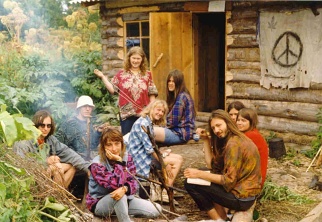 I wonder what ever happened to Donna, the dreamy blue eyed beauty that loved the Monkees as much as I did, but chose a hardscrabble life mucking out barns instead, determined to stand by her longhaired, drug dealing, man. Is she still living in rural Canada or America, amidst macrame pot holders and peace symbols? Or did she wake up one morning and realize in a horror stricken panic that she could have been and done anything she wanted to, had she chosen differently?
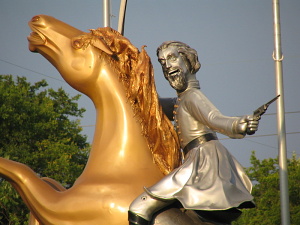 Because, it is implied, even if the art is not Louvre-worthy, that people of colour, and the inner city poor, should at least have the opportunity to feast their eyes upon such statuary. That the monument honours a man in support of slavery and a slave trade that treated the park’s attendees ancestors as human cattle, is a mere peccadillo in their eyes.
 Make no mistake; the decision to remove the statue was a democratic decision. The reasoning behind the removal was sound, fiscally conservative, and sensitive to ALL of the residents of the city, not just those who wanted it to remain.
 frustratedboomers