Happy 100th birthday to a really dumb concept.
We can thank the railroad companies of the world for the entire idea of time zones, which were basically established in the late 19th century in order to get the trains to run on some sort of consistent time. Prior to that, people just looked up at the sun to know what time it was. And at night, it was dark, so they didn’t need much more than a vague idea of the time. 
First time zones, and then along came the concept of standard time, and suddenly we needed alarm clocks in order to get to school or work Oh yeah, the Industrial Age was a slave driver.
And here’s the thing – the railroads were such an enormous economic engine, all around the planet, that the replacement of sun time with standard time was enacted with no legislative backing, and very little public resistance.
 When it came time to mess around with the time zones we’d landed up with, proponents of a ‘daylight saving’ bank pushed those who believed moving our clocks ahead by an hour during the months with the most sunshine, would reduce energy consumption and encourage people to get out and do things outdoors.
Well, they were partly right.
Moving the clocks ahead DID influence our behaviour. When the days are longer, later sunsets dramatically increase participation in after school sports programs, and increase paid attendance at pro sports events. Golf ball sales in 1918 increased by 20 percent. In fact, the entire golf industry was well served by daylight saving, with each DST month worth mega millions in additional sales and greens fees.
But energy savings? Not so much. In fact, studies have proven that North Americans use more domestic electricity when they are in daylight saving mode than when they are out. And, yes, they’re going to the park at night, but they’re driving there, so there’s no decrease in gasoline consumption.
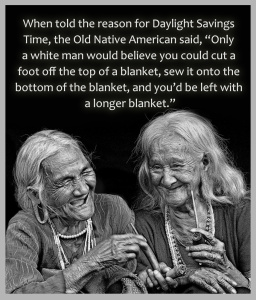 We also didn’t have a lot of info, back then, on what messing around with our brain’s sense of time could do, and how changes impacting our sleep could do real harm to our society. We certainly know a lot more about that now.
It was on March 18, 1918 that American President Woodrow Wilson signed the Calder Act, requiring Americans to set their clocks to standard time. And less than two weeks later, on March 31, 1918, the nation’s first experiment with daylight saving began.
And was repealed within a year.
However, many of the larger American cities, including New York City, were setting their own daylight saving policies, apparently without requiring or asking permission of their government to do so. In 1920, it appears that it was the Chamber of Commerce that decided these matters.
How you gonna keep ’em down on the farm, after they’ve seen an increase in sales of everything from golf balls to summer fashion? By 1965, pretty much all of the states had a daylight saving program in effect. And have continued to practice that ‘savings’ ever since.
” There was a time US municipalities could choose whether or not to observe daylight saving. Then, as technology integrated different local economies, differing time changes and zones caused chaos and confusion. In 1966, Congress passed the Uniform Time Act, which required whole states to fully commit to daylight saving.
States have the option of opting out, so long as the whole state stays on the same time. Arizona and Hawaii, for instance, don’t observe daylight saving. Florida is doing something different, in wishing to be on DST permanently, which requires congressional approval.”
Florida lawmakers are considering a “Sunshine Protection Act,” which would make daylight saving a year round reality.
By contrast, consider an experiment done in Queensland, Australia. After a three year trial of pushing their clocks ahead one hour during the summer months, the people had a referendum on the question, “Are you in favour of daylight savings?”
While there were many who argued that later daylight hours in the summer would be beneficial for both economic and public health, in the end the voters narrowly chose to abandon the practice, 54.5% to 45.5%.
The plain truth about daylight saving is that it was never about energy savings, health, or giving farmers an extra hour of light to work the farm.
It was always about corporations lobbying to sell more stuff. There are no energy savings. But we spend more money in those long summer evenings. The big winners during daylight saving are the candy lobby, the barbecue lobby, and the golf ball lobby.
Fore!
Meanwhile, sleep deprivation experiments run on healthy people prove that less sleep leads to slower reaction times and an inability to handle tasks that require concentration.
“There’s some literature showing that there are increases in accidents, workplace, motor-vehicle accidents, and the severity of them is greater following the time change. And there research showing that even a small amount of sleep restriction, an hour or two, can have an impact on your ability to drive, and things like that. “
There’s a movement going on that wants to end the daylight saving programs all over the U.S. Lives are a lot more flexible now, and we tend to set our own schedules, morphing the hours we spend at work and play to fit what works for ourselves and our particular group of friends. We don’t do ‘event TV,’ anymore, we watch it when we feel like it. Our world is 24/7.
So, if we are no longer slaves to ‘official time,’ why change it twice a year? The Monday after the clock springs forward is notorious for having more car accidents, heart attacks, and the general grumpiness of sleepy people. Time to stop that artificial construct, and maybe save a few pedestrians lives …
******************************************************
Being apolitical, not having the need to follow the politics of your own country and others, is a privilege. It may not seem so, but the very fact that your life and identity does not hinge on the whims and laws of those in power, is a very big privilege denied to many.
Ai WeiWei, a Chinese artist and political activist, has lead an interesting life, most often at odds with authorities. His latest project is the documentary, Human Flow.
“Human Flow, an epic film journey led by the internationally renowned artist Ai Weiwei, gives a powerful visual expression to this massive human migration. The documentary elucidates both the staggering scale of the refugee crisis and its profoundly personal human impact.”
The trailer images made me weep. Even as countries harden their borders and hearts, the stream of refugees continues. This film should upset you, and make you think. It is only by the grace of your current place and status that you are not one of those fleeing,
*********************************

And now, a delightful palate cleanser! I just discovered this wildly entertaining family, lead by John Wilhelm, an IT Director at a Swiss University.

The family – mother, father, three daughters and a son – are the subjects of Wilhelm’s surreal and imaginative photo manipulations.

It is a world of fantasy and imagination …

“Due to the fact that it’s more an obsession than plain passion I call myself a photoholic.” John Wilhelm.
Discover more of his wonderful art on Facebook at tuasmalou.ch, or visit his website for even more amazing images! http://www.johnwilhelm.ch/

 We can plan for our futures, and keep our fingers crossed that we get from cradle to grave without too many inconveniences, but we have to acknowledge the truth – the quo rarely stays statused.
 That kind of thinking seems foreign and weak to those that have made their fortunes, and risen to power, with a dog eat dog attitude that screams, “ME FIRST! ME ALWAYS!”
 They’ve watched in disbelief as America’s president, with all of the class of a cornered rabid dog, exhibits a cruelty on a Grand Guignol scale, with no perceived opponent too big or too small to publicly crush and humiliate. He exhibits not a shred of compassion, no ability to feel or even acknowledge the pain of others, and considers his brutish, meaningless, contempt and cruelty for all of his subjects to be a feature, not a bug, of his reign.
 They’ve watched as this normalization of the abnormal extends to what would appear to be treason – an allegiance to a foreign power – even as mounting and incontrovertible evidence proves that Russia is attacking American democracy. His refusal to impose sanctions nearly unanimously agreed upon by the House and Senate – hell, his refusal to so much as mildly rebuke the Russian intrusions – point to a president that is severely compromised, and should be removed from power.
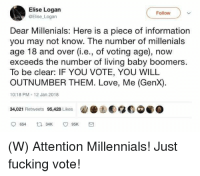 In the last election, 35% of Americans were willfully blind to the lack of ethics and morality, never mind good business practices, that were so evident, and they gleefully placed their X next to Trump’s name.
 A friend of mine is looking forward to retirement, after being with the same company for nearly 40 years. She’s been there through the formative years, and the technological shifts that overtook them in the past three decades. Since she’s in Human Resources, she’s privy to information that was never committed to either paper or computer files.
 Could there have been a #MeToo movement before 2017? The Womens March? A #BoycottNRA? What has changed?
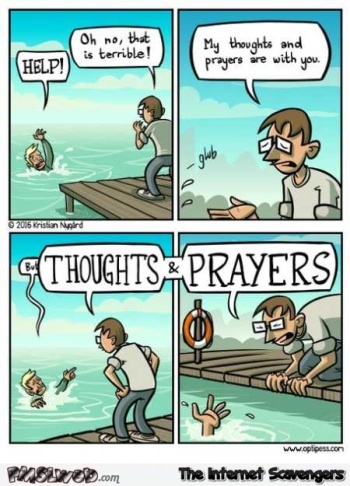 I’ll admit that I greeted the latest shooting in Florida with grief, anger and cynicism. These murders, combined with the mealy mouthed offerings of ‘thoughts and prayers‘ rather than actually taking action to prevent further murders, drove me to despair.
 Companies that have now severed ties to the NRA under the #BoycottNRA hashtag, include the nation’s largest privately owned bank, First National Bank of Omaha, which will no longer offer an NRA branded Visa card. Other companies, including car rental firms Hertz, Entreprise, Alama, Avis, Budget and National, soon followed suit, while the Allied and North American Van lines pulled their perks as well. Software giant Symantec, MetLife Auto & Home, home security company SimpliSafe, Teladoc, Chubb, HotelPlanner.com, United and Delta Airlines, and even Vinesse wines, which operates the “official wine club of the NRA,” have joined in the protest.
 All of life is a flow of non-linear changes, threads in a tapestry that is ever changing and unpredictable. Our challenge must be to learn how to confront and respond to new life transitions, no matter how unpredictable they may be.

 Both can be hoarded, without much censure. Many look at the very wealthy or very powerful, and envy their hoards. Even if the hoards consist of ill-gotten, or at the very least, suspicious, gains, morality ceases to matter in the face of a society that has elevated the acquisition of wealth over all other talents or abilities.
 Music’s been tainted with this obsession. I can’t listen to most of the songs that extol mindless consumerism and waste of resources. And I can’t watch videos that equate the humiliation of others, professionally or sexually, with an enviable use of power. It is abuse, condoned and even applauded, by the easily entertained.
 Yes, we are a confused society. And thus – ripe for those who would take advantage of this seesawing state of mind by using the disorder to mould and shape the thoughts and opinions of those who gag at the glut.
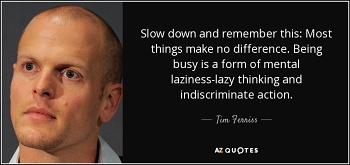
 A few years back I realized how easily we fob off our inattention. When we stub our toes, or fail at a task, it’s human nature to seek a culprit to blame our error upon. Damn! we say, it’s not my fault! It was the stair’s fault for not being perfectly even, the bartender over served me, and that noise I heard made me lose focus! Once I had decided to take a mental step back whenever my knee-jerk excuses came into play, I realized that, almost inevitably, the misstep or blunder had to do with my own lack of attention and/or mental laziness.
 Some days, our lives feel too short, while on other days, it feels like an endless slog. The reality is somewhere in the middle. But we do ourselves no favours when we try to game the system, excuse our own foibles while pillorying other people’s errors, and live a life of self-deception and lies.
 When I say that I am a voracious reader, I’m not exaggerating. In any given week I will get through about seven books, a slew of daily newspapers, and a bunch of junky magazines I drag home from the supermarket because I feel too guilty to just read them while standing in line to pay for my groceries.
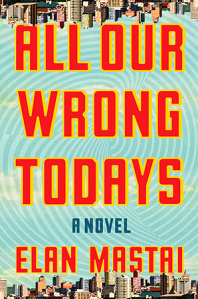 One fascinating book that still has real estate in my brain is a terrific new novel called, “All Our Wrong Todays, ” by Elan Mastai, a Canadian screenwriter who lives in Toronto. Like every sci-fi movie or novel, the book presents another vision of what our future could or should look like.
 While this book presents a fairly utopian future (that we j-u-s-t missed … ) the public’s interest in dystopian literature has been on the rise for .. oh, nearly two years now. It’s simply not possible to deny that the current reality of America’s highly partisan politics was postulated many years ago. Sales of books like It Can’t Happen Here (Sinclair Lewis,) Brave New World (Aldous Huxley,) 1984 (George Orwell,) Ready Player One (Ernest Cline,) and The Handmaid’s Tale by Margaret Atwood have boomed with each new outrage and indignity unleashed in the United States.
 The best dystopian novels are about characters like ourselves, whom we can cheer on through the worst times, and mourn when they suffer losses. We want to see how people react in the face of a world they have to navigate despite the viciousness of nature gone mad, or of all-powerful despots and their evil minions. The survivors are the rebels, the quick-witted, those who manage to turn a horrific society into a place where they can simply live without fear, against all odds.
 It’s funny – way back in October or November of 2016, pre-election, I was a guest on Bill King‘s radio show, along with Jane Harbury and Bob Segarini. I was asked if I thought Trump would win the election, and found myself the only person who thought it very likely to happen. Like Cassandra of legend, my predictions elicited only scorn. But I could see it and feel it, and I knew the world was about to change dramatically.
 The sad truth is that the steady drip drip drip of horrific executive orders, ‘breaking news!‘ and the knowledge that the hands of the nuclear clock steadily move more surely to midnight, has already taken an enormous psychological toll on most thinking humans on the planet, leaving us more prone to mental and physical disorders.
 Winter’s dark at the best of times, and the sun was barely out. I could make out the shapes of the furniture, but overall, I was just hoping that the cats weren’t lurking in the hallway, waiting to trip me up.
 That’s when I started to think about how most things that happen in our life – for good or ill – are surprises, that come without warning. You can prepare … you can anticipate … but some things are still a surprise.
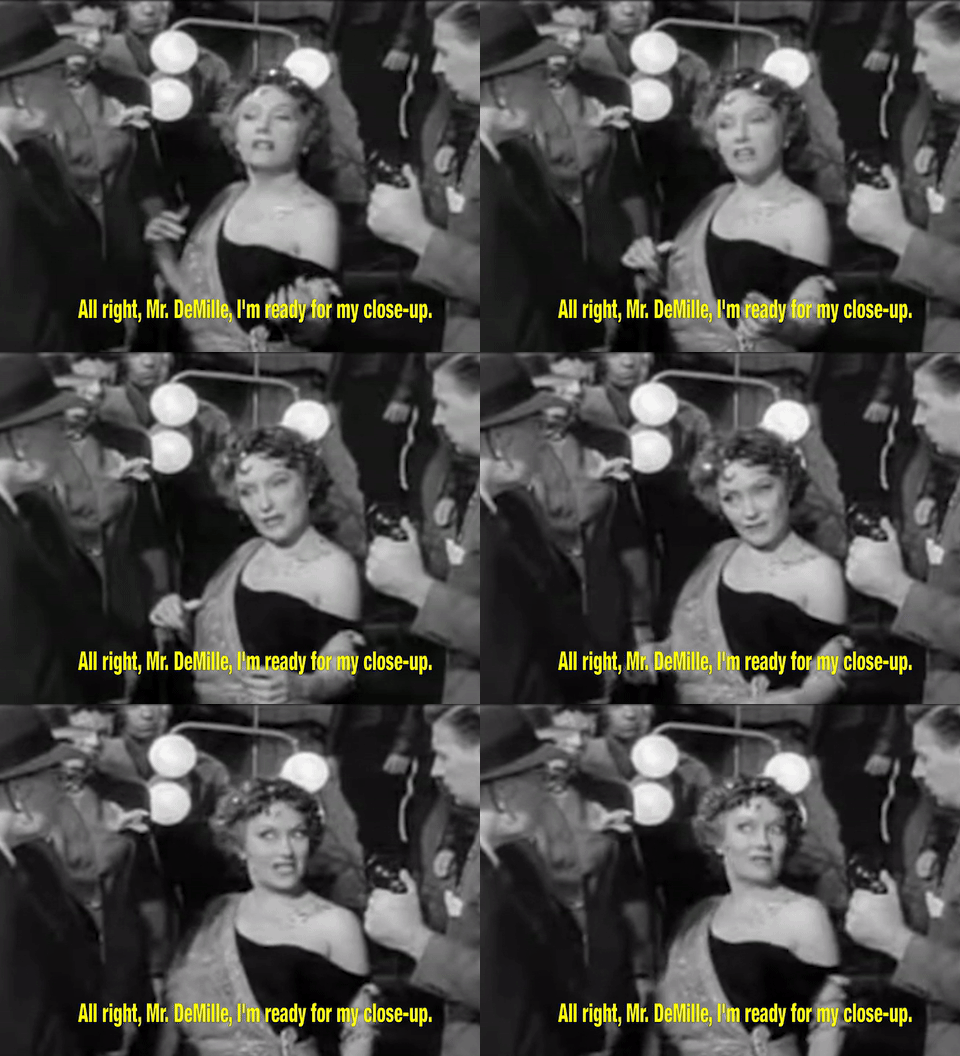 I’m one of those unfortunates that tries to be prepared for every eventuality. That is why my purse weighs 400 lbs. I never travel light; even a trip to the corner store finds me with hair and makeup for a cast of thousands at the ready.
 But it’s tricky. And it takes a faith in the future that many lose as they travel through life. If enough events that you perceive as good have lined your path, you will feel differently than someone who has encountered a lot of disappointing moments. It’s like a trust fall .. where you’re neither trusting nor trustworthy.
 The latest big thing in organizing philosophies is the darkly named Swedish Death Cleanse. It’s the process of cleaning house before you kick the bucket, rather than leaving the job to your loved ones.
 I didn’t feel the walls closing in when they were lined with books, but just having chotchkies lying around does me in. I’m actually getting to the point where I feel a little creeped out when I see pictures of a typically overstuffed living space. It feels fussy and frilly, and not in a good way.
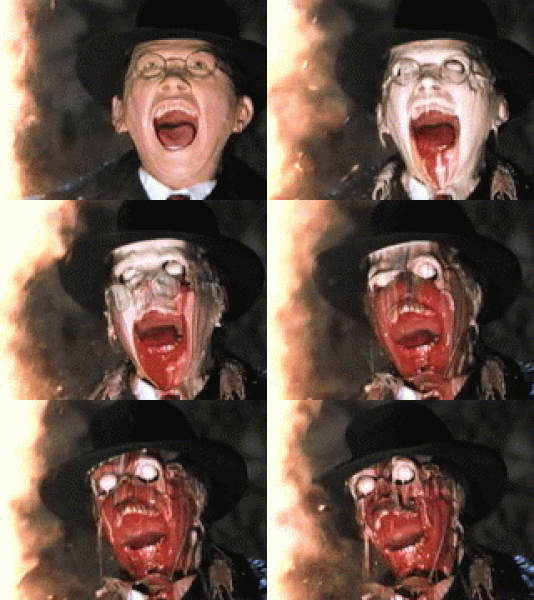 Prioritize the preservation of sentimental and family objects like old letters and photographs, but also keep a well-labelled ‘throw-away box’ for things that you can’t part with yet, but would like to keep away from prying eyes, like your collection of sex toys. Tape a note to the top of the box warning that opening the box will sentence the opener to death by face melting.
 Life is full of surprises; some good, some bad, but all unexpected. That’s what makes those unexpected moments a surprise.
 How gullible are consumers? Good marketing seems able to sell us anything, up to and including a president. So, I’d say we’re pretty darn gullible.
 This might explain why I hanker to sing the Swedish Chef blues. Bork Bork Bork!
 Caveat here, though, is that having a gene marker for a disease does not 100% confirm that you will get that disease, only that you are more likely to do so than others without that marker. You are at risk, but other factors – age, diet, exercise, medications, lifestyle choices – may have a stronger impact on whether or not you’ll succumb to the disease.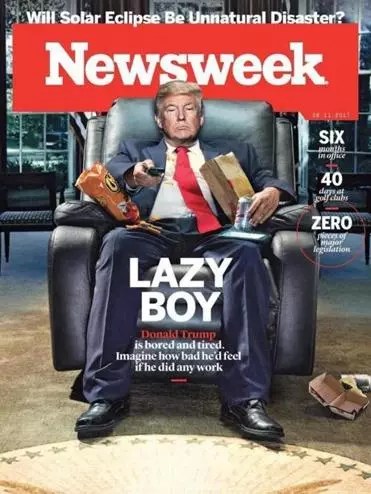

 Paying attention to our own physical and mental needs as we age should be a top priority for everyone – not just for our own good, but out of respect for those who will share those senior years with us.
 But it wasn’t until I began the interview process of the study that I realized how many workarounds I’d unconsciously adapted, in order to conceal the normal mental decline we all face during the aging process. I also began to notice how often I blamed circumstances or other people when I made an error, rather than recognizing that the error was my own fault.
 The study that I’m a part of requires confidentiality on the specifics, but I can say that it involves electrical and cognitive brain stimulation on a daily basis, and includes cognitive remediation (computer games) for an eight week period.
 (A good book on planning for retirement is one I read a few years back, by Canadian Ernie J. Zelinsky … How to Retire Happy, Wild and Free. It’s a great follow up to his previous book … The Joy of Not Working: 21st Century Edition – A Book for the Retired, Unemployed and Overworked. The focus of both books is on enjoying life and both encourage physical, emotional, and spiritual well-being and improvements.)
 It is tempting to ease up on our diets as we age, but it’s probably more important to be nutritionally wise as you age, than it is during the more physically active years. It’s not just about how much or little you eat, as it is what you’re eating. Reducing consumption of saturated fat and cholesterol from animal sources and of trans-fatty acids from partially hydrogenated vegetable oils, along with a concentration of foods high in the B vitamins can help lower your homocysteine levels, which are often linked to an increased risk of dementia. Eat your greens, and enjoy more grains.
 “Exercise is known for promoting both body and mind, with the elderly seeing especially great improvements. But it is not known which type of exercise is best for the elderly. To help address this, the traditional fitness group conducted mainly repetitive exercises like cycling or Nordic walking, while the dance group was challenged with something new each week.

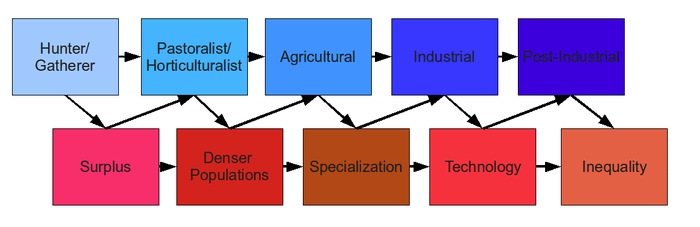
 People had to learn a whole new way of life. They had to wake up and be somewhere for a set time, take their meals when a work break was called, and learn to use the bathroom only when their boss thought it appropriate. Decisions on what days should be honoured, for personal or religious reasons, left their hands, and became the prerogative of the owners. All of these changes ensured that there would be work for doctors, psychologists and life coaches for years to come.
 And the churches played their part as well, by making the concept of work ‘holy in god’s eyes.’ The vaunted work ethic, that became synonymous with virtue, never applied equally to the families of the wealthy, who instead lived lives of ease and indolence, catered to by those who now needed to provide a livelihood for themselves, or their families.
 Workers were told that it was only by working hard that they would be proven virtuous, and achieve their just rewards. They were told that they needed to be independent, and ask for no handouts or help from those already successful, but instead that they must forge a righteous path to their own pinnacle of success. They needed to be daring and adventurous, and carve a path to the top, letting no person or soppy sentiment impede their progress.
 Economic theories that favoured the already wealthy, like the ‘trickle down effect,’ or the tax scam bill recently forced upon the United States, were put into practice by governments who knew very well that the wealth would not only stay where it was, but increase the holdings of the wealthy, at the expense of the middle class.
 Moving forward into the twenty-first century, those who nostalgically remembered a Golden Age where every one who wanted a job, could find a job, were increasingly threatened by a world where their backs and hands and eyes meant little to the owner class. Even worse, the service industry, once an important part of greasing the wheels of the economy, was increasingly threatened with automation.
 Predictably, the internet went mad. Arguments were made for both sides of the dispute, most of whom wanted to send a strong message to the heirs and the coffee chain that they would not have government regulations manipulated to suit business. It is a tribute to our sense of justice that most Canadians found the Joyce/Horton’s highhanded demands a bridge too far.
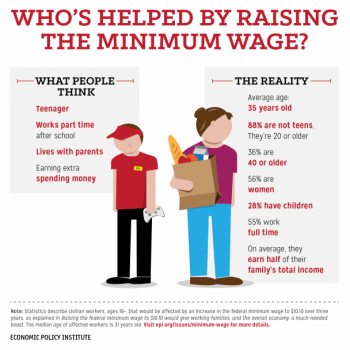 Employees have been treated as little more than inconveniences for decades. Beginning with the corporate raiders of the eighties, who slashed and burned the employee rosters of major corporations in order to enrich stock holders and investors, followed by the well-intentioned, but ultimately cruel hobbling of staff who were asked to eschew wage raises and to double up their efforts as staff numbers diminished, employees were always asked to minimize their own needs in order to further the economic needs of those for whom they toiled.
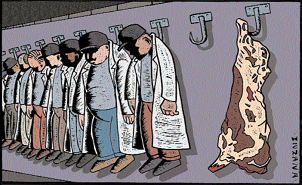 What had begun as a need for willing workers was now becoming an awareness of a glut of workers that wanted the jobs that paid for the basic needs of food, shelter and medical care when they were ill or old.
 In times like this, we have to understand that fighting for the minimum wage of some not very desirable jobs is just one very small part of a problem that can only escalate. There are few solutions to that bigger problem.
 We are driven by kindness and care, and empathy – the ability to understand and share the feelings and emotions of others. The quality is usually strongest in children, who can be almost clairvoyant in their ability to feel the pain of others, either human or animal. From a very early age, we can sense goodness and meanness in the intent of others, and even as babies, we instinctively dislike those who are cruel to others. Little children have yet to learn that most grownups are oblivious and indifferent to the feelings of animals. And many children, sadly, will grow up into adults who will, very often, be just as oblivious to the feelings of those who are different from themselves.
 Every tax payer in America will suffer, and I say ‘every taxpayer’ because the wealthy were already well ahead of most Americans in the non-paying of taxes. Even as the rhetoric on American taxation being ‘the highest in the world’ (it’s not) crescendoed, the wealthy and corporations snickered up their sleeves, knowing that their trusty accountants and willing elected officials had long ago resolved that little problem. Very rarely do the tax bills of the 1% exceed 1% – it’s more likely that they’ll be coasting on credits from past corporate ‘losses,’ government grants, and well established tax havens in other countries.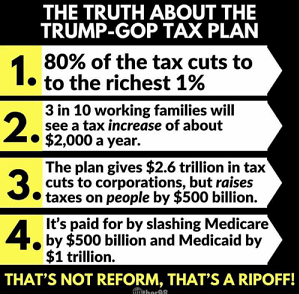
 Years of recession, of belt tightening, of cutting staff to the bone, have weakened respect for workers, and tested our own belief in the value of what we do. After all, if we had any importance, surely our jobs and wages would not be treated with such disdain and indifference! When we are no longer valued for what we bring to a company, when corporations would prefer to pay as little as they can get away with, rather than pay a minimum wage that would allow their workers to have a decent life, the very idea of the dignity of work loses meaning.
 In all religions, there is one rule above all others, and the only one that must be followed. It is always some variation on the Golden Rule … “Do unto others as you would have them do unto you.”
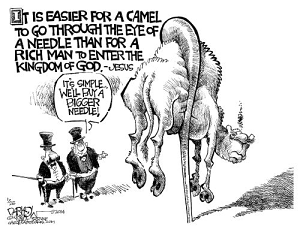 God DID hate those who wielded money and power like a weapon. Remember when he threw the money changers out of the Temple? Or that bit about the camel and the needle? Were you aware that the word “Gospel” literally means “Good News,” and that, at the time of this usage, had no religious feature, but instead meant ‘the forgiving of debt?’
 The essence of empathy is an understanding that we are all equal, and all deserving of love and compassion. When empathy is removed from business and politics, we are on a slippery slope to the collapse of an Empire.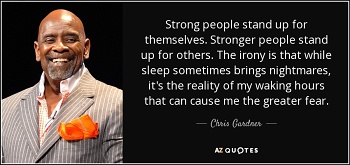

 frustratedboomers