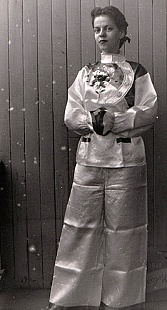
I wrote this column three years ago … tomorrow, it will be 24 years since Mary Theresa Donovan left me the lone survivor of my crazy little nuclear family.
I’ve done a little editing, and added and removed some pictures.
 I wish I could say that time heals all wounds. I know from experience that time softens the corners, but losing those you loved changes you, makes you different. A little more appreciative, perhaps, of those that remain, but always, always, vulnerable to those things that remind you of your loss. Some silly memories will make you smile; others will fill your eyes with tears.
I could, and probably should, write a book about her life, with it’s ups and downs, and the gallant courage she always showed. I am grateful for having had her as my mother.
******
It’s been 24 years since I lost my mum, and still there are days when I think, “Oh, I must tell Mum! She’d get such a kick out of hearing about that!” Then I remember that she’s gone, and it hurts all over again.
But I am lucky. I had a terrific mother, who was funny and smart and strong and she loved me, despite my failings. Even when I was at my most hateful, a rebel without a clue, Mum encouraged  me and found the good in my mutinous soul.
My mother was just always there, usually chasing after me. I wasn’t a clingy kid. You’d more likely find me way up at the top of a tree, or posing beside the mannequins on a revolving display stand, than hanging off her skirt. I was the kind of kid that kiddy leashes were made for; darting madly into crowds, racing towards excitement. I wasn’t a brat – that would not have been tolerated – but I wasn’t easy.
My sister Jodi and I got into scrapes all the time. Once, we thought it would be lovely to bring home lilacs for Mum. So we helped ourselves to armfuls of the flowers, oblivious to the fact that they belonged to a private school. When the caretaker spotted us and started yelling, we ran, with the flowers leaving a trail of petals behind us, up the street and up the stairs of our apartment building. Thrusting the shredded lilacs into my mum’s arms I said, “Hide us! He’s coming!”
How she kept a straight face when the caretaker arrived, having followed the trail right to our door, I’ll never know. As he ranted and raved about the desecration of the school’s trees, she calmly told him that her girls couldn’t have done it; they’d been home and in their rooms all night. Of course, we were scolded later, but also warned that, if we were going to pursue a life of crime, it might be an idea to hide our getaway route a little better.
Jodi developed juvenile diabetes at 12. Always frail, she now became angry at the world. Heading into her teenage years with the stigma of twice daily injections and a restricted diet, she seethed with rage, flailing out at the rest of us for being healthy. My mum was a tower of strength, keeping her in line with love and laughter. Jodi and I thrived on Mum’s ability to put a funny spin on even the worst tragedies. Our humor was dark at times, but there was always laughter, and always music.
I left Montreal in 1976, and within a year, both Jodi and Mum joined me in Toronto. For a while, we all lived in the same apartment building at 100 Roehampton, just floors apart, and when my Grandmother and Aunt Pat moved to Toronto as well, they took an apartment in the building behind ours. Our strength came not just from laughter, but from proximity.
When I was singing full time, Mum couldn’t have been more supportive. She wouldn’t let me lift a finger in the house, lest I break a nail, or be too tired to perform that night. She lived through the joy and heartbreak of my first two marriages, the birth of my daughter Cara, and later, Cara’s son Carter, and never passed judgment on the way I chose to live my life.
 After suffering a double stroke that left her partially paralyzed, she fought to re-learn how to walk, and eventually was able to triumphantly show me her first baby steps. When my sister died, Mum and I were devastated, and it was only through sharing each other’s strength that we were able to carry on. And still we laughed, and joked, sometimes through our tears.
My friends adored my mother, and loved to spend time with her. We’d have regular Rummoli nights, where she’d display her cutthroat gambling techniques, wiping out her opponents and winning all the pennies we used as chips. Mum drew people to her, and her friends spanned all age groups. No one was immune to her charms.
Mum adored Christmas. She would transform our humble home into a winter wonderland, with her collection of heirloom and newfound ornaments. She’d make sure anyone who dropped by was treated to a holiday they would never  forget, and always had a few small presents tucked away so that no one was empty handed when the gifts were unwrapped. After her stroke, she was unable to decorate with her previous flair, but we compromised with a tiny artificial tree and a selection of her favorite foods to enjoy on Christmas Eve. Christmas Day, she would spend with Aunt Pat and Gram.(Me, Gram, Mum, Cara in front)
My grandmother, bless her, died on April Fools day, in 1992, and my mother finally gave up her own struggle 8 days later. I had just come home from bartending, about 3 a.m., when two policemen arrived at the door. Apparently they had been given the wrong phone number, and had been unable to reach me earlier. They told me that mum had had another stroke, and a heart attack, and was in critical condition. I cabbed it to Sunnybrooke. She was on the operating table, but they let me in for a moment to see her. As I stroked her hair, and assured her that I was there, she murmured, “don’t let them bring me back, I can’t face it again.”
As horrible as that was to hear, I understood. Going through rehab had nearly broken her spirit, and even those tiny steps relearnt had strained her. I told the doctors what she had said, but they were adamant that she was too young and would be strong enough to make it through.
I was brought to a waiting room, where I pulled out the book I had in my purse. Ironically, it was an Ashleigh Brilliant book of funny sayings and drawings, called “I May Not Be Totally  Perfect, But Parts of Me Are Excellent.” I had bought it for Mum, but I paged through it, to relieve the tension, and find a laugh as I tried to send healing thoughts to her.
Although the door and windows were closed, I suddenly felt a soft breeze against my cheek. Tears rolled down my face, but I smiled, and said, “Bye, Mum.” A few moments later, a doctor entered the room to tell me that she had died, but I already knew that she was gone. She was only 64 years old.
 A lot of odd things happened in the days following her death. Music boxes would start to play; strange, mystical items would suddenly appear. My aunts told me of dreams they had had about her, laughing and dancing, a young carefree girl once again. I knew she was somehow letting me know that all was well, and that I mustn’t let my grief consume me. She was wise and wonderful that way. (Aunt Anne, Mum, Aunt Pat and Gram)
All these years later, I still miss her. Despite being a mother and grandmother myself, I will always be Terry’s little girl in my heart. And I too will always remember her laughing and dancing. Her indomitable spirit gave me the strength and courage to reach for the stars, for even if I failed, she’d always be there to help me up again. And that’s really all a child can ask for in a mother.
= RT =
(first published Mother’s Day, 2013) https://bobsegarini.wordpress.com/2013/05/12/roxanne-tellier-you-and-me-against-the-world/)

 Yep, all ages are feeling the pinch. For many, it’s the first time they’ve ever felt the bite on their bucks this savagely, so they’re under equipped to take advantage of some of the newest survival techniques out there. Time to use every trick you can find.
 When Uber came along, it seemed a great way to make a couple of bucks, if you had a halfway decent vehicle. But many cities put up a good fight against ‘ride sharing,’ worried that it would cut into the taxi business, a rich tax resource, and strictly regulated.
 But there are ways to pinch a penny, if you’re open to new concepts. Charity shops are a mixed bag these days. Value Village is no longer such a value, and the Salvation Army and Goodwill are slowly increasing prices.
 Three pair of flats for $10? Three new summer tank tops or new leggings for $15? I’m in! You can pop into one of their outlet shops, (I like the one at Woodside Square,) or even shop for their deals online at
  Toronto’s Emily Bitze started the Bunz Trading Zone (BTZ) (originally called Bumz) in 2013. It’s a swap/trade group that operates on a no money basis. The ‘currency’ can be anything from TTC tokens to beer cans. You offer anything from clothes to furniture, advice or services, and negotiate your own deal.
 I’ve been an avid user of Freecycle (
 also a great way to sample an area, without committing to long term leases. You can find Facebook groups that list sublets and temporary living spaces in your area, or somewhere you’d like to be.
 I’ve been talking about a ‘rock and roll retirement home’ for years. It only makes sense for those in similar fields and with similar backgrounds to pool resources in a way that allows freer expression than that most commonly seen in retirement homes. I’m just hoping I can get it off the ground before it’s time to move in!
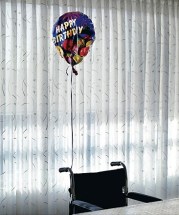 One of my dearest friends died from cancer, two years ago. It was a long illness, fraught with surgery and chemo, but she always believed that she could beat the disease. Still, she made sure to spend what time she had in doing what she’d put off for years; spending time with loved ones, traveling, taking courses, and enjoying live entertainment. What she stopped doing was living up to other people’s expectations.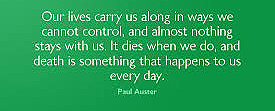

 This week, leading up to Good Friday and Easter Sunday, has always been considered the Holiest of Holy weeks to Catholics. As a child, I looked forward to new shoes and a showy hat (women still had to wear them in church, back then) and a basketful of goodies – maybe even a chocolate bunny!
 The world press had no such strictures.
 It’s all so very reminiscent of the post-death canonization of Margaret Thatcher. Reviled during her tenure for her hawkish policies, key role in bringing about the first Gulf War, and advocating for the 2003 attack on Iraq, along with her ushering in of a period where the rich got richer at the expense of the poor, her influence negatively affected millions around the world. And yet, her canonization began just nanoseconds after word of her death hit the airwaves; she was lionized worldwide in the press, her state funeral cost Britain £3.1 million pounds, and Iron Lady statues made of actual iron were erected in places as diverse as the Falkland Islands , despite Argentina’s fury.

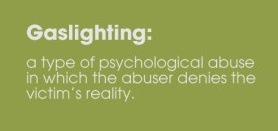 ight. It’s a way to keep those who disagree with you off balance, wondering if perhaps what they perceive isn’t real, casting doubt on their mental stability, pointing to others that agree with YOUR beliefs as proof that THEY are in the wrong. It is psychological abuse. And it’s an ugly way to treat anyone.
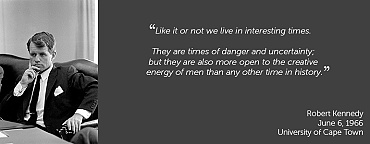
 So many dread and fear changes to their lives, and yet, there can be great beauty in chaos. Certainly, coping with new information can be problematic, but without profound change, we are static and boring. We even bore ourselves when life becomes nothing more than a forced march through our days, stuck deep in a rut of habit and preconceptions. Creativity demands a spur. You cannot rage against that with which you have not grappled.
 His followers yearn for an America that never existed except on film. They are led not so much by what he says, but what they fear – reality itself. They want to stop the world, just for a while, “just until we figure out what’s going on.” He’s going to make life all better, more understandable, and “you’re gonna love it. There will be so much winning, you’ll get sick of winning.”
 Despite zero political experience, and a chequered, peppered with bankruptcy, past, he has nonetheless captured the lazy and the selfish, those who have yet to grasp that they are being sold a bill of goods. It seems almost preordained – behold your next President, brought to you by a media that prizes sound bites over content, the election reduced to a simple transaction between a seller and a buyer. And bought by those too foolish to grasp the precept, “if it seems too good to be true, it probably is.”
 Despair. Fear. Anger. So much anger. Anger that simmers just below the surface, until released in the form of the fist of a 78-year old man, sucker punching a young, black dissenter. A mindless, impotent, unending anger against politicians, Wall Street, terrorists, immigrants snatching the few remaining jobs, governments kinder to corporations than its voting citizens. Anger against a dream denied, a life that might have been, a life ‘as seen on TV.’ An anger that is fear disguised as action and reaction.
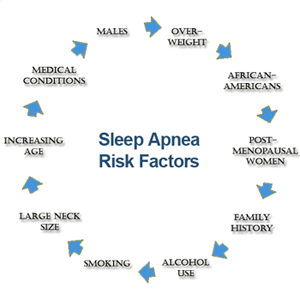 Sleep apnea is a disorder that anyone can experience, even little kids. But it’s more likely to happen if you’re male, over 40, overweight, and have a family history. It’s also common in those who suffer from gastric reflux, or who have a history of allergies, sinus problems, a deviated septum, large tonsils, a large tongue, or a small jaw bone. Having a larger neck (17 inches or greater in men and 16 inches or greater in women) may indicate problems as well.
 with my jammies. And so, one cold and snowy night, me and my footie pyjamas were ushered into what looked like a budget motel room, where I filled in numerous forms and was then weighed and measured, before being hooked up to the machine that doesn’t go ‘ping!’
 or earlobe monitors your heart rate and the level of oxygen in your blood. None of these devices are painful. They are all designed to be as comfortable as possible. The sensors may feel strange on your skin at first. But most people get used to them very quickly. They should not be an obstacle that keeps you from falling asleep. After everything is hooked up, you will do a test to make sure it is all in working order. You will be asked to move your eyes, clench your teeth and move your legs. Once it is all ready, you are free to read or watch TV until your normal bedtime. Then the lights are turned out and it is time for you to go to sleep.”
 ng that you pass or fail. The scored results are simply given to a doctor for further evaluation. At an accredited center, this doctor must be a board-certified sleep specialist. The doctor will review the study to find out what kind of sleep problem you may have. Because of the detail and amount of time involved, it usually takes about two weeks for you to get the results. The doctor who ordered the study will discuss the results with you. If your primary care doctor ordered it, then the results are sent to him or her. If you met with a doctor in the sleep center, then he or she will tell you the results.”
 This is a mask that will either cover your nose or your nose and mouth. Another version has soft silicone tubes, called nasal pillows, which fit directly in your nostrils, and provide a steady stream of air that gently blows into the back of your throat. This treatment is called positive airway pressure (PAP). While there are three kinds of PAP, the most common uses a level of pressure that remains continuous (CPAP.) In Canada, Health Insurance subsidizes a percentage of the cost, but, depending on the model you choose to buy, you’re looking at shelling out somewhere between $200 and $1000.
 est case scenario might mean a vast improvement in your health and overall enjoyment of life.
 In a Salon.com article last week, Steve Almond accused Comedy Central of having “squandered Jon Stewart’s legacy” by appointing South African comedian Trevor Noah as host, over the then-incumbent Samantha Bee.

 Stephen Colbert’s defection to The Tonight Show, despite his best efforts, still landed him in that traditional format. While the move made great career sense overall and I do love his joyful, melodica playing, bandleader, Jon Batiste, Colbert’s brilliance is still best viewed in his political snipes, and thankfully, the cream of his wit usually wind up getting spun off into Internet clips and memes.
 The main take-away being, at least on the commentator’s part, not to see a chance to explore and try to understand a different perspective on the very real problem of racism in America, and how it’s dealt with, legally and individually, but instead a demand for more white faces to rehash white opinions on a series focused on black lives. And there you have your #allLifeMatters in a nutshell.
 Oliver had the distinction of guest-hosting The Daily Show in the summer of 2013, when Stewart took a working sabbatical to direct his film, Rosewater. Oliver’s sardonic and exaggerated comedic ‘voice,’ was immediately acceptable to American viewers familiar with the work of British comedians in the Monty Python vein. Although his series airs only once a week, each episode is a little gem, with the bulk of the airtime focusing with laser beam intensity on a well-researched and timely item deserving of closer examination.
 Still a force to be reckoned with, is Bill Maher, of Real Time, and the late, lamented Politically Incorrect. The granddaddy of political satire and discussion, Maher is definitely polarizing. He’s a “love him or hate him” kinda guy. Perhaps that’s the attraction. At any rate, I’ve followed his career since the nineties, and even once seized the opportunity to be in the Politically Incorrect audience, just a week or two after 9/11. Though I can’t remember if that was the episode that got his multi –award winning show cancelled.
 But circling back to Full Frontal with Samantha Bee… this new series airs only once a week. Like John Oliver, Bee touches briefly on current events, before diving deep into the murky waters of American politics. She’s funny, strong, relevant, courageous … even the show’s theme song, Peaches “The Boys Wanna Be Her,” asserts that “the boys want to be her, the girls want to be her.”
 But really, in the end, our appreciation of comedy is personal, and only our opinion, as is our sense of humour. Everyone’s taste is different, and that’s a good thing – it speaks to our individuality. There’s room for all at the inn – pitting comedian against comedian is sophomoric and limiting. Let’s keep any nonsense austerity principles as far away from the distribution of art as we can.
 what sort of monster was I to think that my urban sense of time was more important than agriculture, and where do you think you’re going in that short skirt, young lady … oh, that might have been another conversation….
 I do enjoy a little more sun at the end of a long summer’s day, but I can’t really justify that odd bit of enjoyment while I deal with feeding pets that are notoriously bad at telling time. Their little tummies want to be fed on a schedule, and asking them to wait patiently for another hour ensures that it is ME who will be groggily trying to find my slippers, and then banging off the hallway walls trying to find the kitchen, an hour earlier.
 All I know is that all of this backwarding and forwarding of the clocks is annoying, and is really just a nostalgic reminder of how businesses ran a century ago. Today’s businesses operate around the clock, like it or not, and syncing time with the United States is as silly as attempting to synch to Australia or China – if you need to do business there, you’ll figure out how. The idea that we all need to work at exactly the same time and in exactly the same way is controlling and paternalistic, and about as useful as a vestigial tail.

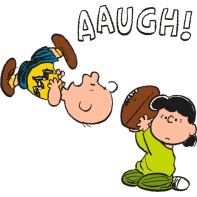 I’m sure it wasn’t the Canadian government’s intention to play Lucy snatching the football away before Charlie Brown can kick it. But it’s getting harder and harder to trust that the Trudeau government has any intention of following through on promises to legalize and/or regulate marijuana use, medically or recreationally.
 On Wednesday, roughly 500,000 medical cannabis users in Canada over the age of 25 got a small reprieve from the fear of imprisonment for possession, when a Federal Court judge struck down a ban on home growing. The previous government had put that into place when Ottawa moved to a system of large-scale commercial producers, once more putting commerce before citizens’ needs.
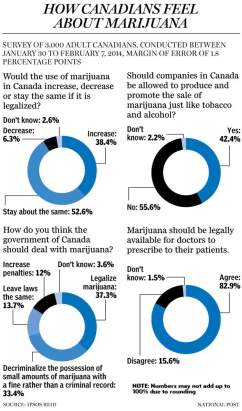 e nor the LCBO seem to be hurting for customers.
 Enforcing a law that the government has declared it will eliminate is not just confusing, it’s unethical. There is no moral basis for enforcing a law that remains on the books, even as the government moves towards repeal. The people spoke to the ethical standards of the community when they elected the Liberal Party with a very strong mandate. I’ll say it again: It is unethical and immoral to continue enforcing a law that is in the process of being repealed.
 Blair has said that the goal is to strictly regulate the drug, restrict its access to minors, and to take billions of dollars in black market sales away from organized crime groups. He’s just going to need … oh .. about four years … to do that.. Blair, it’s shit or get off the ‘pot’ time, indeed.
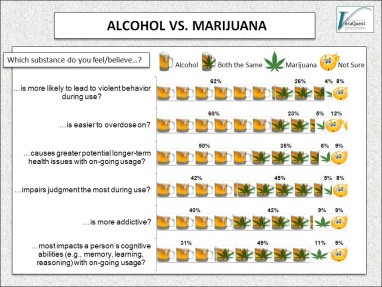 Blair says his concern is ‘public health.’ That flies in the face of science, as both Canadian and American scientists, amongst others, determined more than thirty years ago that marijuana was not dangerous and in fact had many scientifically-documented, medically beneficial, uses.
 We already have an existing legal framework for the regulation of alcohol and tobacco. States in the U.S. have hammered out regulations, and are reaping the tax benefits and new employment from the sales.
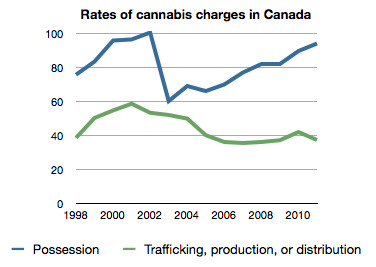
 This is not rocket science. Every nitpicking argument has been discussed and discarded, to the satisfaction of everyone but the most self-righteous and sanctimonious pearl clutchers. There will always be those who are against the legalization of anything, be it booze, pot, or completely naked strippers. Get over it. This is supposed to be a democratic nation, where adults make choices at their own considered risk. Continuing to ‘police’ the consumption of a drug less harmful than most of the ‘prescribed’ drugs on the market is outrageous and condescending.
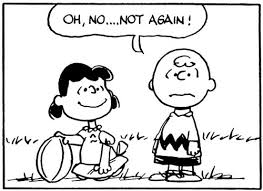 Simply taking what was once illegal and rendering it legal by government proclamation has been done throughout Canada’s history. Dragging out decriminalization/legalization as a policy point necessary for re-election will ensure the Liberals lose the ground they won in the last election. Just another promise not kept, the voters manipulated for political gain. The current government ignores that reality at their own peril.
 n ’76, the Yorkville of the sixties was already undergoing gentrification, with trendy shops springing up where head shops once ruled, and the few hippie hold outs clinging to their properties out of loyalty or desperation. Disco fevered platformed shoes trod the sacred ground in front of the Riverboat as I’d wander through on the way to The Morrissey at Yonge and Davenport.
 the clubs, the patios and the streets.
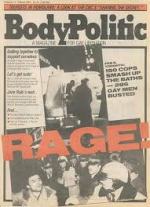 In 1975, “tiny perfect” mayor David Crombie sent his best wishes to Pride’s organizers, but refused to officially recognize Pride, while City Council declined permission for a Yonge Street march .
 pretty common for the bigger bars to have strippers by day, and live bands at night.
 Out in Scarborough, clubs like the Knob Hill boasted top local talent while the waiters, legends themselves, sold watery draft for a quarter a glass. In Richmond Hill, anyone who was anyone hung at the Black Hawk Motor Inn.
 If you smoke in Toronto, good luck. It’s getting harder and harder to find a place, inside or out, where you can light up. When the new law of not smoking on patios took effect, I knew they’d gone too far. Can’t drink, can’t smoke … what do you do? Why go to a bar at all? May as well stay home – assuming your apartment or condo allows smoking – and drink without the hassle.
 If Toronto is serious about doing more than endlessly discussing what they`d do for the city if they could, but apparently can`t, they`ll have to do better than the recent WaveLength panel on The Toronto Music Moment. The latest meeting, held on January 31st saw Jonny Dovercourt and moderator Emily Scherzinger along with Amy Terrill (Music Canada, 4479 Toronto), Daniel Silver (U of T Sociology, Chicago Music City researcher), Rolf Klausener (The Acorn, Arboretum Festival) and Ayo Leilani (Witch Prophet, Above Top Secret, 88 Days of Fortune) hash through basically the same points they did on previous gatherings, and presumably will rehash again at next year`s meeting.
 frustratedboomers