
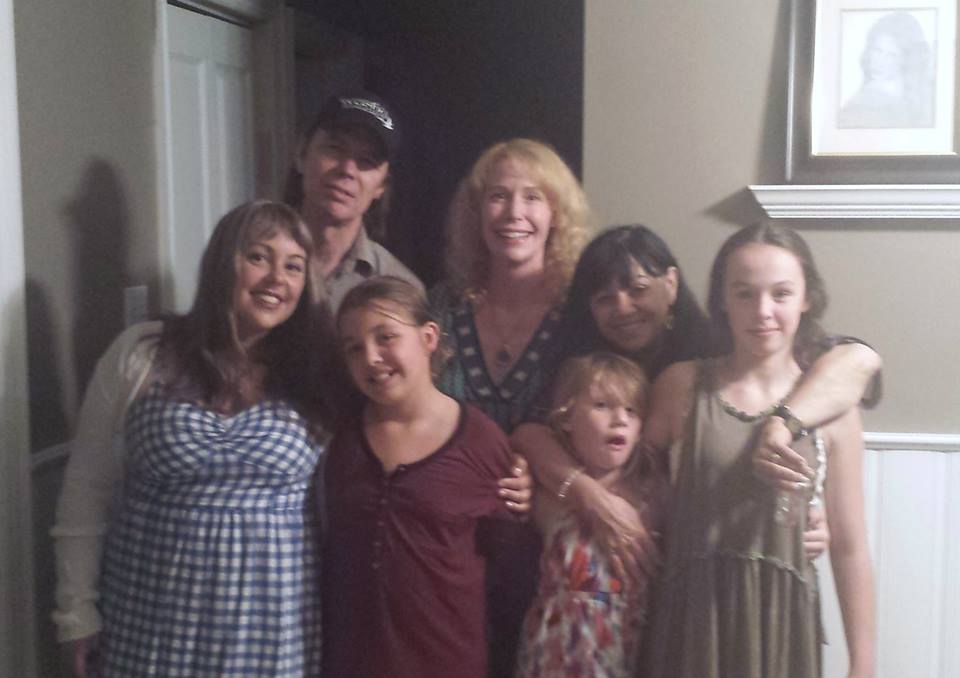
 Next week, I’ll be heading to British Columbia to visit my daughter, granddaughters, family and friends. My husband gifted me the fare; he knows I’ve been aching to see the girls. I’ll be there for my daughter’s birthday, and to reacquaint myself with my granddaughters, who are teetering on the brink of their teenage years, at ages 11 and 13. My daughter will have her hands full for the next decade with these two little minxes.
I, on the other hand, have ‘grandmother privilege.‘ I get to see them when they’re on their best behaviour, and to leave the room for a nap or to visit friends when they’re acting up. Life is good!
For years I was unable to travel. A weird combination of finances and bureaucracy kept me from obtaining the necessary identification to board a train or plane. My clever friend, Barbette Kensington, steered me through the morass of paperwork, and now … I am a genuine, legally viable, traveling person!
So I’m looking forward to this trip, for many reasons, and despite my insane fear of flying. It’s a joy and a privilege to be able to travel, and one that I’ve not been able to do in over 16 years.
Getting older is a privilege as well, although many of us hate to think about it. As our loved ones, idols and contemporaries succumb to time, it starts to seem like the world we once knew is fading away, leaving us adrift in an altered space.
Coming to grips with aging looks a lot like getting thru the stages of grief. You’re gonna have to go through denial, anger, bargaining and depression before you finally come to acceptance.
I have my own theory on how we deal with getting older; I think I read it somewhere, but it’s mine now. Basically, there’s three stages.
In the first stage, you feel pretty much like you always did. You still want to do all of the things you used to do, and for the most part, you are able to socialize, travel, and maintain your hobbies with maybe a little more resting time needed than before. But you’re still a you that you recognize, and if you’ve got a few bucks, you can finally relax and enjoy life.
In the second stage, something goes wrong, either physically or mentally. Maybe you break a hip, or have a stroke. Now you’re wishing you had gotten in that trip to Peru before your lungs decided high altitudes were no longer an option. You get a little angry that your social calendar looks barer than it used to, and you might start to tell people that you’re “not as young as you used to be,” in order to get out of doing any sort of strenuous movement … like walking up the stairs.
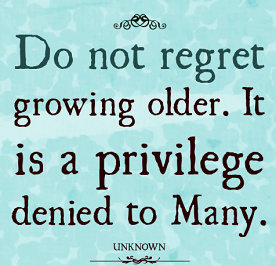 In the third stage, you can’t do very much at all, and there isn’t much you look forward to anymore. That’s the last bit of the human journey, and probably the least anticipated.
Aging is inevitable, and few would prefer the alternative. Ready or not, at some time in your late fifties or early sixties, you will realize that you’re nearing, or in, that first stage, and that you have no idea when exactly the second stage will kick in.
We live in wonderful times. While we can’t turn back the clock, we can be grateful that medical science now allows an array of options for dealing with aging bodies. Hip surgeries and knee replacements are commonplace. Who knows what miracles will be available as we age and need a few more drastic nips and tucks?
 We simply can’t anticipate what the future will hold, for good or ill. As a kid, I never dreamed that there would someday be a surgery available to correct vision … I had just assumed that I’d eventually lose my sight entirely, as both of my grandmothers had. Thanks to lasers, I had two decades of perfect vision. One of these days, I’ll have more laser surgery, and that will correct the effects of aging as well.
It would be great if there were big advances in cancer treatments. Cancer is a cruel bitch, and she’s taken away too many of my loved ones. Last fall, I had to finally admit that it was time to stop smoking, and I quit cold turkey. I’ll be dealing with the damage that I did to myself from here on in, and keeping my fingers crossed that I escape the Big C.
Took me too long to realize that you only need to change a few letters to go from ‘excuse’ to ‘exercise.’ A regular exercise program makes me feel a lot less stressed. Maybe the aquafit will also help me lose a few pounds. Couldn’t hurt. For sure it’s refocusing my attention on how good it feels to be able to stretch without pain.
The first stage of aging can be a bit of a shock – it’s almost as though our bodies are betraying us. After years of doing pretty much whatever was asked of them, our bodies have gone mutinous, and are demanding that we treat them with more care.
There’s several reasons for these changes, but they are all inevitable, so you may as well get used to them.
” Two biological phenomena appear related to the aging process:
• Accumulation of waste products in the cells
• Loss of elasticity of the connective body tissue
These changes, sometimes called nongenetic, occur at the cellular level. They have a direct bearing upon many declines we experience in our physical and sensory capabilities.
Many bodily changes take place over the entire lifespan— some beginning with birth. They are part of a relentless, post-maturational phenomenon called senescence (biological aging).
Senescence results in a decrease in the physical capacity of an individual, accompanied by an increase in a person’s vulnerability. As a result, any product or environment may become less friendly and less supportive for some people while adequately providing support for others.
Most of the changes that characterize senescence occur slowly. As they occur, individuals adapt to them. For example, people with arthritis may select utensils with larger and softer handles to ease the pain and enhance their grip.”
http://www.transgenerational.org/aging/aging-process.htm)
While the changes are inevitable, how we deal with them is up to us. Denying the realities of aging only leads to a more rapid decline, and if we try to force ourselves to perform at the same level, mentally or physically, as we did in our prime, we’re doomed to failure, and to setting up a negative feedback loop that tells us that it’s no use to even try for what improvement we can rationally expect.
What we really crave is a happy aging experience, and that’s easier to get to when we aim for smaller goals, with less dramatic gains, but gains that are progressive and ongoing. In a positive feedback loop of self-reinforcing and self- energizing behaviours, we can find the sweet spot of feeling comfortable at any age.
 There’s got to be joy in our lives. That’s what really motivates us, and leads us to the healthy actions and interactions that make getting up every morning something to anticipate rather than dread.
We need ‘fresh air and friendly faces,’ people that we care about and people who care about us. We need to love and be loved, and to hold dear those whom we treasure for the good impact they’ve had in our lives.
We need to appreciate where we’ve been, and what we’ve done, while embracing new experiences that stretch our abilities. And sometimes we need to get on an airplane even when we’re terrified of flying.
There’s no sense in denying your ‘golden years;’ there’s only the reality of how you’ll choose to live them. My choice is to make the rest of my life, the best of my life.
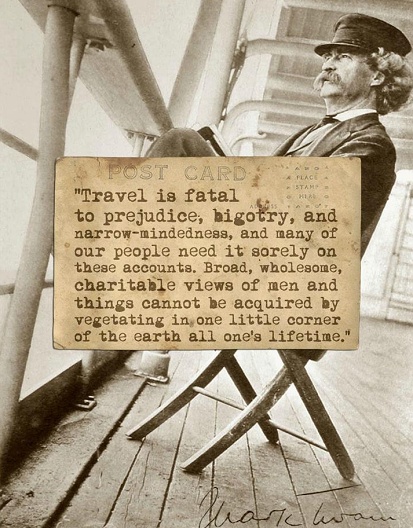



 er ‘Peace.’ I was shocked. People still use MySpace?
 souls in flirtatious Italian men.
 Or maybe he was just a guy that fell in love with music early, as a kid in Thunder Bay (formerly Port Arthur, ON) through his successes in the Canadian west, and his conquering of Las Vegas, and never stopped feeling that joy.
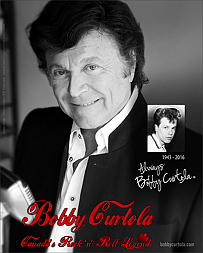 Had he moved to the States, like Ottawa’s Paul Anka, he might have made an even bigger splash, maybe even been recognized by the Canadian Music Hall of Fame, which has yet to do so. But I don’t think any amount of fame would have spoiled Bobby Curtola. He was a good man, sometimes naïve, sometimes following his heart rather than the money, but always giving it his all.
 I fully intend to continue my lifelong obsession with The Monkees by writing about their new, 50th anniversary release, Good Times! and upcoming tour. However I’ll need an entire column to talk about this record breaking album that’s burning up the charts, chock filled with songs written by the likes of Rivers Cuomo, Ben Gibbard, Noel Gallagher , Paul Weller, Andy Partridge and more … for now … feast your ears on this tune …
 I wish I could say that time heals all wounds. I know from experience that time softens the corners, but losing those you loved changes you, makes you different. A little more appreciative, perhaps, of those that remain, but always, always, vulnerable to those things that remind you of your loss. Some silly memories will make you smile; others will fill your eyes with tears.

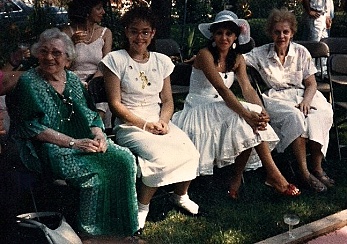 After suffering a double stroke that left her partially paralyzed, she fought to re-learn how to walk, and eventually was able to triumphantly show me her first baby steps. When my sister died, Mum and I were devastated, and it was only through sharing each other’s strength that we were able to carry on. And still we laughed, and joked, sometimes through our tears.
 Perfect, But Parts of Me Are Excellent.” I had bought it for Mum, but I paged through it, to relieve the tension, and find a laugh as I tried to send healing thoughts to her.

 ovely, but some years, presents could wait. Christmas was about gathering with family, and sharing what we did have, and what we had to spare was love.
 Nor were the needs of others to be forgotten. We’d be given a small amount of money, and a list of those we needed to delight with thoughtful gifts. It’s extraordinary how far $5.00 could go back in the sixties. We would have been mortified to not have a gift to give to any of the family who had brought a gift for us. Some years would find us digging through our own stash of precious things, in order to find something we could wrap quickly and present to an unexpected guest.
 And she’d always linger over a set of orbs, some round, some tear-shaped, so transparent they reflected rainbows, so precious and delicate, “they’re like soap bubbles , Roxanne! Aren’t they beautiful?!”
  She’d drape the tree’s branches with long strands of tiny glass beads, the beads a little more worn every year, but shining nonetheless. The box of tinsel was precious too; after Christmas we’d gather as many of the used strands as we could and save them for the following year. We had two special toppers for the tree – one, a paper plate collage of an angel adorned with cotton batting that I’d made in first grade, the other , a plastic doll dressed as an angel, it’s halo tipped jauntily to the left, a scratch of pen ink faintly visible on it’s cheek.
 thlessly for the Christmas specials to appear on the TV; without video or DVD, you had to be home to see “A Charlie Brown Christmas,” “How the Grinch Stole Christmas,” or one of the other animated delights, most of which seemed to be Rankin Bass productions.
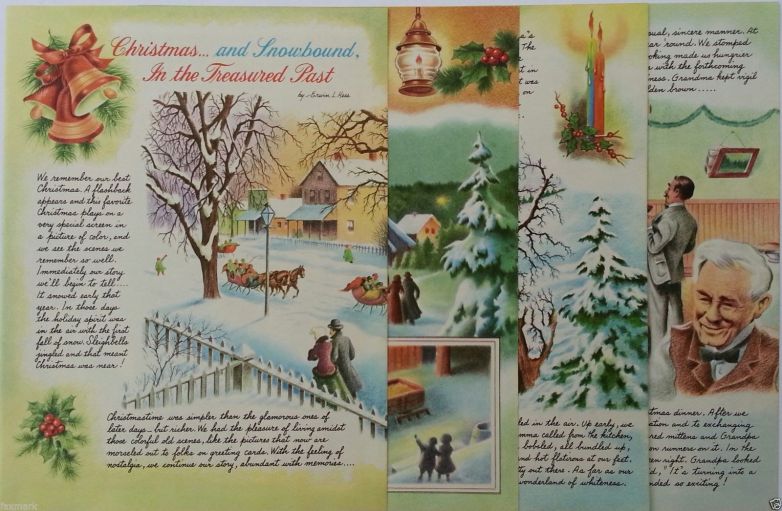
 Were winters colder then? Not always … one memorable Montreal Christmas Eve, the family toddled off to church in summer dresses and sandals, only to emerge into a starlit night made brighter by soft, fat flakes of snow gently falling onto the sidewalks. But that was an aberration; most Christmas Eves were ‘see your breath’ cold, brightened by our new knit hats and mittens that Gram had made to keep us warm.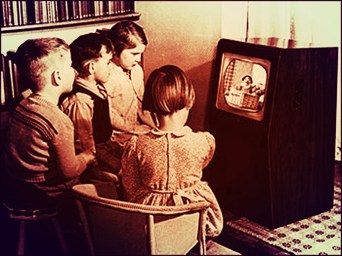







 frustratedboomers