
I ‘get away’ so rarely that I hadn’t realized how proscribed most lives have become – when you only leave your house for short jaunts into civilization, interact with a select few, and then hurry back home on the last bus, people-watching changes from being a relaxing pastime to a zoological behavioral study.
 It was fun to leave our stuffy bungalow for a jaunt up to Musselman’s Lake, in the Stouffville area. Our daughter recently bought a trailer, which is parked in the Cedar Beach resort.
The resort has been run by the same family since 1929, and generations of holidaying campers have enjoyed the lake and beach, along with other amenities. It’s a great place to bring a precocious 7 year old like my granddaughter, as the resort is like a small village, with 520 long-term trailer sites, most of which are as cared for as primary residences.
 The casual atmosphere, highly regulated, and self-policed by the families themselves, allows kids to run freely, to play in the many playgrounds, and simply behave like kids did before the last twenty or thirty years of increasing parental paranoia.
You don’t realize just how controlled kids’ lives have become until you find yourself, as my husband did, panicking over the sight of a pair of 4 and 5 year old girls calmly walking a doll stroller on a one-way lane. “Anyone could snatch up those two, throw them in the back of a van, and speed away!” he said.
Good lord – is that what we’ve come to? That, even in a small space where entry is carefully controlled, where the speed limit is 10 kph, and most of those present are long-standing renters, in a space that is rife with parents, aunts, siblings and grandparents … even in a space this sheltered, we have to live in constant fear that our most vulnerable and precious could be snatched away at any time?
How has life become so seemingly perilous, even to we who have never known armed combat on our land? Are we now to live under constant fear, and the feeling that we could be attacked at any moment – by our neighbours, by a stranger, by a predator, always potentially lurking in the shadows? Are we now to live in constant dread of ‘what could happen?’ No wonder people in America are so protective of their right to own guns.
 But the bigger question is – when did we develop this persistent fear, and why? In a civilization where anything can be deemed too harmful to be legal, (fireworks, lawn darts, unpasteurized cheese … even KinderEggs!) how have we gone from subconsciously knowing the possibility of a rare instance of unforeseen harm into a state of constant vigilance against possible marauders?
Certainly, there are now more people living on the planet than at any other time in history, and we feel that claustrophobia even in our suburbs and towns. But proportionately, rates of kidnaps, rapes and murders haven’t really risen. In fact, the instances of kidnapping of children in the U.S. by non-parental or family members intent on harming the child is about 115 per year … out of 340 million inhabitants.
To put that figure into perspective – during the Vietnam War, every American personally knew at least one of the 10,000 soldiers per year who had died in the conflict. But almost no one personally knows a child that was taken with criminal intent.
 So who’s ramping up this fear? Well … it’s astounding how much of U.S. law enforcement is influenced not just by mass media coverage, but by the hysterics of tabloid media, who thrive on rehashing grisly incidents for as long as they can drag out the gory details. Police and politicians have their feet held to the fire to account for the panic brought on by those who profit from tragedy.
Statistics can be, and often are, manipulated by private interests and organizations, in an attempt to boost profits, be they donations to causes meant to comfort sufferers, or by the marketing of items meant to increase private citizens’ feeling of being protected.
A fearful society tends to prefer the status quo, allowing governments to stay in power for perhaps longer than they should be. They will look to the loud and the bombastic, because the posturings of the aggressive allow the frightened to shelter in place.
 And it’s certainly no stretch of the imagination to realize that a country in a state of fear and panic is easily manipulated by governments with agendas that might have seemed too radical in times of peace. Look to America’s overly militarized Homeland Security, or Canada’s Bill C-51, an over-reaching bill designed to capitalize on the fear instilled in us, that trumps our free speech with a plan to capture – and indefinitely retain – all of our private phone calls and internet data.
The ripple of fear that circled the globe after the 9/11 attacks on the Twin Towers has never really subsided. Horrifying acts, including brutal torture and murders, were committed on suspects, whether innocent or guilty of crimes, and the attack on Iraq, which had long been a possibility for unrelated reasons, was used as an excuse to punish the masterminds wrongly believed to be behind the tragedy.
There must be a villain, there must be a reason, and so the net is cast further and further, vilifying those who are not exactly like us, the ‘others’ that we scapegoat to try and calm our jangled nerves. Something must be done! we cry … and done now! Save us from the unknown, no matter if it is ultimately we that are harmed in the process.
A fearful society will often turn to religion, and a reliance on a supernatural power to ensure that, even should they themselves be injured or killed, there will be a reward, post-mortem, from the deity of their choice. They will blame and reject progressive ideas and ideology, preferring to trust the writings of the ancients over the possibility that a science they can’t quite understand could hold a solution to their terrors.
A fearful society wraps it’s most vulnerable in emotional cotton batting and bubble wrap, too frightened to allow children to explore their world and learn both the good and bad of their environment, and to experience the emotions and understandings inherent in living in their social order. A fearful society looks with suspicion on anyone who’s not in their personal tribe, and passes that crippling fear on to their children.
 Whenever changes meant to move our culture forward progressively are proposed, the rallying cry from those who are afraid of alterations to their reality is “Think of the children!” That plea, originally referring to children’s rights, and real dangers, such as child labour, has now become a plea for pity, and an appeal to emotion. It is a logical fallacy that substitutes emotion for reason, and indicates a culture in moral panic and relentless distress. It is, in fact, the antithesis of what children need – a feeling of security and of being protected.
And in believing that it is only by insulating children from all contact with ‘others’ and other ideas, it is a pious attempt to stop progress by effectively robbing children of their right to childhood. It seems a very high price to pay.
Our terror of the unknown, and our concern for the well-being of our children, must not be the justification of our need to inflict upon them a very real ‘nanny state’ created by our own neurotic anxiety.

 er ‘Peace.’ I was shocked. People still use MySpace?
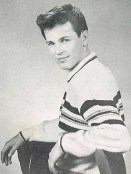 souls in flirtatious Italian men.
 Or maybe he was just a guy that fell in love with music early, as a kid in Thunder Bay (formerly Port Arthur, ON) through his successes in the Canadian west, and his conquering of Las Vegas, and never stopped feeling that joy.
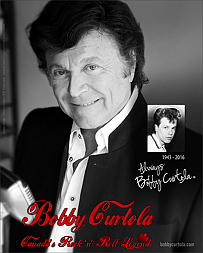 Had he moved to the States, like Ottawa’s Paul Anka, he might have made an even bigger splash, maybe even been recognized by the Canadian Music Hall of Fame, which has yet to do so. But I don’t think any amount of fame would have spoiled Bobby Curtola. He was a good man, sometimes naïve, sometimes following his heart rather than the money, but always giving it his all.
 I fully intend to continue my lifelong obsession with The Monkees by writing about their new, 50th anniversary release, Good Times! and upcoming tour. However I’ll need an entire column to talk about this record breaking album that’s burning up the charts, chock filled with songs written by the likes of Rivers Cuomo, Ben Gibbard, Noel Gallagher , Paul Weller, Andy Partridge and more … for now … feast your ears on this tune …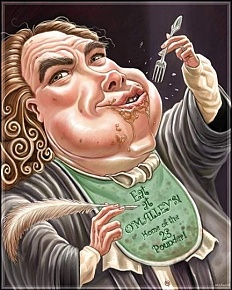
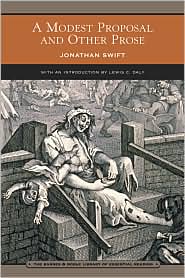 In 1729, Jonathan Swift wrote “A Modest Proposal (for Preventing the Children of Poor People From Being a Burthen to Their Parents or Country, and for Making Them Beneficial to the Publick.)” His answer to the “Irish’ problem was to advise the poor to sell their children as ‘food for rich gentlemen and ladies’, and came complete with techniques for slaughter and mouth-watering recipes.
 the twelve pages of the victim’s statement, which outlined in searingly heartbreaking detail what she has gone through, during and since the rape.
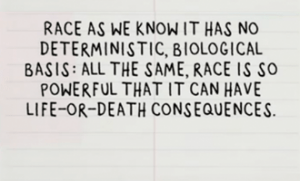 racism is no longer an issue, I am very aware that racism, sexism, and bigotry are enormous problems, and that pretending they do not exist is as foolish as denying gravity. This is our reality, and wishing it away demonstrates the naiveté of a child.
 -martial may direct.”
 What is a life worth? Should men, women, and children have separate values, or can we agree that the assault or murder of any person is grievous? Since racism is supposedly a non-issue, do we then assign the same value to people of all colours? In a court of law, can we agree to an equality of all members of society, independent of their circumstances of birth?
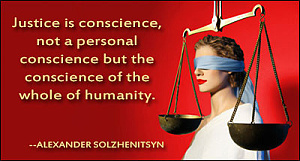 In order to purge real or perceived prejudices in the courts, each and every citizen must be first and foremost recognized as a unique and valuable entity in his or her own right. If the law, lawyers, and judges are unable to see people as such, perhaps the only solution is to tack a label upon the people, signifying ownership, with the attendant penalties enforced upon those who damage governmental property.
 Love ‘em or hate ‘em, the dollar stores keep our homes chugging along smoothly. I have dollar store items in the pantry, the cupboards, under the sink, and under my feet, in the form of floor tiles. As I sort and purge, I begin to realize that I have somehow amassed thousands of dollars, in kitchen ‘stuff’ alone, from the dollar store. These are the things you don’t think about, just pick up as you go; the serving spoons, tongs, measuring spoons and cups; the knock-off cleansers and scouring pads; the novelty drinking glasses and salt and pepper shakers; the plastic bags, containers and baggies that hold those leftovers you can’t remember enjoying the first time around. There are odd food items in my fridge and pantry that I picked up on a whim, just because the manufacturer changed the packaging and decided to purge stock by dumping it for ten cents on the dollar. Teas, coffees, spices, mustards … the list goes on and on.
 We just don’t notice how completely the dollar store items have crept into our lives. If, heaven forbid, my house burned down tomorrow, I couldn’t even begin to guesstimate how many items I’d not even think to claim on the insurance as property- they’re just too ubiquitous. These junky bits and pieces are the grease that we never notice is keeping our homes running smoothly.
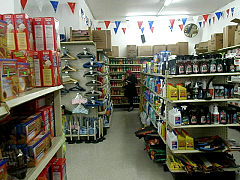 So I blame the dollar stores for my excesses, but I also bless them. There will always be a need for stores where thrifty people can stretch their dollars and meet their budgets. Today’s economics demand that we show dollar stores a little respect.
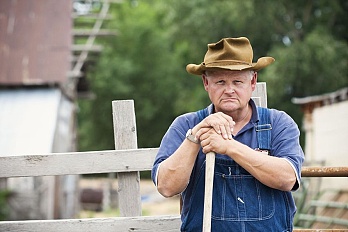 Gardening is not for everyone. We may have once been a nation of “hewers of wood and drawers of water,” but nowadays, many people consider physical and menial labour demeaning, something to pawn off on the unskilled and unambitious, or to contract out to uniformed and franchised professionals. Actual farmers in Canada rely a great deal on machinery to keep their acres going.
 Gardening requires focus. I have always found a kind of primal joy in concentrating completely on one stalk, one stem, one leaf, studying the foliage for signs of disease, rejoicing in new buds, snipping carefully in the direction of the node to encourage growth. There’s also dismay in discovering that, despite appearances, there’s no trace of green left in a branch, no matter how far down you snip.
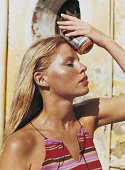 And does anything taste more perfectly right than an ice cold drink at the end of an exhaustingly physical day? For me, it would preferably be a beer, guzzled straight from the can or bottle, holding the sweating tin or glass against your forehead between sips … that’s a little bit of heaven right there.
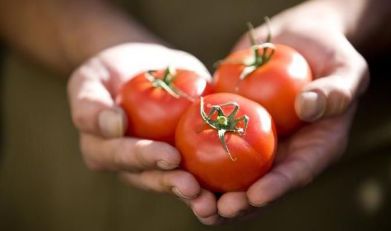 Some have a practical take on maintaining a garden, be they the stalwarts who continue to coax vines and stalks into existence as their parents did before them, or the grocery store gardener who just wants to get a break on the cost of tomatoes and herbs. For the price of a few seeds or a seedling, we become like minor gods, with the power of life and death over these potential lives. As pragmatic as patio or backyard farming may seem, we should never underestimate the simple joy of biting into a fat, ripe, sun heated, home grown tomato, or the satisfaction and pride of a successful fall harvest.
 Having read a wealth of copy, pro and con, on the subject, I have my own opinion, as do most of those who dabble in the world of social media. There’s no lack of outrage from either side of the debate. We will likely never know what really happened, so we tend to base our conclusion on our own ethical and moral biases, and, sadly, on which side recently presented the best defense for our review.
 According to Canada’s own Justice Department, sexual assault is the crime least likely to be reported to police. 78% of victims never come forward, either afraid of further repercussions from their attacker, or in the belief that, even as they confide intimate and embarrassing details to authorities, justice will not be served. In those who do ask for police assistance, the request often comes long after the offence has occurred.
 No one is born a mother. Nor does the act of birth make you a mother, though the preparation can kill you. Nine months of physical, emotional and often financial trauma can really take it out of a woman, let me tell you, and her reward is a life sentence of blood ,sweat, tears and copious amounts of other bodily fluids, starting just moments after delivery. It takes more than those vaunted male balls to merely survive motherhood, never mind make it to an age when your progeny finally honour your effort.
 woman had swapped her youth for the chance of financial security, and she and her progeny were essentially the property of her husband, with very few rights, and less autonomy than a free range chicken.
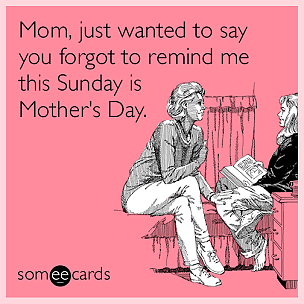 Get it out of your head that Mumsie will be over the moon with a new pair of fuzzy slippers, and realize that she’d much prefer a gift certificate to a spa of her choice, or a year’s subscription to the Wine of the Month Club. If you’re old enough to read this, and you are lucky enough to still have a living maternal figure, remember her existence and needs more than once a year.
 Even the armchairiest of armchair gardeners eyes the sprouts of green peeking out of the earth, and tells themselves lies about the magic they’ll coax from the soil this year. Dreams of successful planting and transplanting, and visions of exotic fruits fresh plucked from your own trees, dance through your head like the sugarplums of Christmas. Garden paths that never overgrow! Bushels of perfectly formed, organic vegetables! Idyllic afternoons whiled away in draped pergolas, desultorily conversing with like-minded friends.
 I would much prefer to just dance around a flagpole, dressed in a long gown and draped with flowers, vying to be crowned the Queen of May, as they do in Europe. I mean, the month of May was named for the Greek goddess Maia, who was identified with the earlier Roman goddess of fertility, Bona Dea, whose festival was held in May. I’ll even take the pre-Christian Roman celebrations that revolved around Flora, the goddess of flowers, or celebrate Walpurgis Night or Beltane with the witches. In any case, my first act upon being crowned Queen would be to dispense with ritual house cleaning, in favour of far more civilized communal celebrations, rejoicing at the promise of another sun-filled summer. Vote for me!


 rgency.
 At the moment, it’s a gray, chilly morning in Toronto. I missed the Morris Dancers, (rats!) but if I hustle, I can get down to the square at Yonge and Dundas, where a rally and march will begin at 1:00 pm. This year’s theme highlights the struggles of resistance to anti-black racism, police brutality, and issues deeply affecting black communities, along with Indigenous sovereignty, gender justice, anti-poverty and anti-austerity organizations.
 “Every woman knows what I’m talking about. It’s the presumption that makes it hard, at times, for any woman in any field; that keeps women from speaking up and from being heard when they dare; that crushes young women into silence by indicating, the way harassment on the street does, that this is not their world. It trains us in self-doubt and self-limitation just as it exercises men’s unsupported overconfidence.”
 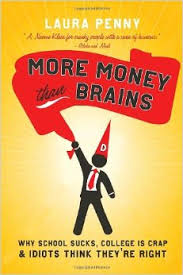 When you have people of wealth and/or power who are used to ‘man’splaining’ to women, it’s not very long before they decide that they’re also qualified to talk to everyone about other things they haven’t a clue about, as long as they deliver the info in a deep and stentorian voice, brimming with confidence and dominance .. about ‘legitimate rape,’ the age of the planet, or how science and scientists have it all wrong, because … The Bible. And they are not just talking to women – these speakers do not discriminate. No, they are talking to the general public, be they male, female, young or old. Anyone, in fact, who will allow their nonsense to enter their ears and fester in their minds.
 Clinging to the idea that your gender, wealth or power makes you somehow magically smarter than those around you is like sitting under a flashing neon sign that points to your head and says, “old guy.” And not a nice old guy that we can learn the mysteries of life from, but a nasty, old, half-cut, pre-civil liberties era relic that snarls, “get off my lawn!” at every passing child … or idea.

 Me too. And I miss those days. I used to amuse myself at times trying to find the odd misspell or grammatical error, because I was a nerdlinger, and errors were rare enough to make the game worth the while. Overall, I really appreciated a cleverly turned phrase, an apt summation, a seductive call to ‘read all about it!’ and I relished the tiny print request to (continue reading on page …. ). I’d even suffer the frustration and indignity of wrestling a broadsheet into submission, when my interest had been piqued.
 Now you can feast your eyes on the clickbait genre; titles that are designed to manipulate or coerce readers into entering their site. Today’s online version of the Weekly World News.
  And in a philosophical sense, isn’t society always in doubt as to the state of humanity? It can be a Sisyphean task, keeping the faith. ”You won’t Believe what happens next” challenges our cynicism and belief systems, and dares us to dream, one more time, that there are wonders and miracles to be found. All you have to do is click this link ….
 It would be sooo easy to write off clickbait as the natural habitat of those easily manipulated and gullible people. But they are not the only ones to fall into the trap; clickbait appeals to our sense of disbelief. It asks – dare you read this? How strong are your views? – while simultaneously appealing to our innate desire to know what is in the future. What happens next? Ah, wouldn’t we all like to have a heads up on that!
 I’m not saying that clickbait is an insult to our collective intelligence. No, I’m saying it’s a necessary evil, designed to ease the pressure off an already strained valve. Without clickbait, cat videos, games, listicles and recipes, the strain of modern life would likely blow the top off of our heads.
 frustratedboomers