by Roxanne Tellier
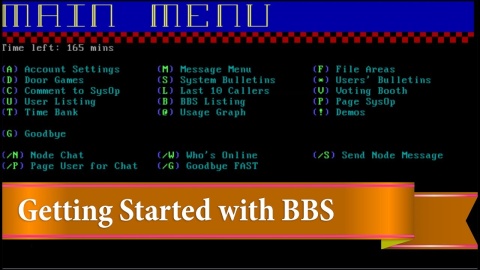
In the nineties, I ran the Artsy Fartsy Bulletin Board System out of my home for several years. Those were the days of 2400 baud modems and the scree scraw weeeeeeeeeekkkk!!! sound of the connection soon became a part of my every waking and sleeping moment.
In those days, tens of thousands of hobbyists around the globe ran primarily text-based boards, where users could exchange messages, upload and download files, (often pirated) play games, and generally hang out with other computer geeks.
 These boards were in someone’s home, and that system operator (sysop) could see what the incoming caller was doing, since their actions scrolled by on the sysop’s own monitor. Sometimes a sysop would break into your session for a one-on-one chat, which was always a little bit of a fanboy experience. The sysop controlled entry – they could disallow your admission, or give you access to the ‘secret’ files you craved, like the latest version of FileMaker Pro or the naughty Leisure Suit Larry video games. And all you knew about this person was that they were probably as cuckoo for computers as you were.
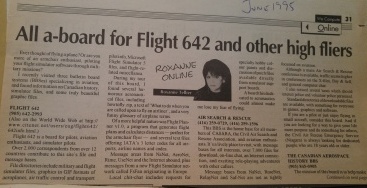 The boards were personal, they were usually rather unprofessional, messy, and run by teenage boys, and the boards were often geared to special interests. For about three years I wrote a bbs column, Roxanne Online!, for We Compute!, a monthly paper I helped launch, describing local boards, how to access them, and how to find boards that catered to your personal needs.
(I still have all of the clippings of those columns, and someday I intend to scan them, and upload the texts to a website. Patience, padawan.)
Only the cognoscenti, the nerds like myself who used local bbs boards, could foresee that this ability to communicate, pretty much for free, with likeminded people around the world, was the future. I loved being a bbs user, and when my old friend, Iain Grant, offered to set me up a board on my own PC, I jumped at the opportunity.
I became friends with many of Toronto’s FidoNet Region 12 Net 250 sysops along the way, getting to know people like Craig Hastings, Paul Chvostek, Don O’Shaughnessy, Luke Kolin, James Korolas, and Loralie Freeman, many of whom I remain in contact with today.
Over time, and as I trawled the Net Echos for fun, I came to know and eventually spend a lot of quality online time with, some of the denizens of the FidoNet Writing Echo. Each of the writers, whether their writing was yet in print or not, had interesting details to share about their work, and publishing. Pakki Chipps, Laurie Campbell, Rocky Frisco, Dennis Havens, George Willard, Jack Lynch, Billie Sue Mosiman, Shalanna Collins, Lisa Peppan, Carl Thames, Pamela Dean Dyer-Bennet, Diane Lamoureaux, Kevin R. Tipple, Karen Rhodes, Jack Ruttan, Douglas Rhodes, Rich/Rachel Veraa, Michael Nellis, Patrick Goodman, Rebecca Bohner were just a few of the people I would never have encountered, had I not discovered this wonderful online world.
And it was a very egalitarian world. When you chatted with people, you only knew as much as they’d decide to tell you. Anyone could present as any gender, race, or sexual preference. No one was ‘The Boss.’ 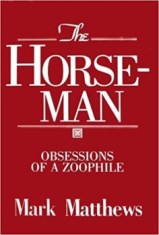
While most of us used our real names, there were a few who preferred to be known by a pseudonym. George Willard, aka Mark Matthews, was an ‘animal lover’ in the carnal sense, and his book, “The Horseman,” got him and his ‘bride,’ Pixel the Pony, as guests on a Jerry Springer TV episode that was the one episode Springer never aired. It was a very long time until the episode became available at all, and then, only on some rather shady video tapes.
I met Pakki Chipps ‘in real life’ soon after my mother died. I had mentioned in an online post that I needed to go somewhere and heal, and she immediately messaged me to say she was preparing a room in which I could stay, and that her daughter Weyla was already out picking flowers for the room.
 And that’s how I came to stay on a reserve in Sooke, BC, where I spent a week doing nothing but relaxing on verdant hills and exploring rain forests with someone whom I had previously only known online.
Many of us were musicians as well as writers. Rocky Frisco was a true Oklahoman character, adept at many fields. He’d been a race car drive, a disc jockey, a writer, an actor, and JJ Cale’s goto keyboardist from 1957 until Cale’s death in 2013. Rocky’s Wikipedia entry is a study in just how much one man can pack into a life. I was honoured to finally meet him when he played The Phoenix with Cale in 2002.
I would often feel that this entree into the online world was slightly unreal. I’ll never forget the time we were on vacation in Florida. We drove up to a Miami medical treatment centre, where we had arranged to have coffee with Rich Veraa, a writer who was a resident there. As we pulled up to the centre, I saw two men in wheelchairs – one white and one black – and realized that I had no idea what this long time friend actually looked like. It was an ‘aha!’ moment for me; in the future, I realized, people could be whomever they wanted to be online, unconstrained by any reality. For good OR ill.
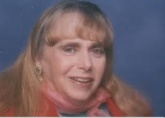 Somewhere along the line, Rich Veraa became Rachel Veraa, but not many of us gave it a lot of thought. People lived their lives as they pleased, and most of us didn’t care what you got up to, as long as you had something interesting to share in your writing.
Not having met most of these writers in person was no impediment to very long, very strong friendships. Although the Writing Echo is long gone, I still stay in touch with many of it’s denizens, on Facebook, and thru the Writing Tavern Google group. I get to read the exploits of Laurie Campbell, as she and her husband prepare to return to New Zealand in retirement, and Dennis Havens can be counted on to keep me in the loop of what he’s been up to in his writing, and in the music world, where his past as a life long Vegas musician and composer of many a Sousa flavoured march makes him a delightful raconteur.
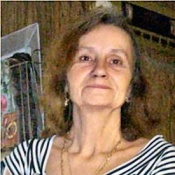 The first time I encountered one of Billie Sue Mosiman‘s horror tales (she wrote over a hundred novels, and was also a well-respected editor of horror anthologies) I was a little bit in awe of actually having this talented woman as a ‘pen pal.’ I often think about how she would describe accompanying her beloved husband Lyle, a long distance trucker, while she sat in the cab and wrote to the rhythm of the road. Billie Sue loved her man, her little dogs, and her life, all with equal passion.
 “To look at her, Billie Sue looks like a typical Southern belle (born someplace like Mobile, Alabama, I think) with no more concerns than the cotillion and whether there’s enough Spanish Moss on the oak trees adorning the plantation house… okay, I’m being silly again—I know those sorts of Southern belles went out about the time the carpetbaggers invaded the Deep South after the War of Northern Aggression, as some call it. Although she lives in Texas (or Alabama, I’m never quite sure) with her husband Lyle, I don’t think they can afford a plantation or would want one if they could. And probably the cotillion would be the last thing on her mind—unless as a setting for a massacre; she’s been a full-time writer for years, and her favourite genres are (surprise!) thrillers and horror/fantasy, at least judging by what she’s been publishing lately. The first book of hers I read was called Wireman, about a singular serial killer who used piano wire to garrote his victims. And she looks so normal!” (from AmazingStories.Com/2015)
 Every time I pick up one of Pamela Dean‘s wonderful science fiction or fantasy novels, I marvel again at how lucky I’ve been to have had access to her generous sharing of writing and publishing knowledge over the last three decades.
Times were very different, pre the sort of Internet connectivity we now take for granted. You probably didn’t know what a BBS was unless someone you knew was a hobbyist. Most people were actually a little afraid of computers in general; when I applied to be the executive secretary of the CN Tower‘s food and beverage director, the job involved working on one of the only five computers in total that were in use in the executive offices at that time.
 Times changed pretty quickly, though. We went from, “computers! too scary!” to “How does this thing work, and why do I have a steamer trunk full of AOL starter discs?” almost overnight. Prodigy and CompuServe also got into the game, and soon the internet was so intertwined with the corporate world that any sense of the intimacy or personality of the bbs days was gone. When the internet went viral in the late nineties, it was the computer equivalent of the dinosaurs being wiped out by comets – one day BBSes were there, and the next … poof! Gone.
Though – in the beginning, none of the majors really sounded much different than they had back in the 2400 baud modem days.
It was right around that time that we were moving from our home in the east end of Toronto to a bungalow in Scarborough, and that seemed like a good time to shut down the Artsy Fartsy, and put the home pc to better use, making a living, working from home (which was ALSO considered an impossible ‘ask’ for the average office worker in the mid nineties. Old school bosses just didn’t believe they’d get an honest day’s work out of anyone whom they couldn’t see by a quick glance around the workplace.)
BBSes were the gateway drug that allowed many computer geeks to get involved with the Internet, well before the hordes arrived. There’d have been no eBay, PayPal, or Youtube without the hobbyists who were the first to see the potential of a worldwide connectivity.
These days, what with our dependence on smart phones, and the ubiquitous
hyper-connectedness of the internet, most of the social media sites tend to feel more like corporate-sponsored trips to the mall.
Our interactions with friends and family (and Russian trolls) are interspersed with cute animal videos and products tailored to the information big data firms glean from our conversations, enabling big corporations to better target what they’ve decided we need in our lives, all for a pretty price.
It’s slick, and professional, and very corporate, impersonal to a fault. And it’s not anywhere near as fun as the bulletin board systems of the nineties.
You just had to be there.


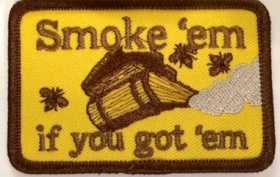 Because, whether you knew it or not, whether you liked it or not, a very large percentage of Canadians have been quietly enjoying pot in one form or another for decades. World didn’t end. Won’t from this either. That’s not how we’ll go.
 On October 10, the American Supreme Court ruled to uphold a decision by the state’s courts that requires a residential street address in order to vote in North Dakota’s elections. Since much of the state’s Native American population, which lives largely on tribal land and whose IDs typically feature P.O. boxes, cannot comply, the decision is expected to steal away the right to vote of thousands of Indigenous North Dakotans, along with those who share their residences.
 If that’s not enough to make you howl in frustration, Canada actually one-upped that stance, when our own Canadian Supreme Court ruled that politicians do not need to consult First Nations when drafting new legislation that may affect Indigenous rights.
 Now .. is it just me, or does that not sound an awful lot like the democracy and the civil rights are being drained out of Canada’s interaction with First Nations people?
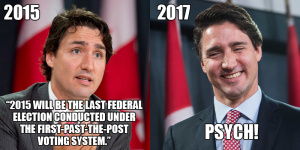 And in Febuary, 2017: ” Prime Minister Justin Trudeau abandoned his promise to reform Canada’s electoral system on Wednesday, claiming no consensus has been found on an alternative system.
 But we in Canada seemed to be talking a better game; our image involves mountains, lakes, lumber jacks and mounties, for pete’s sake!
 So here we are, then. A stalemate where our self-interests outweigh what would seem to be our possible demise.
 And, c’mon … be honest … no matter how virtuous and outwardly concerned we are about the planet, or about the morality of investing in Kiddie Koncentration Kamps, or about the ethos of denying Indigenous people a voice on the discussions on how best to destroy their land …
 Or so we’ve been led to believe, by all of our ‘likes’ and ‘loves’ on social media, which is where we go to show off our funny, pretty, and intelligent sides. It’s where we go to get our ‘strokes’ of approval, to find out who’s doing what, and it’s where some of us go to air our opinions and beliefs, and to challenge the opinions and beliefs of others.
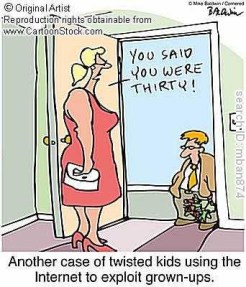 What is indisputably true, in the world of social media where reputations can be made or destroyed in the space of a tweet, is that there aren’t many grown ups in the room.
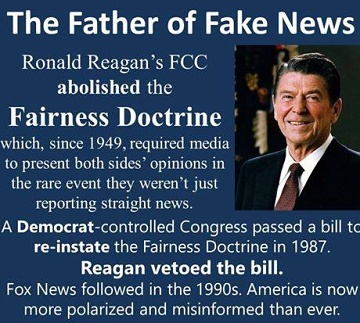 “It established two forms of regulation on broadcasters: to provide adequate coverage of public issues, and to ensure that coverage fairly represented opposing views. The second rule required broadcasters to provide reply time to issue-oriented citizens. Broadcasters could therefore trigger Fairness Doctrine complaints without editorializing. The commission required neither of the Fairness Doctrine’s obligations before 1949.” (wiki)
 While this sort of blathering can be very entertaining, and kickstart the hearts of those who either lack their own opinions or love to air their ideas and conspiracy beliefs, it really didn’t do much good for those people who are easily led to often ill informed and hard right theories.
 Why is it so hard to understand that there are very few of us capable of holding every aspect of a quandary in perfect balance for long enough to solve the equation?
 Corporate and political entities are not the only ones that often have a smug belief that they are the only ones with the answers.
 But it IS gonna happen, and much sooner than those who picture electric vehicles being powered by a trunk full of double AA batteries can conceive. Barring a nuclear holocaust, which would put paid to pretty much all of civilization, electric vehicles will be the only new vehicles manufactured in many countries, as soon as 2021.
 Despite the miracle of the internet allowing each of us to research, in real time, any questionable information presented to us by even the loudest and most authoritative voices, the demand that truth be spoken is often overridden by the Bully Pulpit of those in power.

 Trip and jitters aside, I still found the time on Friday afternoon to drop in on Greg Godovitz at El Mocambo‘s pop up shop, Prohibition (66 Kensington Avenue,) where I bought a couple of rocking t-shirts for my western family. Then it was off to the media launch at Tom’s Place, (190 Baldwin) where local luminaries, including a texting Mayor John Tory, the dashing Richard Flohill, and chanteuses Molly Johnson and Genevieve Marentette, along with Celine Peterson (daughter of Oscar) and a host of others, gathered to celebrate the beginning of the fest.
 To my hippie ears, his new CD has a sort of new age-y updated feel of Mike Oldfield‘s Tubular Bells, played on this fascinating Persian instrument.
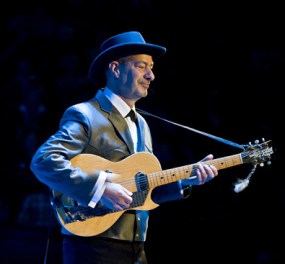 Toronto’s favourite son and perennial Energizer bunny, Danny Marks, will be playing at the Hotbox Cafe (204 Augusta) from 1:00-2:00 pm, ($12. at the door) and then at Prohibition from 4:00-6:00 pm (Pay what you can.)

 Next week, I’ll be heading to British Columbia to visit my daughter, granddaughters, family and friends. My husband gifted me the fare; he knows I’ve been aching to see the girls. I’ll be there for my daughter’s birthday, and to reacquaint myself with my granddaughters, who are teetering on the brink of their teenage years, at ages 11 and 13. My daughter will have her hands full for the next decade with these two little minxes.
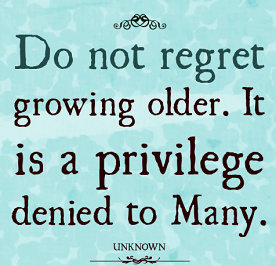 In the third stage, you can’t do very much at all, and there isn’t much you look forward to anymore. That’s the last bit of the human journey, and probably the least anticipated.
 We simply can’t anticipate what the future will hold, for good or ill. As a kid, I never dreamed that there would someday be a surgery available to correct vision … I had just assumed that I’d eventually lose my sight entirely, as both of my grandmothers had. Thanks to lasers, I had two decades of perfect vision. One of these days, I’ll have more laser surgery, and that will correct the effects of aging as well.
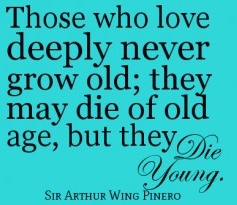 There’s got to be joy in our lives. That’s what really motivates us, and leads us to the healthy actions and interactions that make getting up every morning something to anticipate rather than dread.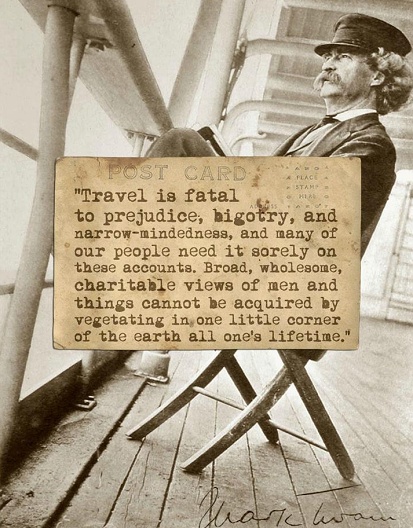











 frustratedboomers