by Roxanne Tellier
I originally wrote this column in April 2015. Woke up today unable to write about the things I find so depressing in 2019, so … this retread will have to substitute for new thoughts on ‘interesting times.’
 “If music be the food of love, play on!” Like food, music can be comforting. It can also be stimulating, annoying, or cloying. Music releases dopamine, the ‘feel good’ hormone, just like sex and actual food. Music can arouse feelings of euphoria and craving. Dopamine release is at “peak emotional arousal” during music listening, so you really ARE getting a bang for your musical buck.
Although there are exceptions – whether you consider them cursed or blessed, 5% of the population is indifferent to music, and feels nothing when they hear it.
But for the rest of us, music is much like a drug. When you’re listening to music that ‘speaks’ to you, you are completely dialled in to your brain, and that changes your brain chemistry. Music will change or augment your good or bad mood, and can cause you to slow down and relax, or jump up and dance.
 Complex changes occur in our brains when we hear our favourite songs. We can be unconsciously manipulated through sound; studies show that listening to sad music can lead to a wide range of complex and partially positive emotions, like nostalgia. Listening to particularly sad or happy music can change the way we perceive the world.
When you’re watching a film, you’re unconsciously processing the background/soundtrack tones and tempos which signal to our brains that what we are seeing should be experienced in the way the writer intended.
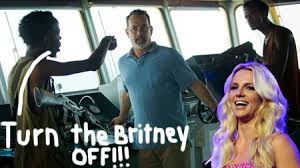 The sort of music we want to hear at a given moment has much to do with what we’ve heard before, the sounds that we’ve absorbed through our lives, the sounds that feel familiar, that work within the tonal range that defines what is ‘popular’ in our culture. Which is why Britney Spears’ music has been used by the British Royal Navy to scare off Somali pirates.
Merchant naval officer Rachel Owens explained the tactics: “Her songs were chosen by the security team because they thought the pirates would hate them most. These guys can’t stand western culture or music, making Britney’s hits perfect. As soon as the pirates get a blast of Britney, they move on as quickly as they can.“ (metro.co.uk)
The inherent nature and power of music affects the animal kingdom as well. Cows produce more milk when listening to relaxing music, and 3% more milk listening to slow music over fast. Birds and whales compose musical creations very like man’s, combining rhythm, length, patterns and pitches we can recognize, and both will sing complex songs to communicate with each other, and during courtship.
 If your pet has a tendency to overeat in stressful situations, or suffers from separation anxiety, quiet music playing on the radio may calm their anxieties, relax muscles, improve digestion and increase restful sleep. Dogs are particularly sensitive to music, with classical music having been shown to actually calm pups prone to epileptic seizures, and stimulate and release endorphins in the brain that aid in pain reduction.
Our brains love repetition. The first time we hear a song, our brains are processing the input, constantly predicting what will happen next, based on a pattern. And brains are a little lazy … we love repetitive choruses. In fact, for each repetition of a chorus, the chances of a song reaching the top of the charts rise by 14.5%
 But there’s a limit to how much repetition we can take. Although hearing a song again and again makes your brain happy, because it’s already done the work to figure out what comes next, after a while, overexposure to songs causes an actual irritation. Like when you can’t bear another chorus of “Jingle Bells,” or break into hives at the ten millionth rendition of “Stairway to Heaven.”
One thing that I always find hilarious is how easily we mishear lyrics. As we listen, we’re actually Interpreting and anticipating what will come next, a combination of hearing and hope. And once you’ve misheard a lyric, it becomes more difficult to process the actual lyrics, especially if a part of you is tickled by how witty you find the misheard version.
 There’s an actual term for misheard lyrics – mondegreen. It was coined by writer Sylvia Wring, in a Harper’s piece in 1954. She admitted to mishearing a piece of ancient English poetry her mother had read to her in her youth. Instead of hearing, “They hae slain the Earl Amurray, / And laid him on the green,” she heard, “They hae slain the Earl Amurray, / And Lady Mondegreen.”
Makes sense, right? Even though it’s incorrect, it fulfills the two-step process of hearing – the physics of sound entering your ear, and the part where your brain takes the sound and interprets what you’ve heard. When communication breaks down between sound and meaning – you’ve got a mondegreen.
We take what we’ve heard and shape it to what works for us. Bohemian Rhapsody becomes Bohemian Rap City. Creedence Clearwater Revival’s “bad moon on the rise,” becomes a ‘bathroom on the right.” It makes more sense to imagine Jimi Hendrix kissing a guy than the sky.
 Mondegreens work so well, in poetry, music and everyday life, that the misheard can become a new reality. “Spitting image” was originally “spit and image.” (Spit meaning likeness.) It drives me batty when I see a writer refer to an all-intensive purpose, but they’ve come there from ‘for all intents and purposes. “.It’s not ‘tow the line, ‘ it’s ‘toe the line,’ from the early days of the British Royal Navy,(those guys again!) at a time when seamen fell in for inspection barefoot.
It’s a ‘dog eat dog world,’ not ‘a doggy dog world.’ We ‘champ,’ not ‘chomp’ at the bit, and we ‘nip it in the bud,’ not the ‘butt.’ Perhaps these misinterpretations are ‘blessings in the skies.’ No, wait, that would be a ‘blessing in disguise.’ You’ve got another ‘think’ (not ‘thing’) coming if you believe these expressions are really “one in the same,” (one and the same.)
For some reason, Cat Steven’s classic, ” First Cut Is The Deepest” seems to be a mondegreen buffet, no matter who has recorded the tune.
People hear the lyrics, “First cut is the deepest.” and mishear it as ….
First time as a DJ.
The First God is a DJ
First cousin of Jesus
The first God was a teapot.
The first god is a demon.
The first guy is the deepest
The thirst god is the deepest
The first dive in the deepend.
And, ” And I’m sure going to give you a try.” as “And I’m sure going to give you a child.”
And, ” But if you want, I’ll try to love again ” as “But if you want, I’ll try another man.”
And, ” When it comes to loving me, he’s first.” as ” When it comes to love in need he’s the worst.”
People …. enunciate!
But even the grumpiest and most contrary Grammar Nazi can get a chuckle out of misheard lyrics. This video, apparently made as a birthday gift to a friend, captures every nuance and mondegreen that listeners heard in Joe Cocker’s classic rendition.
And the folks at pleated-jeans.com have a ton of terrific videos you can enjoy on Youtube, starting with this one:
and then there’s this :
As a prize for getting through all of that science, here’s my gift to you. SketchShe, the models-turned-comedy act from Australia, released a new video this week. Shae-Lee Shackleford, Lana Kington, and Madison Lloyd debuted their latest ‘Mime Through Time’ sketch – but this time they decided to go topless. Now that I’ve got your attention … here’s a lip sync medley that romps through seven decades of music. Enjoy!

 When those lies become a continuous stream, and range from nonsensical, easily disproved, contortions of actual facts to major leaps of nonsensical confabulation, the problem becomes how to control a citizenry in which a large percentage has bought into the deluge, and effectively becomes a brain washed cult, no longer able to differentiate truth from lies.
 I read recently that only 19% of millennials think the average person can be trusted. But the weird thing is that, despite all evidence to the contrary, they DO trust the system. and they believe that they, themselves, are trustworthy They just don’t trust each other.
 It’s hard to put your faith and your money into the hands of someone whose own hands have been caught looting the cookie jar. When social media exposes the stories of people, just like yourself, who have been lied to, or who have been cheated by those in whom we are asked to trust, our credulity becomes strained.
 Today, only 1 in 3 Americans believe that most people are trustworthy. Less than 1 in 3 trust that other drivers are competent, or would trust a clerk or website with their credit card. 1 in 4 people trust their employers, and less than 1 in 5 adults trust the government.
 Statistics show that violent crime in El Paso has been falling steadily over the last 25 years. There was a little uptick, just for a bit, after border fencing was installed in 2008, but other than that, the statistics are clear.
 Hey! let’s not let facts get in the way when we’re selling to the rubes! Somebody’s gotta buy this snake oil!
 If it turns out that this is, in fact, the emperor unclothed, then this photo has done a real service, at least to some of us. His base will likely never believe that the Trump that regularly throws a news hand grenade into our living rooms and then wanders off to play golf is not the pompous, pompadoured autocrat usually seen swanning around in his black ‘fat coat.’
 Thankfully, we still have access to alternate points of view. Saturday Night Live no longer allows it’s skits to be streamed on YouTube, so I can’t embed the fun Alec Baldwin had with his impersonation of Trump’s rantalogue last night. But it went something like this ….
 Baby boomers have been there a few times. The chaos of the sixties, when the world suddenly went from belonging to your parents, to belonging to you and your like-minded friends – remember that?
 From Parade Magazine:
























 frustratedboomers