Oh yes, you can choose. You can choose pretty much every aspect of your life, from the small to the large, from the clothes you wear to the colour of your hair, and the music that you listen to, and of course, to the politicians you elect to run your country and who will ultimately tell you … what you can choose.
But it’s not all lollipops and roses, this ability to choose. First off, once we’ve chosen, we might not be happy with what we chose, and we might not want to take responsibility for how our choice worked out.
That’s free choice. And it can be exhausting.
Now, of course, there’s some stuff that is best when it’s our choice. That’s the prime directive from our childhood – it’s all about getting out from under the right of other people to make choices for us. We can’t wait for the day when we’re on our own, able to decide what we want to eat, drink, and wear, and how we wish to behave without being told what we can and cannot do.
And yes, we find out the hard way that these choices are always available to us .. as soon as we are able to pay … financially, physically, and emotionally … for the right to choose, and the consequences of what we have chosen. It’s a child’s parents who have to teach children how to make smart choices.
One thing that parenting magazines stress is that giving kids virtually unlimited power to make choices is damaging to the child.
Some kids are better at decisions than others; some kids shut down when confronted with too many choices.
But one thing is certain. “An infinite number of choices will make a child anxious and insecure, ” says Dr Gorski. “Think how you feel when you have a dozen important decisions to make. What we think are small issues, such as what to wear, or what to eat, are huge to a child. Having to make too many choices – even kid sized ones – can be overwhelming. “
Children are more comfortable within boundaries. “A child who acts up is begging with her behaviour to be shown limits. “
I know exactly how they feel. It’s not so different when we get older. Yes, it’s great to be able to choose our destinies – that’s what being an adult is about! However there are times when it’s just so much easier if someone makes the choice for us.
Take music, for instance. It’s great to be able to access any song we want to hear, and to hear it as many times as we would like, but sometimes, it’s more relaxing to let a radio station’s programmer made that decision. Not only might we hear songs we like, but we might even hear new songs we wouldn’t have found on our own.
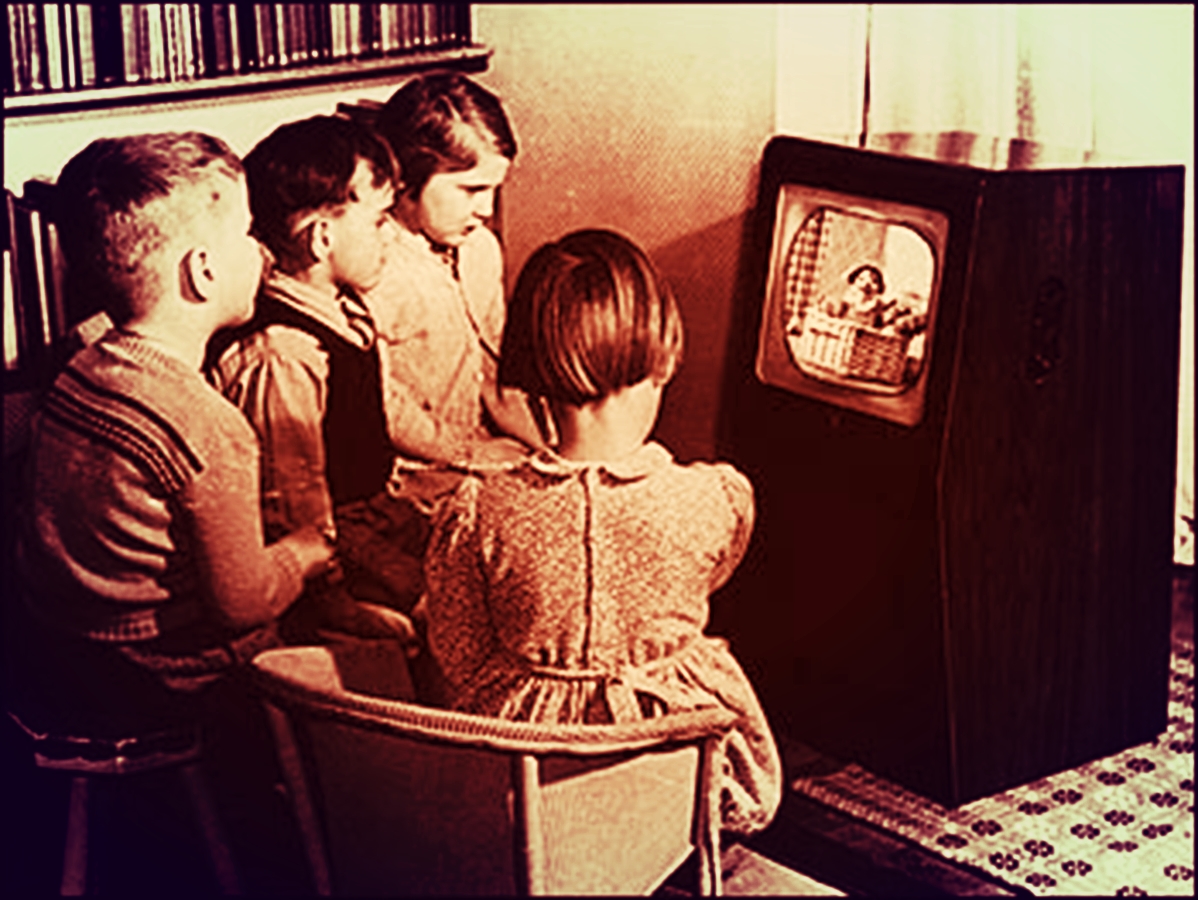
Or TV programs. Remember how we used to follow a series for years .. like Seinfeld, or Friends, and Thursday was the night you didn’t go out because you might miss an episode?
Well, it’s not like that anymore, because there are 500 channels on the satellite, and then there’s NetFlix, Hulu, Kanopy, and a half dozen other additional outlets, and then you can also stream television episodes from any point in the history of broadcasting, and watch them at any time of the day or night.
All you have to do is choose which episode … And again .. that’s stressful. What if you decide to watch this one episode, or this movie, and there’s another better one you don’t have time to watch because there’s only so much time in anyone’s life?
You can choose. But sometimes, it is great when someone else chooses for you. Isn’t it great when you ask your official or unofficial ‘other’ what they want to do, and they tell you? In detail? What they want to eat, where they’d like to go, and what they’d like to do after that? It can feel really good to hand over the reins to someone else, occasionally.
You can choose to agree, or disagree, or to start a dialogue where your preferences are considered and best of all, suddenly, you have more choices!
What we learn, as kids, and what we take with us into our adulthoods, is that every group in which we are included is a community, and that not everyone’s needs can be met all of the time. Fair is not always equal. We resent if there is one person making all of the decisions all of the time. We need to spread the freedom of choice around and amongst us.
As we grow and begin to reason, we also see the consequences of our choices, and learn that what might be fun or easy in the short run, could be disastrous in the longer run. We learn that we may have to deal with the regret of making a bad choice, but that we can’t always know what is best, and that mistakes, and how we deal with them, are also a part of life.
Choice can be a liberating or a limiting thing, depending on circumstances. There are days when, just like a child, it’s best to limit your choices, to ask yourself to be responsible for just so much, and no more. Limiting the amount of decisions you need to make can be as beautiful a thing as having the reason and responsibility to make really big choices.
You can choose that too.
(originally published 2018/03/18 on Bob Segarini’s DBAWIS website)
by Roxanne Tellier first published 21/12/2014 on Bob Segarini’s Don’t Believe A Word I Say …. So here’s what was happening, mostly in Youtube and music, 9 years ago!
This year it falls to me to be the last voice of 2014. Still decked out in my new holiday outfit, and digesting our early family New Year’s dinner, I’m parsing my memories of the events of the last 365 days. Some incidents filled me with joy, while others had all the appeal of an ugly, if ironic, Christmas sweater.
Now, that’s MY kind of Holiday table!
Life is a seesaw; for every up, there’ll be a down. Revelations and accusations of chronic sexual abuse of women were aimed at celebrities Woody Allen, Jian Ghomeshi, and Bill Cosby, as well as at pro footballers, politicians and university students. But in the music world, women took a strong lead, garnering awards for their abilities, and sadly, often attention for their willingness to literally expose themselves to the world. (What is it with our obsession with big butts, she asked rhetorically?)
One of the biggest winners of the year is Taylor Swift, who transitioned from introspective and observational country songs to pop and fashion diva . “She released a best-selling album, took on Spotify, performed at the Victoria’s Secret show and turned a tabloid reputation for man-trap desperation on its head, emerging as a single-and-loving-it cheerleader for girl power.”
“Ms. Swift’s latest album, “1989,” her first under the aegis of pop, arrived in October and in its first week sold 1.287 million copies, more than any of her competitors in first-week sales, and more than any album in that time period since 2002.” (The New York Times, December 2014)
I’m still not convinced. And I like this parody of “Shake It Off” better than the original.
On the country scene, Maddie and Tae’s “Girl In A Country Song,” hit number one on the Country charts December 20, 2014 after 23 weeks of climbing said charts. The song is a satire of the contemporary “bro-country” trend, where the biggest male country stars objectify their downhome ladies.
Meghan Trainor’s another female with a Nashville background. Only 20 years old, she previously wrote and self-released two albums, and has had song writing cuts with Rascal Flatts, R5, Sabrina Carpenter and others before releasing the mega earworm “All About That Bass.” Unfortunately the follow up, “Lips Are Movin’ ” is pretty much a virtual remix of “Bass.”
Iggy Azalea has cornered the market on Australian white woman rap. Her song “Fancy” reached number one on the U.S. charts, with Azalea becoming only the fourth solo female rapper ever to top the Hot 100. Jessie J, Ariana Grande & Nicki Minaj work the same street, and their joint effort, “Bang Bang,” debuted at number one in England, and reached the top 10 in Canada, Australia, New Zealand and Bulgaria. The song now sits at number 3 on the U.S. charts, and has been nominated for 2015’s Grammy Awards for Best Pop Duo/Group Performance.
On the adult contemporary front slash latest Disney song to drive parents mental, both Idina Menzel and Demi Lovato had hits with “Let It Go,” the first song from a Disney animated musical to reach the Billboard top ten. The song, from the smash hit Frozen, has sold 3.5 million copies as of this month. And still counting.
This adorable mother/daughter duo’s video went viral (4.5 million views) when they lip synched to another song from the movie, “Love Is An Open Door.”
Still bubbling on the charts, Sia’s electro-pop hit “Chandelier” video has enchanted viewers with the help of Maddie Ziegler, a young, fearless and apparently boneless 12 year old dancer. The track was certified quadruple platinum by the Australian Recording Industry Association (ARIA) and platinum by the Recorded Music NZ (RMNZ) and Recording Industry Association of America (RIAA). It’s hard to take your eyes off young Maddie, as 397 million hits will attest.
Madonna had a hissy fit this week, when her new music hit the Internet prematurely. She posted this on Instagram on December 17, “This is artistic rape!! These are early leaked demos, half of which won’t even make it on my album. The other half have changed and evolved. This is a form of terrorism. Wtf!!!! Why do people want to destroy artistic process??? Why steal? Why not give me the opportunity to finish and give you my very best?”
I guess she had it explained to her, because two days later she released six songs from her upcoming album Rebel Heart. Genuine outrage or publicity stunt? Who knows. Or cares.
It wasn’t all good for women this year. Jennifer Lawrence, Kate Upton, Kim Kardashian, and more were digitally hacked in August 2014 and their nude selfies were posted all over the Internet. Here Comes Honey Boo Boo was cancelled after Mama June was found to be dating a sex offender – again.
Women were largely unrepresented at the 2014 Grammy Awards, although Lorde’s “Royals” won Best Pop Solo Performance and Song of the Year. Alicia Keyes won Best R&B Album, and Rhianna picked up the Best Urban Contemporary Album. But overall, it was a Grammy sausagefest, as Daft Punk, Macklemore & Ryan Lewis and Pharrell Williams cleaned up in the main categories.
Speaking of Pharrell, his famous hat sold for $44,100 at an eBay auction to fast food chain Arbys The money is going to From One Hand to Another, a charity that helps children learn through technology and the arts. Unfortunately, he also seems to have sold his ability to generate a followup hit to “Happy” (Song of the Year at 2014 Soul Train Awards.) His new song, “Gust of Wind,” is pretty gustless.
We lost a lot of good people in 2014, including Joan Rivers, Shirley Temple, Lauren Bacall, Peaches Geldof, Jan Hooks and Maya Angelou. Although the voices of Philip Seymour Hoffman, Mickey Rooney, , Richard Attenborough, Harold Ramis, Sid Caesar, Casey Kasem, Tommy the last Ramone, Phil Everly, Pete Seeger, David Brenner, John Pinette, and others were silenced, it seemed that the loss of Robin Williams hit people the hardest. His last cinematic performance, in Night at the Museum; The Secret of the Tomb, debuted December 19th.
We also lost the services of Toronto Mayor Rob Ford, who withdrew from the race after being diagnosed with a rare tumour of the abdomen. Brother Doug Ford officially signed up to step into his place just minutes before the deadline for candidates to submit their registration papers. But it was John Tory who won the position. We’ll have to see how well Mayor Tory runs the city, but in the meantime, it’s been a refreshing and nondramatic breath of fresh air for the Big Smoke.
In the ‘States, a St. Louis County grand jury decided not to indict Ferguson, Missouri, police officer Darren Wilson in the August killing of teenager Michael Brown. And an Ohio special grand jury decided that no officers would be charged in the death of 22-year-old John Crawford III, who was shot and killed inside a Wal-Mart while carrying an air rifle sold at the store. In New York, a special grand jury decided to not bring charges against the officers involved in the death of Eric Garner, an unarmed black man who died in a chokehold during an arrest. This week, Cleveland Browns wide receiver Andrew Hawkins wore a shirt calling for justice for two black Ohioans (John Crawford and 12 year old Tamir Rice) recently killed by police, onto the field before a game against the Cincinnati Bengals. With racial unrest and worldwide protests over the apparent lack of justice, all eyes will be on the grand jury called to decide if the police offers who shot Tamir Rice will be indicted.
At the cinemas, the monster hits primarily had the first initial “G” – Guardians of The Galaxy, Gone Girl, Grand Budapest Hotel. Non-G movies included Ida, creepy 70’s cinema throwback Nightcrawler, JonStewart’s Rosewater, and Snowpiercer, with a dramatic ending making the political statement that sometimes you’ve just got to blow it all up and start all over again. What we won’t see this holiday season is “The Interview,” pulled from it’s planned December 25th opening by Sony Pictures Entertainment, after hackers leaked several other then-upcoming Sony films and sensitive internal information. The hackers, whom the FBI believe have ties to North Korea, demanded that Sony pull the film, which it referred to as “the movie of terrorism,” and threatened terrorist 9/11 style attacks against cinemas that played it.
On December 19, Craig Ferguson’s final episode of the Late Late Show aired, but was largely overshadowed by the finale of Stephen Colbert’s Colbert Report. Both shows will be very much missed.
What will the new year bring? Here’s hoping for a lot less controversy, and a lot more quality entertainment. Will the ladies take their current success to the 2015 Grammy Awards or will Sam Smith’s album win Record of the Year?
I’m keeping an eye on several groups that I hope will break out this coming year, including Vintage Trouble, who knocked us dead at Lee’s Palace in September; St. Paul and The Bones, who just keep getting better and better, and alt-J, a group I first saw on British TV who are starting to get airplay in Canada, after scoring several high profile late night spots on American television.
And of course, I remain infatuated and enthralled by Bruno Mars, who’s latest outing with Mark Ronson is racing up the charts. With nods to Nile Rodgers, Nelly, James Brown and early Prince, it’s a more classic funk that can’t help but pull you out of your chair and on to the dance floor.
So that’s it … goodbye 2014. Wishing all Don’t Believe A Word I Say readers a happy holiday season, and a bright and shiny New Year!
Happy Holidays to all! And to all a superior New Year!
(originally published Dec 13, 2015, on Bob Segarini’s WordPress)
My mum embodied the Spirit of Christmas. She loved everything about the holiday, and she made every one of my childhood Christmas’ as merry and bright as she could.
She’d grown up in the depression, and my family always struggled financially. But mum knew that Christmas wasn’t about money. When times were tough, she’d tell us it would be a “Hoodoo McFiggin” year – that meant the only presents would be things she had to buy us anyway, just to keep us clothed and fed – underwear, socks, boots. Presents were lovely, but some years, presents could wait. Christmas was about gathering with family, and sharing what we did have, and what we had to share was love.
She just had so damn much joy and childlike belief in the season that it all came naturally through her to us … the breathless lead up that began months before, when she’d start asking my sister and I what we were going to ask to receive from Santa, and the admonition that we must be very sure of what we’d tell the Big Man when the day came … this was serious business! We were to name only one important item we really, really wanted. If there were other gifts, they would be of Santa’s choosing. We’d spend hours arguing over what toys were best, what we really wanted, and we’d change our minds a zillion times before our visit to Santa’s Kingdom.
Nor were the needs of others to be forgotten. We’d be given a small amount of money, and a list of those we needed to delight with thoughtful gifts. It’s extraordinary how far $5.00 could go back in the sixties. We would have been mortified to not have a gift to give to any of the family who had brought a gift for us. Some years would find us digging through our own stash of precious things, in order to find something we could wrap quickly and present to an unexpected guest.
In the run up to the Day itself, we’d drag out the boxes of carefully packaged ornaments that Mum had collected through the years. She’d linger over the battered aluminum stars made from pie plates, reminding me that she and I had made those together, one year when I was very young, and recovering from the mumps. She’d carefully unwrap the fragile glass ornaments she’d had since she and dad first married, each colorful globe a warm memory. And she’d always linger over a set of orbs, some round, some tear-shaped, so transparent they reflected rainbows, so precious and delicate, “they’re like soap bubbles , Roxanne! Aren’t they beautiful?!”
We had to have a real tree. She felt there was no point in having a tree if it didn’t come with that delicious smell, and the scratchy feel of pine needles under foot. The tree would find a place of honor in the dining room, and strict instructions about its care and watering were delivered. After the tree was set into the metal holder, she’d draw a bright red and sparkly cloth gently around the base, and then add puffs of ‘angle hair’ to make the tree look like it was floating on a cloud.
She’d drape the tree’s branches with long strands of tiny glass beads, the beads a little more worn every year, but shining nonetheless. The box of tinsel was precious too; after Christmas we’d gather as many of the used strands as we could and save them for the following year. We had two special toppers for the tree – one, a paper plate collage of an angel adorned with cotton batting that I’d made in first grade, the other , a plastic doll dressed as an angel, it’s halo tipped jauntily to the left.
Christmas songs would be playing on the little record player, and we’d all sing along as we decorated. Jodi and I liked to make up new and naughty words to some of the classics, just to make mum laugh, before she’d chide us to “Behave! Santa hears and sees everything you do!”
Once the tree was up and decorated, we went into a two week hiatus, where the other 50 weeks of naughtiness were replaced by determined niceness. We’d wait breathlessly for the Christmas specials to appear on the TV; without video or DVD, you had to be home to see “A Charlie Brown Christmas,” “How the Grinch Stole Christmas,” or one of the other animated delights, most of which seemed to be Rankin Bass productions.
As my sister and I got older, we began to appreciate more adult offerings; Jodi loved “It’s A Wonderful Life.” My favourite was “Holiday Inn,” with the moment I waited for being when the heroine posed in silhouette against a giant red paper heart, before dancing through it … and breaking poor old Bing Crosby’s heart.
And of course no Christmas was complete without the scary, but ultimately uplifting, black and white classic … Alastair Sim in “A Christmas Carol.” God bless us, everyone!
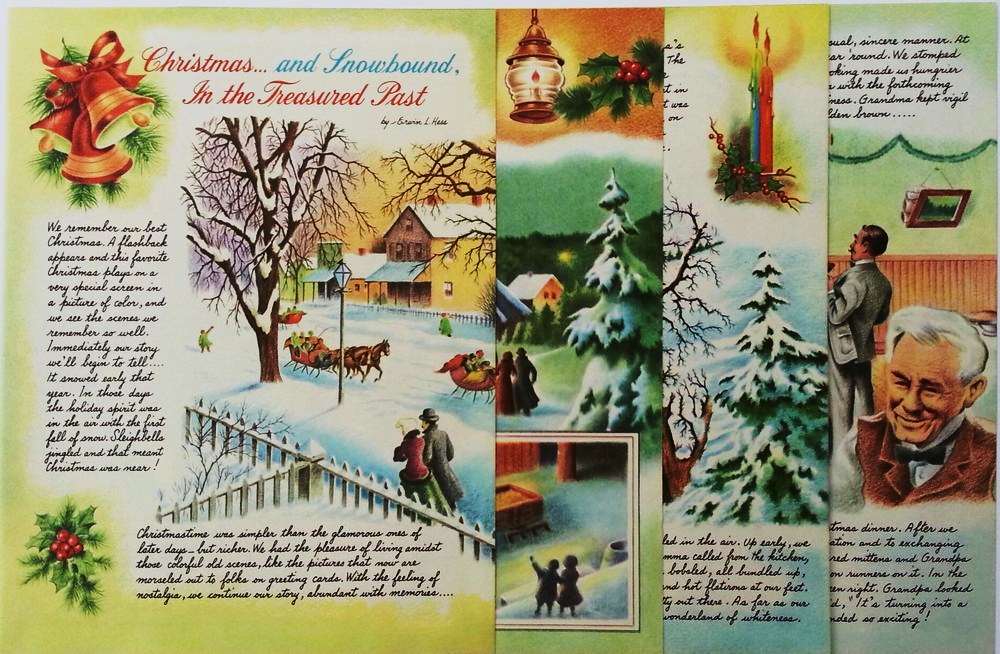
There was also one special box that contained nothing but photos, recipes, newspaper clippings, song lyrics, and a few very treasured books. Our favourite to read and to have read to us was” Christmas and Snowbound in the Treasured Past,” a large full coloured collection of holiday poems, stories, artwork and photos, from 1961.
“We remember our best Christmas. A flashback appears and this favorite Christmas plays on a very special screen in a picture of color, and we see the scenes we remember so well. Immediately our story we’ll begin to tell … It snowed early that year. In those days the holiday spirit was in the air with the first fall of snow. Sleigh bells jingled and that meant Christmas was near!” Erwin L. Hess
We loved that book; it epitomized an ideal Christmas, one that we’d never had, nor likely ever would. But it held a promise, so much so that the phrase, “Christmas and snowbound in the treasured past” became our family code for how we imagined paradise to be.
Were winters colder then? Not always … one memorable Montreal Christmas Eve, the family toddled off to church in summer dresses and sandals, only to emerge into a starlit night made brighter by soft, fat flakes of snow gently falling onto the sidewalks. But that was an aberration; most Christmas Eves were ‘see your breath’ cold, brightened by our new knit hats and mittens that Gram had made to keep us warm.
Cold, colder and coldest was more often the weather on Christmas day. During my teen years, the habit was to gather at one of the uncles’ house to carve the roast beast. The best parties were at Uncle John’s big house in Chambly, as there was plenty of room for the kids to play, and even a special room where we could have our own holiday meal, manners and decorum cast aside, while the adults ate, smoked, clinked glasses and laughed about adult matters. We felt a little sorry for them – they didn’t even get to watch TV while they ate!
No matter where the party was held, in time the celebrations would wind down, and we’d gather our outdoor clothing, say goodbye to the 14 cousins, and kiss all the ‘grumps,’ (grown ups) before piling into the car for the long ride home, across snowy roads and an ice-laced Pont Cartier, and then along Sherbrooke Street for miles, our bellies full and heads nodding, and inevitably slipping into sleep just before the car drew into the driveway. If we were small enough, we’d even get carried to our beds, where our new pjs and slippers awaited us.
It was a very different time, and, as with every generation that comes along, we were creating our own version of what Christmas should look and feel like. My mother’s memories were precious, but no more precious than the one’s she created for my sister and me.
Times change, and families are usually smaller than they used to be, and often times, a great deal more complicated. The name we give to that wonderful time of year when we get together to eat and sing and laugh and pray may be Christmas, or Hanukkah, Kwanza, Ramadan, or even Festivus. Heck, call it “Christmahanakwanzika“ if you want to.
What we call the holiday doesn’t matter – what matters is that we take the time to find that small, still place in our hearts, where peace and goodwill live. We gather with our families and friends to join our hearts and hands, to share what we have, and to give thanks that we … together … made it through another year, and are ready to enter another year, whatever it may bring … together.
When I was growing up, you weren’t supposed to trust anyone over 30. 40 was the start of being ‘over the hill.’ It was “Welcome to Middle Age!” at 50. Then at 60 they’d say, you’re “Old enough to know better, but too old to care.” When you hit 65, you can retire – from work, and/or life. And then 70 … 70 is ‘the new 40’ … or 50 or 60. Nah. 70 is 70.
Seventy – Don’t Panic! Consider the alternative! And the one I see most often from my peers – “It was more fun being 20 in the 70s than it is being 70 in the 20s.”
I’m too young to be seventy. Even when my everything hurts, I’m still plotting and planning and thinking and doing and writing and singing and making good trouble. I can’t keep a lid on it; I never learned how.
But there’s something that’s really not cool about being seventy – it’s being invisible most of the time. It’s being underestimated, and having assumptions made about abilities and capabilities. And it’s living with what other people presume when they look at or through an elder, their eyes shifting to focus on the person behind them, because they can’t imagine what a senior has to offer, and they’d rather not deal with someone not as young, quick, and as with it as themselves.
I chose to make a major change to the rest of my life when I opted to move to a new city, far away from my friends, colleagues, and acquaintances. Some might think this drastic move an opportunity to reinvent oneself, to wash away the past, and to start anew. But instead, it was a shock to the system. These new people I was meeting only saw the surface, that little old white-haired lady on a scooter. But we are all – each of us – so much more. We are the sum of all of our lived experiences. Being invisible, being a blank slate, presenting myself solely on how I looked and acted at 70, was the denial of the existence of all the major and minor events of a vibrant, action-packed life.
And I hated it. At 70, I wanted a victory lap, not to have to start over from scratch. But it is what it is, kids. After a lifetime of feeling ‘seen’ I discovered what so many learn as they age – society’s triage of acceptance.
On one level, I’ve always understood the importance of community, of friendships and relationships, and of how ‘it takes a village.’ But when you move from one place, you leave your physical community behind. And it feels like losing a limb. You’ve can have a lot of connections online, but that won’t keep you warm at night.
Loneliness can kill you, as surely as a drink or drug habit. During the closures and restrictions of the Covid 19 era, we learned that not being able to gather for the highs and lows of life sucked a lot of pleasure out of our human experiences. Seniors, and those who lived alone, were especially hard hit from the lack of human contact. A study in June, 2023 found that:
“People who experienced social isolation had a 32% higher risk of dying early from any cause compared with those who weren’t socially isolated. Participants who reported feeling lonely were 14% more likely to die early than those who did not.”
At any age, it’s important to get out of your cocoon, get active, get involved, and to meet people. For seniors, it’s a sad truth that you have to keep making new friends, because your old friends, bless ‘em, will be – if you’ll excuse the expression – dropping like flies.
For the most part, I’ve always been a rebel who does what feels right, rather than what makes others happy. And I’d like to think I’ve learned a truth or two in my life’s travels.
But the wisdom of age doesn’t come with a megaphone. You’ve still got to have the chutzpah to demand to be heard and seen.
I always did like an audience. So, while I have you here, I’m going to share a little of what I’ve learned – mostly the hard way – in the last seven decades:
From the moment we are born, we have to figure out whose voices we’re listening to in our heads. This is your one life. You can and should listen to the advice of your elders, but in the end, it is your own path to walk, regardless of your families, cultures, and beliefs. We are born alone, and we die alone. In between, we need to be the sculptor molding the shape of our life.
BUT – no matter how determined you may be to try to chart your course, there’s no guarantee it’s going to go in the direction that you planned. And maybe that’s not where you needed to go, anyway. Zigging when you meant to zag can sometimes lead you to somewhere all together new and unexpected. The future will not be forced; be open to the unexpected.
Happiness is a choice. Neither you nor anyone you know is going to have a perfect life. There’s going to be moments of great joy, and moments of deep sadness, but you’ll get through whatever gets thrown your way, even if it leaves a scar. It’s life’s hurdles that make us resilient, and we need that resilience so that we can help lift others when they, too, inevitably fall.
You can get away with being dopey and vacuous when you’re young and attractive, but being stubbornly obtuse as an adult takes all the pretty out of a person.
What makes you seem the strange, nerdy, uncool person as a kid, can often lead to being thought of as interesting, quirky, and distinctive when you get older.
What other people think of you is none of your business. Or theirs. When you’re young, you think that every embarrassing thing you do is observed and found wanting. As an adult, you still worry about what your peers think of you, but now, you’re judging their actions right back. When you’re older still, you finally realize that everybody was too busy worrying about their own cringeworthy actions to notice yours. You are so much less interesting to others than you think.
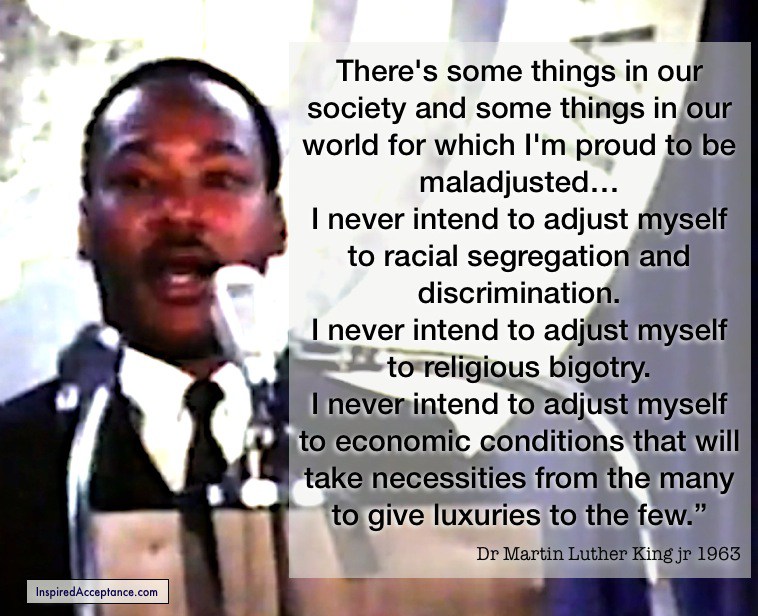
The Buddha once said “Hatred is like drinking poison and expecting the other person to die.” You know that thing that bugs you? Let it go. Don’t hold grudges; it’ll just hurt your stomach and give you frown lines. Don’t look for opportunities to complain and hate. No one likes a whiner. Don’t be a racist, bigot, chauvinist, or antisemite. Don’t. Just don’t. If you want to live in a kind world, choose empathy, not cruelty.
Compromise, while necessary, still means that someone’s gonna be unhappy, because no one ever gets everything they want. Compromise anyway.
Even the nicest people think, “What’s in it for me? “We are all creatures that want to have good, fulfilling lives. As a young woman, building a family, building a career, I often put other people’s needs ahead of my own. And I learned that sacrificing your own needs for a loved one can be a lot like sacrificing your life for a job; it’s mostly unappreciated, love and respect can be withdrawn without warning, and, sadly – you can always be replaced. Always. If you must put other’s needs and wants before your own, do it wisely, and don’t expect repayment.
Trust your gut, in friendship or romance. Marriage and relationships should be fun, make you feel happy, and make hard times easier. You’re not supposed to be constantly sad or needy. If you notice a red flag, there’s a reason for it. The right person will bring out the best version of yourself. It’s not the right person if you are trying to be someone you’re not to make them happy, making yourself smaller so that they can be bigger, or if you’re compromising your values. Sometimes being alone is better than being in the wrong company.
You are not obligated to keep toxic people in your life, no matter their connection to you. Your life’s job is to take care of yourself. The people you keep around you should make you a better person, a person who feels loved and supported. You need to let go of people that bring you down and make you feel insecure.
Take the reins of your life. Don’t be or play a victim. Don’t be a martyr. Refusing help for fear of being judged as ‘less than’ is only a punishment on you, your kids, your family. If you need help, ask, and take what you are given with gratitude. Start a GoFundMe to pay for your family’s, or your pet’s, medical needs. Call Meals on Wheels. Call 211 and get help. There are kids in high school that can get credit for helping you with home maintenance, shoveling, mowing. It’s not worth killing yourself over clean gutters or a shoveled walk. Just remember to pay it forward, if and when you can.
Don’t live in a ‘bubble.’ You can ‘play along to get along,’, but if your opinions, and decisions on your choice of jobs, schools, marriage/relationship/sex partners and tech are decided by committee, rather than yourself – you’re doing it wrong.
Remember, the victor writes history, so when you read history, try to find out what the other side had to say. Accept nothing at face value; there’s always more to the story.
Social media can help you stay in touch with family and friends, but it can also take over your life, if you let it. Too much time spent scrolling destroys your attention span, and takes time away from living your best life. Consider setting a time limit for how long you’ll be on your mobile devices. “Always leave them wanting less.”
Take a stand. But if it turns out you were wrong – apologize, frankly and honestly. You don’t have to argue over every disagreement. Pick your battles and let trivial things slide.
“Everyone is entitled to my opinion” is a joke, not a commandment. It is always okay to say, “I don’t know,” or “This is not my area of expertise.” Wild speculation doesn’t add anything to understanding issues. Before you share your opinion, ask yourself; Is it true? Is it necessary, or at least useful? Is it compassionate, or at least, not harmful?
Be true to yourself. Honesty is the most powerful tool you own. Use if wisely, because, once you are branded a liar, you will never be known as anything else.
Travel, as much as you can, as far as you can, as often as you can. Cross an ocean. Travel while you’re young, and have few responsibilities. Travel when you’re older, and bring the kids! There’s a whole other world out there that many will never see, except on a screen. Be the one out there seeing and doing, not the one who just watches other people enjoying life.
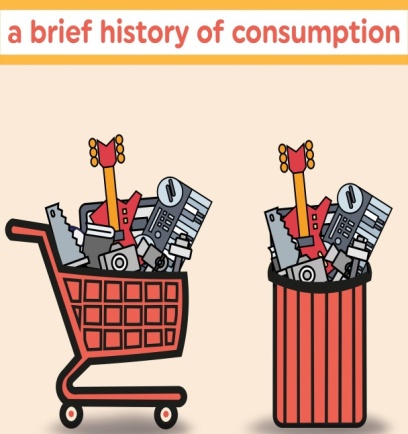
Focus on experiences, not things. At 70, you’ll remember good times with great people, and visiting new places or attending important events. You will NOT remember that 12-foot skeleton or Barbie photo booth you absolutely had to get the kids, no matter the cost, in order to make their Halloween ‘perfect’. Money can’t buy perfect, even thought the kids swear that it does.
What you thought you couldn’t live without changes every five to ten years. One day you’ll realize how many years you have spent giving all your time, money and energy to buying ‘stuff’ that only made a mess that you now have to either find a place for, or dispose of, at yet more cost of time, energy and money.
Read something every day. Reading, be it on a printed page or an electronic device, is crucial to a rich life. Read to destress, to find tranquility, to escape into other worlds, or to learn how you can use words to communicate your dreams better to others. Reading teaches you focus, it expands your vocabulary, helps with concentration, and improves analytical thinking. And you can nearly always find something to read for free or inexpensively! Join a library, while you’re at it; you won’t believe the wonders you can find there!
Dance! So many of us have stopped dancing, yet dancing is universal, and an ageless impulse. We feel the music, even while we are inside the womb, and move to it. But as we age, our bones grow stiffer, and we can get so self-conscious about dancing that we stop allowing ourselves to feel the rhythms of life. Some people want to dance, but haven’t a partner. Dance anyway.
Speaking of dancing … The habits that you formed in your teens and early adulthood are going to be what define you as an older person, so try and make your habits good ones. Eat properly. Exercise. Avoid ingesting anything you’ll later have to learn to live without. Do you want to look and feel like a Trump or a Biden when you’re 80? Mick Jagger’s 80. Dick Van Dyke is 97, and he’s still dancing!
You know the Canada Health Plan, with its emphasis on fruits and veg? Read it. Prioritize it. Being retired doesn’t mean you get to only eat what you like. And i can tell you from personal experience – if you only eat what you like, instead of what’s good for your body, you’re a) not gonna get as old as you might have liked, and b) you’re not gonna like what it looks and feels like when your body gets all stopped up, and cranky.
Acknowledge your age, and your health. At least once a year, take your physical and mental ‘pulse’; no one is going to go out of their way to make sure that all of your bits and pieces are in working order. In fact, there’s a form of health care triage that begins to happen after the age of 65; no one’s going to come and save you from falling apart, you’re going to have to do it yourself. Make a check list of what needs to be evaluated every year: eyes, ears, bones, heart, blood. GET THE PHYSICAL. Know your medical rights. Get your ducks – er, docs – in a row; you’re gonna need ‘em.
Physical Health: If you don’t like what the doctor tells you, get a second opinion. If you still don’t like it, get a third. Take care of your body if you want it to make it to the end in one piece. Take care of your teeth. Protect your ears; we want you to hear all the good stuff. And tinnitus, if you are unlucky enough to get that, will drive you mad. Exercise, keep your weight reasonable, cuz it’s damn near impossible to lose weight when you’re over 60. And yes – use sunscreen
Mental Health: Your brain is getting older too. You’re going to need to ‘use it or lose it,’ so start finding ways to stimulate your brain. Crosswords, Sudoku, crafts, learning a musical instrument – these are all proven to help keep your brain ticking over properly. There are tricks and tips you can learn to help you remember why you went in to the next room, or where you left your keys. If you are feeling low, you may be depressed, and that’s no way to spend your Golden Years. Your brain is precious; see a doctor or a counselor if you want to keep it working properly.
It IS later than you think. But it ain’t over ‘til it’s over. So many people tell me they wish they hadn’t waited until retirement to pursue their dreams of being in the arts or music or theatre. Well, it’s now or never. Listen to your heart. There will always be people out there with ideas about what you should be doing or not doing, but not everyone’s thoughts are worth your consideration. Smile, nod, and do what you gotta do.
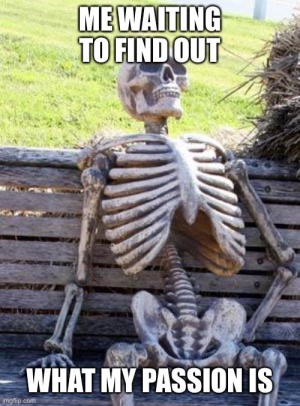
Do you know what your passion in life is? It’s what you are doing or what you want to be doing, every day. It’s what you think about, talk about, study, practice, look up on the internet, argue with others about. That’s your passion. It doesn’t have to earn you a dime; if you want to do it, the reward is the pleasure you get from doing it. So do it.
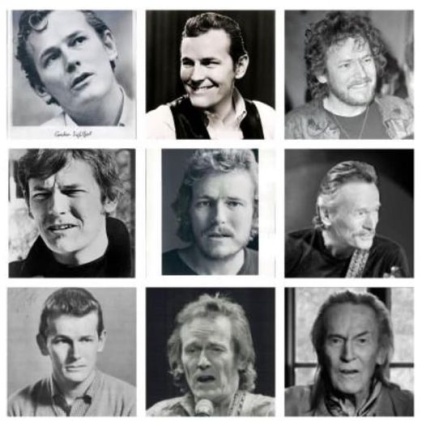
Everyone has a story of the first time they heard or saw Gordon Lightfoot. For me, it was in 1969, at Montreal’s Place Des Arts. His words and music drew me into another world. And his band, with Red Shea on lead guitar, and bassist John Stockfish, fit the folk-based sound to a tee. I was won over immediately and completely.
He was as Canadian as they come, starting as a choir boy in St. Paul’s United Church in Orillia, and making his first appearance at Massey Hall in Toronto at the age of 12. He would go on to play there 170 more times throughout his career. Some call Massey “The House that Gord Built.”
We called him Gord, or Gordie, because in Canada, our idols and icons are of the people. No matter how big and famous a Canadian gets, they’ll always be someone that you could run into on the street, in a bar, at a sporting event. Gord’s gym was in the Sheraton Hotel, where he regularly worked out six days a week, and he was frequently seen passing thru the Sheraton lobby, on his way there. The year of the first O’Cannabis event, held adjacent to Canadian Music Week‘s site, I saw him cruising the aisles, checking out the paraphernalia. When I turned the corner, and ran into film critic Jim Slotek , Jim excitedly told me that he’d just taken a selfie with Gord.
Lightfoot sang Canada’s stories, and he played in every part of it. He cared so much about getting our story right that he even corrected his own lyrics to The Wreck of the Edmund Fitzgerald when information on the wreck was updated in 2010; the line, “At 7 p.m. a main hatchway caved in; he said…“; was changed to, “At 7 p.m. it grew dark, it was then he said….” And he changed the line “In a musty old hall” to ” In a rustic old hall” when parishioners of the Maritime Cathedral took offence at the notion that their hall was musty.
In 2020, at the height of the Covid-19 pandemic, Gord was asked to sing for us on Canada Day. The legendary sound engineer and musician Doug McClement remembered the day well, writing,
“So here’s my favourite of the dozen times I was lucky to record Mr. Gordon Lightfoot. June 11, 2020 on the front porch of his home in Rosedale. (across the street from Drake’s house) for the Toronto Canada Day special when we were all still distancing. His road manager told us “Here’s the deal. Get all set up and ready. No soundcheck. He’s coming out the front door, doing the two songs once, then going back in the house. So you better nail it, cause he will”. Nothing like a little pressure to get you focused. But with Terry Walker and Don Spence on cameras, and Shelagh O’Brien calling the shots, we were in good shape.“
When Gord’s management team announced the cancellation of his U.S. and Canadian concert schedule for 2023,” for “some health related issues,” many of us worried. After all, at 84, most people would be kicking back and relaxing, not gallivanting all over North America like a young pup. While people longed to see him one more time, there comes a time when you’re allowed to rest.
But we were right to worry. On the evening of May 1, 2023, at Toronto’s Sunnybrooke Health Sciences Centre, Gordon Lightfoot passed away of natural causes.
The day after his death, the Mariners’ Church in Detroit rang it’s bell a total of 30 times; 29 tolled for each of the crewman lost on the Edmund Fitzgerald. The final bell rang for Lightfoot himself.
A public visitation was held at St. Paul’s United Church, in his hometown of Orillia, and drew more than 2400 people. It was followed by a private funeral on May 8, 2023.
It’s been just over a week since we lost Gordie, but we can’t stop thinking about him. A petition is circulating at Toronto’s City Hall, requesting that Dundas Square be renamed to the Gordon Lightfoot Square. There’s also talk of a statue being erected in, or outside of, his beloved Massey Hall.
Lightfoot’s passing left Canada bereft. We’d lost our Gordie. But Canadians tend to look on the bright side; at least we had had the benefit of him, and his wonderful songs, for all of those years.
For more than sixty years, Gordon Lightfoot was one of the brightest stars in Canada.
But at the end of the day, he’ll always be remembered as ‘Our Gordie,” and a great Canadian.
People are funny; they want their lives to be interesting and noteworthy, but most of us are good for about 24 hours of novelty before we’re pining for ‘the good old days.’
What’s ‘normal’ anyway? Normal is whatever you believe it is, in your mind, in your life, and in your world. Normal is ‘the usual,” “my regular,” the commonplace, the typical thing that you like to do or say or eat or whatever it is you do in your spare time; I’m not judging.
What it isn’t, is exciting. It’s waking up at the usual time, having my regular breakfast, and then going to work or play in the way I do on a typical day. It’s going to the same places over and over, because you like what they serve, and it’s where “everybody knows your name.”
Before we moved in January, normal for me would have been reaching out to touch the odds and ends that used to live in and on my missing bedside table. Where it’s gone, nobody knows.
But in the bigger picture, on a scale of one to earthquake, my life, and the life of many others, has been less than normal for some time.
We have just celebrated the second anniversary of the onset of COVID-19 regulations, worldwide. Though I’m not sure that ‘celebrating’ is how most of us felt when we thought about two years of fear, discomfort, and hand sanitizer.
Brides Magazine says that “The traditional second-anniversary gift is cotton, making this the prime time to splurge on upgraded bedding or a cozy throw you can use when snuggled up together on the couch.”
Sounds about right. That was pretty much all that anyone did for at least the first twelve months of the plague: overeat and binge watch Netflix. Remember those heady first days, when we all masked up, avoided each other, sterilized anything that didn’t wiggle away from the Lysol spray, and prayed for a vaccine?
In those first few months, that was normal. It was also normal for us to bang pots and pans every night around dinner time, to encourage those health care workers that were (and still are) literally sacrificing their own health to take care of us.
In January 2022, a load of frustrated truckers formed a convoy and honked their horns 24/7 to protest for what they believed to be their rights – which included their right to NOT receive a vaccine – and THAT became normal, for the poor souls in Ottawa who had to deal with what the Convoy wrought, bouncy castles and all.
Over the last half decade, we’ve normalized things which we could never have dreamed of having to deal with. In this I include the disastrous tenure of Trump; a poor beginning to the handling of a once in a century pandemic, and the subsequent whining once a life-saving vaccine became available; an attempted overthrow of the American government in January 2021, followed by something quite similar, if veiled under a web of candy flossed hot tubs, masquerading as ‘freedom’ while demanding a parallel overthrow of the Canadian government in January 2022; and then topped with a drizzle of a Russian attack on Ukraine, completely with threats of nuclear war, that sent many Boomers scurrying to find a school desk to cower under.
So what’s normal, exactly?
Many of life’s aspects, that we would have considered normal pre-COVID, have shown themselves to work for some, but not for others. For a while, it seemed like people realized the importance of community and mutual aid. When we were all pulling together, it did seem like we might be working towards a better normal.
But then, one day, that spirit of working for the common good began to splinter; some leaned into science, embracing vaccines, eager to see a world where everyone could be protected from a virus, while others opted to refuse the serum approved for use by every governmental and health agency in favour of quack cures and unproven placebos.
That was a normal that I really didn’t see coming.
For the majority of North Americans, normal is a world in which we’ve normalized one set of laws for the rich and powerful, and another set of far more extreme laws and punishments for those who are not white, cis, males.
All over the planet, normal is women knowing that they have to dress and behave in approved manners, if they want to avoid being attacked for the crime of being female. And normal is knowing that, if they are beaten, or raped, they cannot be assured that their story will be believed, or that their attacker will face any consequences. Normal is police stations filled with rape kit tests that pile up in storerooms, but are never prioritized for analysis.
Normal is people of colour knowing that there is nowhere that they are completely safe from assault, even in their own beds, in their own homes. Even if they are fleeing from a war, normal is knowing that white citizens will be prioritized in the rush to safety.
Normal is a complete lack of action or attention to the future of a planet where the Arctic temperatures are now routinely higher than the temperature in downtown Toronto.
Normal is watching the world’s richest individuals get richer during the pandemic, while the world’s poorest individuals fell further behind.
What we call ‘normal’ today is what we have decided to call normal. It wouldn’t be normal in any other space or time, but it’s what we’ve become used to living in and with, in order to be part of our society.
The unemployment rate in the United States, at 3.8%, is the lowest it’s been in history. Canada’s rate is 4.2%, and has traditionally been higher than in the U.S. or Europe, mainly because we have a higher proportion of seasonal industries, as well as a higher proportion of population in smaller, more isolated communities.
No matter where we live, there are many who are very nervous about returning to life, as it was defined, pre-COVID. The pandemic and our isolation revealed that our routines of commutes, office work, water cooler small talk, and the like weren’t necessarily conducive to a better quality of life. We discovered that many of us – mostly white collar workers – could work from home, in less rigid conditions that allowed those with physical or mental issues the space to thrive.
This year, 47 million people, mostly millennials, have joined the “Great Resignation” in search of better careers, with higher wages, remote options, and greater flexibility. It must be noted that they are privileged to be in higher end careers; these options are not available for the bulk of those who labour in minimum wage positions.
But for those that have this option, they’ve discovered that time is too precious to spend commuting, and that they want to work for a company that is as committed to finding a work-life balance as they are.
We have collectively learned that the ‘normal’ we are returning to, may not be so normal after all. Some things we can change, but many broad social problems are simply beyond our grasp at this time. For social change to happen, we will have to find a communal force of will in which we all refuse to return to the harmful systems that were highlighted by the pandemic.
To do that, we will need to re-learn the art of working together for a common good.
If we don’t or won’t demand change, we will have wasted what might be our last great opportunity for a societal re-set.
Last week I wrote about local bullies, and those that terrorize the citizens that elected them locally and nationally. More often than we might have thought, those elected bullies, unsated by the billions they suck from their people’s coffers, opt to extend their reign indefinitely. When they do so, they morph from being barely restrained autocratic bullies, into full-fledged, unrestrained, dictators.
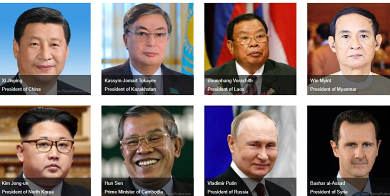
Let’s look at a shocking reality: based on the definition of a dictator being a ruler of a land rated “Not Free” by the Freedom House[1], there are currently 50 dictatorships in the world. There are 19 in Sub-Saharan Africa, 12 in the Middle East and North Africa, 8 in Asia-Pacific, 7 in Eurasia, 3 in the Americas, and 1 in Europe.
From Afghanistan to Yemen, and 48 places in between, these monsters hold the power of life and death over millions of human souls. Dictators not only do not love the people that put them in power, they don’t even see their people as human. Men, women and children are just numbers to be juggled, creatures to serve them and to be subjugated.
Class of 2022
We can reel off the names of some of these men (and they’re all men;) Putin, Xi, Ortega, Maduro, Kim Jong-Un, el Assad, Erdogan … what they all have in common is the need to not just dominate others, but to crush them, to own their very souls. They are cruel, world class bullies, who have perfected what they likely began in the school yard … insulting, hurting, threatening others who are weaker, smaller, less powerful and more vulnerable. They seek to destroy any vestige of freedom or pride in anyone who dares try to stop them.
North America’s 24/7 ‘breaking news’ media has kept us soaking in the bullying actions of Putin as he wreaks hell on Ukraine. But even as we gaze upon the horrors of Mariupol being pummelled into dust, dictators around the world have not stopped their assault on their own people.
As The Atlantic said recently, in an article entitled, “Dictators aren’t Pretending Anymore,”[2] autocrats now openly steal elections, stage coups, and invade other countries.
In the February 2022 Freedom House report on the state of democracy in the world, they stated that the world has entered the 16th consecutive year of what the political scientist Larry Diamond has termed a ‘democratic recession.’
“Democratic institutions and civil rights deteriorated in 60 countries, with Afghanistan, Nicaragua, Tunisia, and Sudan experiencing especially precipitous declines. At the beginning of the democratic recession, about half of the world’s population lived in a country classified as “free.” Now only two out of every 10 people do, while four in 10 live in “partly free” nations like India, and another four in 10 live in “unfree” nations like Saudi Arabia.”
In most of the last century, the enemies of democracy embraced the use of political violence, seizing power at the point of a gun. However, in the last few decades, dictators have generally first come to power democratically, winning seemingly free and fair elections, which they used as a jumping off point to concentrate power into their own hands, and eventually manoeuvred into a situation in which they could no longer be removed from office by democratic means.
In the last few years, however, there has been a return to violence, with the number of military coups worldwide jumping to seven. Over the past year, Myanmar, Sudan and Mali, military officers have used force to install their leaders into dictatorship positions.
The slow weakening of democratic norms, the slide into ‘fake news’ and ‘alternative reality’ has allowed those in high positions to kick away the illusion of a democratic legitimacy, and behave as ruthlessly as they wish. Laws meant to stop powerful people from abusing their power and authority have been so attacked and bowdlerized that it is increasingly unlikely that, even in a democracy, any elected official need fear an overlong prison sentence, if a sentence is given at all.
As we witnessed on January 6, 2021, social media worked alongside former president Trump and his enablers to ramp up allies when they attempted to overthrow the results of the free and fair 2020 election. More than a year later, Trump is preparing to run again, in 2024, despite laws that forbid anyone who was involved in an insurrection from seeking public office. And if he’s elected again, the path will be clear for him to ascend to dictatorship in the United States.
(*Section 3 of the 14th Amendment prohibits anyone who has violated their oath of office, by engaging in insurrection or aiding in a rebellion, from running for federal office.)
Canadians had a near miss this January with another sort of coup, an epidemic of full-scale bullying, when the Trucker Convoy blasted and blared their way into the news, and the downtown heart of Ottawa, with a headline concern of “Freedom” and a much longer manifesto that demanded, in small print that their supporters would never read, that all of the current federal government step down and be replaced with a governance of their convoy leaders’ choice.
These attacks on democracy are far too close for comfort. The enemy is not just on your wide screen, the enemy is at our gates.
Putin has attempted to keep NATO and other countries friendly to Ukraine at bay by holding the threat of nuclear war over our collective heads. Many fear that appeasing his appetites at this time will merely sacrifice Ukraine, while enabling him to then continue gobbling up the rest of Europe. Certainly, it would appear that he is determined to win at any cost.
“In June 2020, Putin signed a decree—the Basic Principles of the Russian Federation’s State Policy in the Domain of Nuclear Deterrence—that specifies two conditions under which Russia would use nuclear weapons. The first is unsurprising: “The Russian Federation retains the right to use nuclear weapons in response to the use of nuclear weapons and other types of weapons of mass destruction against it and/or its allies…” But that sentence ends with an unusual statement: “… and also in the case of aggression against the Russian Federation with the use of conventional weapons, when the very existence of the state is put under threat” [emphasis added].
In his February 24 speech, Putin echoed that unusual language to describe his Ukraine invasion. The United States, he claimed, was creating a hostile “anti-Russia” next to Russia and in Russia’s historic land. “For the United States and its allies, it is a policy of containing Russia, with obvious geopolitical dividends,” he said. “For our country, it is a matter of life and death, a matter of our historical future as a nation. This is not an exaggeration; this is a fact. It is not only a very real threat to our interests but to the very existence of our state and to its sovereignty” [emphasis added]. Putin has defined the current situation as one in which, in line with the principles of its deterrence policy, Russia retains the right to use nuclear weapons.” [3]
That’s some world class bullying, right there.
But does all of this sabre-rattling lead to the conclusion that the only way to stop a bully is with a bigger bully? That would depend on how we define our systems of justice.
Post World War II there were consequences for Hitler and his party. But the process of the Allies seeking justice in response to the atrocities of Nazi Germany were intended to establish a precedent that they hoped would prevent war crimes from ever occurring again. We’ve seen, in Putin’s criminal actions in the Ukraine, that the rules and laws will not stop a determined warmonger.
Nonetheless, democratic systems of justice, and criminal sanctions are not bullying; they are the way societies are governed, in order to protect all members of nations.
Without a crystal ball, I cannot say what will happen next in the Ukraine/Russian war. I do feel though, that whether we are ready to admit to it or not, we are already part of the launch of World War III.
“As Russian troops advance toward Kyiv, democracy is no longer the only game on the global stage. And so the coming decades won’t just pit democracies against autocracies in key territorial battlegrounds like Ukraine. They will also pit the defenders of democracy against those who blatantly reject the supposed decadence of popular self-determination in the sphere of ideas.” (The Atlantic, Feb 2022)
This has been a hellish week. We are watching the unthinkable perpetrated upon the peaceful people of Ukraine by a Russian despot who has become a madman.
Putin’s Billion Dollar Palace
During two years of solitude and paranoia, Putin seethed and simmered as he isolated in his dacha on the Black Sea coast, attempting to avoid contracting COVID-19. Eventually, the germophobe ended up in an echo chamber of his own crazed thoughts. These he shared on the Kremlin’s website on July 12, 2021 when his work was first published in the Ukrainian and Russian languages..
His 7,000 word manifesto, described as ‘rambling’ and riddled with ‘many (historical) myths’, denied Ukraine’s statehood, and laid claim to much of modern-day Ukrainian lands by stating that ‘they are entirely the brainchild of the Soviet era, and was to a large extent created at the expense of historical Russian lands.”
Putin repeatedly demonstrated his contempt for Ukrainian statehood, saying that the current policies in Kyiv are “anti-Russia .. which we will never accept.”
The passages contained ominous threats towards Ukraine, vowing to destroy Ukraine’s independence, a conflict begun during the inter-state war eight years ago, when Russia invaded and seized Ukraine’s Crimean Peninsula.
He also repeated what he said to then-US President George Bush Jr at a NATO summit in 2008, that “Ukraine is not a country.”
“I am convinced that true Ukrainian sovereignty is only possible in partnership with Russia,” Mr. Putin wrote. “After all, we are one people.”
This manifesto, Putin’s own ‘Mein Kampf’, outlined his plans for Ukraine. And on February 24, 2022, he put those plans into effect, launching what he called a ‘special military operation’ into the country. At the onset, Putin claimed that the Russian military only sought ‘demilitarization and denazification,’ but attacks far beyond that scope followed soon, from multiple fronts, and towards multiple cities.
The man who at first claimed to only want to reunite his stray Russian lambs, has instead perpetrated the worst physical attack on another European country since World War II. Like a demented, cast aside lover, he has determined that if he can’t have Ukraine … no one can.
The original plan may have been to reunite the countries as one, but it is a strange sort of family unity when the father is murdering the children wholesale – an estimated 14,000 Ukrainians alone, and an uncounted amount of young Russian soldiers – and is pulverizing the ancient and historical buildings and monuments raised to honour both Russians and Ukrainians.
About 1.5 million people have fled Ukraine to date, fleeing to Poland, Hungary, and other NATO countries, seeking shelter for their most vulnerable. We will soon be in the middle of the worst refugee crisis in modern history.
Meanwhile, it is said that Putin has gathered his family members and hidden them away in a luxury, high tech bunker in an underground city in Siberia. Designed for protection in the event of nuclear war, the bunker is meant to keep Putin’s family safe, while the people of Russia suffer whatever fate befalls them.
As I gather these facts to share in the column, I touch my face, and realize that I have no idea how long I have been silently crying. The tears never stop flowing when I think of the tragic and pointless murder, destruction, and terror being inflicted upon the people of Ukraine, by a man whose gross miscalculation of his power will eventually find him and all of his cabinet tried and sentenced at the Hague for war crimes.
Putin and his generals have entered the end phase of their careers and lives. Trapped inside the rapidly tightening jail cell that was once their Russian playground, they have been stripped of their wealth, had their economy shattered, and will never again be allowed to travel outside the confines of Russia. Unfortunately, this means that they will have little reason to think or behave rationally, militarily.
And that, of course, is the saddest and most frightening aspect of the first ‘TikTok War’. We all watch, powerless, as caught up in watching the horror as any lookyloo on a highway unable to look away from a car crash.
This war was brought home to me forcibly when I learned that an old friend, musician Paul Christopher Caldeira, is one of the many needless casualties. Paul had been living in Chernihiv, which is at a strategic crossroad of major roads leading from Russia and Belarus to Kyiv. Short on meds and food, he had a heart attack when the tanks began to near the city, and died. I’m still in shock.
His old friend Greg Critchley kindly proffered this link to his SoundCloud account, and the 1996 album he produced and co-wrote. The songs have stood the test of time, and have given me some comfort since I heard the tragic news of Paul’s death.
The war has brought attention to music, past and present, that focuses on Ukraine’s beauty, and her wonderful people. Here’s a selection of tunes that have been revisited, or in some cases, written or re-written, in support of Ukraine.
Renaissance – Kiev from the album “Prologue” (1972)
Corey Hart – Komrade Kiev (1985)
Lyrics: “Shoot Komrade Kiev And through the pride and prejudice, you blind the truth you couldn’t miss. For the target you have drawn won’t bite the hand that cuts the arm. And when the story’s finally told, that each man’s heart was bought and sold, there was no enemy you see. Only the doubt in you and me I know the sun will shine thru winter time I pray the rain may someday end the flame”
Ukrainian Chorus Dumka of New York performs Prayer for Ukraine – SNL Feb 26, 2022
Pink Floyd – Marooned (Official Music Video HD)
Major parts of this video were shot in Pripyat, a city in Ukraine. This is the area that was evacuated in view of the Chornobyl Nuclear Plant explosion that took place near it.
NCT – Boss
The majority of the shots in this video are filmed at the Vernadsky National Library of Ukraine in Kyiv. The video includes several shots of this popular K Pop group, NCT, at some popular locations in Ukraine.
Calum Scott –You Are The Reason (Official Video)
This video includes glimpses of the National Opera of Ukraine, the architectural beauty of St. Sophia’s Cathedral, Khreschatyk Street, and other sites.
Akçay Karaazmak -We are made of Love – Stop the war – Song for the peace for Ukraine – Ukraine Russia War
Harpin Norm – You’re a Master of War –March 2022
Океан Ельзи & Один в каное – Місто весни (official video) – 2021
Slava Vakarchukof Okean Elzy, one of the most popular rock bands in Eastern Europe.
Sting – Russians
I’ve only rarely sung this song in the many years since it was written, because I never thought it would be relevant again. But, in the light of one man’s bloody and woefully misguided decision to invade a peaceful, unthreatening neighbor, the song is, once again, a plea for our common humanity. For the brave Ukrainians fighting against this brutal tyranny and also the many Russians who are protesting this outrage despite the threat of arrest and imprisonment – We, all of us, love our children. Stop the war. Supplies shipped to this warehouse in Poland are delivered in coordination with the Armed Forces of Ukraine and are guaranteed to go to people most in need
Sting.
Wherehouse address: Pol-Cel Ramos Breska 63, 22-100 Chelm, Poland Every box should be labeled “HELP UKRAINE” and indicate the contents: “Medicines,” “Clothes,” “Food,” “Humanitarian Aid.” For more info, contact: UK +44 1353 885152 USA +1 855 725 1152 helpukraine.center
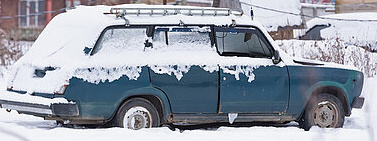
A few days ago, as I motored back from the grocery story with yet more packing boxes, I passed an old station wagon in the local mall’s parking lot. There were pillows, blankets, and clothing schmooshed up against every side window. And the front window was impressively ice encrusted.
I am not a wealthy woman. And I have not lived a particularly charmed or lucky life. I am just a little bit fortunate that my husband and I were careful with our money, despite a lot of economic ups and downs over the years, and that we managed to save enough to be able to afford a roof over our heads as we head into our senior years.
But it was clear to me that the people who were in that station wagon, for whatever reason, were not so fortunate.
I’m a mere 10 days out from a pretty epic change of circumstances myself, but I know that my move, although chaotic, likely done in snow and cold, to a background of fulsome curses, and with a future that will probably be filled with many surprises at the onset, is of our own choosing, and that the road we travel leads to a warm home with a roof (that needs repairs) to shield us from the cold and snow.
The snow and biting cold this morning was a nasty surprise. For days I’ve been warning my husband that we needed to get the last of the outdoor furniture, gardening supplies, and the like, under cover and out of the weather. I’ve had a persistent vision of the cursing that will ensure as we try to dig chairs and wheelbarrows out from under a foot of snow and ice, to pile them, dripping with icicles, into the moving truck.
But even yesterday it was warm enough for me to be tossing around boxes in the shed without so much as a jacket. That’s not the case today, when January’s reality has arrived. The birds and squirrels were thick on the porch at feeding time, desperate for the seeds and nuts I provide. That food keeps them alive. I worry about what they’ll do when I leave, and their food source is gone. I’ll leave some provender behind for the next tenant to dole out, but I won’t be here to ensure it’s done on a consistent and timely basis. And that haunts me.
Our little cat also worries me. She has not been herself since she lost Farley, her lifelong companion, in November. She’s old, blind, and seems terribly depressed. Her habits have completely changed. She now wakes, screaming, from a troubled sleep every two or three hours, demanding food, and then has to be soothed back to another short period of rest before she wakes again, howling as she is reminded of her loss. This schedule is not particularly conducive to anyone – either human or animal – getting a good night’s sleep.
Ten days out from the move, I’m in that terrifying position of still needing to pack but a) having little space to put the packed boxes, and b) being pretty much down to the things that I thought I’d need in the last days here.
Of course, I grossly overestimated how much I’d need to keep on hand. I’ve got a king’s ransom of cleaning supplies. I’ve kept enough beauty supplies and clothing on hand to supply a cast of a Cecil B DeMille spectacle. I still have far too much food and drink on hand, though every day I make a dent in what’s been living in the freezer for the last many months.
I’m now at the Sophie’s Choice part of packing – what’s left must be packed, but must be chosen carefully. Essentials misplaced, if mispacked, will cause problems. When we sold our house in Scarborough, all of my shoes disappeared, and I spent six months wearing scuffed orange garden clogs. That’s a fate I wouldn’t wish on anyone, but most especially not someone from Montreal. The horror!
How do you decide what can be safely stowed, and what must be clasped tightly until safely deposited at the other end of the move? I mean, besides the cat … of course the cat will be safely secured, along with her own collection of necessities. I am not at all looking forward to THAT part of the journey;
Today’s the second day of the new year. I’m doing a lot of sorting, a modicum of packing, and an infinite amount of worrying. Hoping all this rehearsing will mean that it’ll be ‘alright on the night,” as they say in the theatre.
The holiday gift giving tradition goes waaay back … back, back, no, even further back. Before the kid in the stable, even.
Exchanging gifts at a midwinter feast seems to have started as both a magical AND practical way to share the bounties of the year with family and friends. The people that gave the best gifts to others were respected for their generosity.
During the Roman winter solstice festival, Saturnalia, citizens spent a week feasting, decorating trees, and then showing generosity to the poor in a display of goodwill towards all. The Roman New Year, Kalends, which started on January 1st, featured gifts being ritually exchanged by being tied to the boughs of the greenery that people used to decorate their homes.
In the colder countries, this feasting and bestowing of goods served another, more practical, purpose as well; it was often too expensive to keep one’s cattle fed and comfortable through a long cold winter. It wasn’t unusual for families to bring favoured pigs and chickens into the home to share the long nights of January, February, and March.
But if there was a glut of food animals to deal with, slaughtering many of them to prepare giant feasts that cemented one’s place in their community as respectable, business-savvy, providers could go a long way in making the burgher’s prospects even brighter in the new year.
Early Christianity borrowed lavishly from pagan religions and traditions. Long before modern day religions, many faiths worshipped gods who were born to virgins, who performed miracles, were killed, and then came back to life. Many of those religions also placed the date of their savior’s birth as December 25th.
And thus was conceived the bane of every December born child.
Check out Richard Gillooly’s book, All About Adam and Eve, for a major accounting of Capricornian Gods, which include Horus, Osiris, Attis, Mithra, Heracles, Dionysus, Tammuz, Adonis, and a host of others. As a popular date, and likely as a sop to other faiths, December 25th was declared a holiday that celebrated Syrian god Sol Invictus, by the Roman Empire in 274 AD. Fifty years later, Roman Emperor Constantine swapped the day out for the celebrating of the birth of the god of his newly acquired religion, Christianity.
Gifting – what and how we gift – says so much more about us than we realize. My mother emphasized that the getting of gifts was secondary to the bestowing of gifts upon others, to show family and friends that they were loved and appreciated. As a child, I also took to heart the message of O. Henry’s 1905 short story, The Gift of the Magi, which told the tale of a young husband and wife, and of how their deep love led them to sacrifice their most precious possessions in order to give gifts to each other.
So, for me, Christmas was always about providing for my loved ones. Even when money was tight, when I had little to spend, I’d somehow whip together something to gift; one year, on the road and practically penniless, I bought a load of wool, and knitted everyone long, Dr Who-style, scarves. In the years when I was flush, my family were surprised with huge bags of lavish presents on Christmas morning. Feast or famine, Christmas has never found me empty handed, when it came to gifting.
Everyone approaches holiday gift giving in their own way. Some are practical, others, selectively generous. Some want to show off their wealth, while others want to find gifts that impart some of their own hard-won knowledge or skills to a younger generation.
Like almost everything to do with interactions amongst humans, it all comes down to how we communicate our own needs, and how we discover what is necessary to keep those we love happy and feeling loved, appreciated, and respected.
A few years back, a well-known marriage counsellor named Gary Chapman released a book entitled The 5 Love Languages, which outlined how different personalities give and receive love within their relationships.
The key to good gift giving is in knowing what to give to someone that you love and appreciate. In order to do so, you need to understand what is their core ‘language’ – what speaks to their heart.
For some, the receiving of gifts is vitally important. This is not about materialism, or the cost of the gift, but rather on the love, thoughtfulness and effort behind the gift. For these people, the perfect gift or gesture indicates that they are cared for, and that they are more important to the giver than whatever was sacrificed to attain the gift. These gifts are usually treasured and carefully kept close, as a visual representation of their partner’s love.
For the partner or friend of someone who speaks this language, a gift might be a piece of jewelry that alludes to a hobby or work they do, a book on a pet subject, or tickets to an event.
For others, the greatest gift they can receive is quality time with their loved one. The gift of full, undivided attention means more to them than anything bought in a store, as it makes them feel truly special and loved.
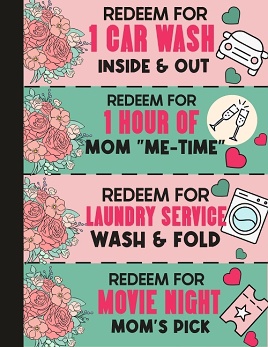
Acts of service – sometimes actions speak louder than words. Remember those little books kids (and broke spouses) used to make for each other, promising to ease another’s physical or household burdens to come? Washing a pile of dishes, vacuuming the floors, doing the laundry, or dusting may seem like meaningless household chores, but for some people, those actions speak volumes.
Hearing the words, “I love you,” are important. But words of affirmation are a love language that uses positive affirmations from your partner to send your heart soaring. Unsolicited compliments given at just the right moment can make the sun come out on a cloudy day. Encouraging words that are kind and soothing are life-giving, while insults will leave this language-type disillusioned, and unlikely to forget or forgive.
The last language is spoken by those who crave appropriate physical touch. It’s not all about sex, it’s more the sort of touchy-feely thing that involves holding hands, hugs, and thoughtful touches on the arm, shoulder or face. Slow dances in the kitchen after dinner that show how much we love and care about each other. While kind, gentle physical touch fosters a sense of security and belonging, neglect or abuse can be unforgiveable, and cause irreparable damage to the relationship.
Understanding the ‘language of love’ that our partners, family, and friends speak makes gift giving a snap. All you need is a language decoder ring …and you earn that by really paying attention to what lies beneath what the ones you love don’t say out loud.
Gift giving in 2021 can be frustrating and exhausting, but then, that’s the way it’s always been. Somewhere along the line we lost the true meaning of giving and receiving. Maybe it rolled under a Coca Cola polar bear, or was stolen by a porch pirate. Who can say?
It used to be that giving gifts was how you showed your love for others, and for some that meant that the bigger the gift, the more you loved. But expensive gifts mean nothing if the gift doesn’t fit the giftee.
And gifting out of a sense of obligation does little to make you or the giftee happy, since a gift you never wanted to give is nearly always all wrong for the person that receives it. Aren’t Amazon and the other big suppliers of gag gifts and useless paraphernalia rich enough?
Here’s my gift giving advice for this holiday season: Set a budget you can live with. Choose who you’re gifting, and how much you can afford to spend. You don’t need to spend a fortune to show how much you care. Give to strengthen your ties to family and friends. And make the criteria for what you give commensurate with how much joy you can spread around to your loved ones.
Merry Christmas to all, and a wish that you have the happiest of New Years. DBAWIS is on hiatus until mid January. When we return, I’m sure we writers will have lots to share about our adventures and misadventures during the holiday season.
Meanwhile, it’s Christmas, 2021, and like the Little Drummer Boy, I have no gift to bring. Shall I play for you, pa rum pah pum pum?
































 frustratedboomers

