by Roxanne Tellier
The holiday gift giving tradition goes waaay back … back, back, no, even further back. Before the kid in the stable, even.
Exchanging gifts at a midwinter feast seems to have started as both a magical AND practical way to share the bounties of the year with family and friends. The people that gave the best gifts to others were respected for their generosity.

During the Roman winter solstice festival, Saturnalia, citizens spent a week feasting, decorating trees, and then showing generosity to the poor in a display of goodwill towards all. The Roman New Year, Kalends, which started on January 1st, featured gifts being ritually exchanged by being tied to the boughs of the greenery that people used to decorate their homes.

In the colder countries, this feasting and bestowing of goods served another, more practical, purpose as well; it was often too expensive to keep one’s cattle fed and comfortable through a long cold winter. It wasn’t unusual for families to bring favoured pigs and chickens into the home to share the long nights of January, February, and March.
But if there was a glut of food animals to deal with, slaughtering many of them to prepare giant feasts that cemented one’s place in their community as respectable, business-savvy, providers could go a long way in making the burgher’s prospects even brighter in the new year.
Early Christianity borrowed lavishly from pagan religions and traditions. Long before modern day religions, many faiths worshipped gods who were born to virgins, who performed miracles, were killed, and then came back to life. Many of those religions also placed the date of their savior’s birth as December 25th.

Check out Richard Gillooly’s book, All About Adam and Eve, for a major accounting of Capricornian Gods, which include Horus, Osiris, Attis, Mithra, Heracles, Dionysus, Tammuz, Adonis, and a host of others. As a popular date, and likely as a sop to other faiths, December 25th was declared a holiday that celebrated Syrian god Sol Invictus, by the Roman Empire in 274 AD. Fifty years later, Roman Emperor Constantine swapped the day out for the celebrating of the birth of the god of his newly acquired religion, Christianity.
Gifting – what and how we gift – says so much more about us than we realize. My mother emphasized that the getting of gifts was secondary to the bestowing of gifts upon others, to show family and friends that they were loved and appreciated. As a child, I also took to heart the message of O. Henry’s 1905 short story, The Gift of the Magi, which told the tale of a young husband and wife, and of how their deep love led them to sacrifice their most precious possessions in order to give gifts to each other.
So, for me, Christmas was always about providing for my loved ones. Even when money was tight, when I had little to spend, I’d somehow whip together something to gift; one year, on the road and practically penniless, I bought a load of wool, and knitted everyone long, Dr Who-style, scarves. In the years when I was flush, my family were surprised with huge bags of lavish presents on Christmas morning. Feast or famine, Christmas has never found me empty handed, when it came to gifting.
Everyone approaches holiday gift giving in their own way. Some are practical, others, selectively generous. Some want to show off their wealth, while others want to find gifts that impart some of their own hard-won knowledge or skills to a younger generation.
Like almost everything to do with interactions amongst humans, it all comes down to how we communicate our own needs, and how we discover what is necessary to keep those we love happy and feeling loved, appreciated, and respected.

A few years back, a well-known marriage counsellor named Gary Chapman released a book entitled The 5 Love Languages, which outlined how different personalities give and receive love within their relationships.
The key to good gift giving is in knowing what to give to someone that you love and appreciate. In order to do so, you need to understand what is their core ‘language’ – what speaks to their heart.
For some, the receiving of gifts is vitally important. This is not about materialism, or the cost of the gift, but rather on the love, thoughtfulness and effort behind the gift. For these people, the perfect gift or gesture indicates that they are cared for, and that they are more important to the giver than whatever was sacrificed to attain the gift. These gifts are usually treasured and carefully kept close, as a visual representation of their partner’s love.

For the partner or friend of someone who speaks this language, a gift might be a piece of jewelry that alludes to a hobby or work they do, a book on a pet subject, or tickets to an event.
For others, the greatest gift they can receive is quality time with their loved one. The gift of full, undivided attention means more to them than anything bought in a store, as it makes them feel truly special and loved.
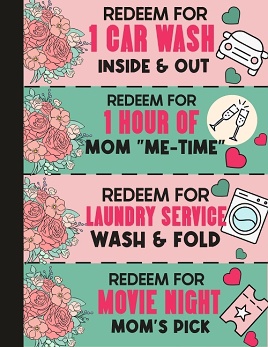
Acts of service – sometimes actions speak louder than words. Remember those little books kids (and broke spouses) used to make for each other, promising to ease another’s physical or household burdens to come? Washing a pile of dishes, vacuuming the floors, doing the laundry, or dusting may seem like meaningless household chores, but for some people, those actions speak volumes.
Hearing the words, “I love you,” are important. But words of affirmation are a love language that uses positive affirmations from your partner to send your heart soaring. Unsolicited compliments given at just the right moment can make the sun come out on a cloudy day. Encouraging words that are kind and soothing are life-giving, while insults will leave this language-type disillusioned, and unlikely to forget or forgive.

The last language is spoken by those who crave appropriate physical touch. It’s not all about sex, it’s more the sort of touchy-feely thing that involves holding hands, hugs, and thoughtful touches on the arm, shoulder or face. Slow dances in the kitchen after dinner that show how much we love and care about each other. While kind, gentle physical touch fosters a sense of security and belonging, neglect or abuse can be unforgiveable, and cause irreparable damage to the relationship.
Understanding the ‘language of love’ that our partners, family, and friends speak makes gift giving a snap. All you need is a language decoder ring …and you earn that by really paying attention to what lies beneath what the ones you love don’t say out loud.
Gift giving in 2021 can be frustrating and exhausting, but then, that’s the way it’s always been. Somewhere along the line we lost the true meaning of giving and receiving. Maybe it rolled under a Coca Cola polar bear, or was stolen by a porch pirate. Who can say?
It used to be that giving gifts was how you showed your love for others, and for some that meant that the bigger the gift, the more you loved. But expensive gifts mean nothing if the gift doesn’t fit the giftee.

And gifting out of a sense of obligation does little to make you or the giftee happy, since a gift you never wanted to give is nearly always all wrong for the person that receives it. Aren’t Amazon and the other big suppliers of gag gifts and useless paraphernalia rich enough?
Here’s my gift giving advice for this holiday season: Set a budget you can live with. Choose who you’re gifting, and how much you can afford to spend. You don’t need to spend a fortune to show how much you care. Give to strengthen your ties to family and friends. And make the criteria for what you give commensurate with how much joy you can spread around to your loved ones.
Merry Christmas to all, and a wish that you have the happiest of New Years. DBAWIS is on hiatus until mid January. When we return, I’m sure we writers will have lots to share about our adventures and misadventures during the holiday season.
Meanwhile, it’s Christmas, 2021, and like the Little Drummer Boy, I have no gift to bring. Shall I play for you, pa rum pah pum pum?








 frustratedboomers