Freebies and Freecycles


by Roxanne Tellier

The hardest part of starting something – is starting something.
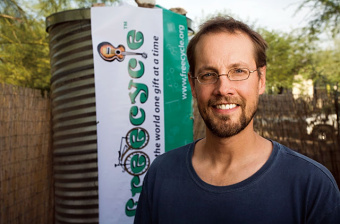
In 2003, Deron Beal was 39 years old, and working in Tucson, Arizona for a non-profit group that combined recycling with job training. Beal couldn’t stand to see good, usable items in his neighbourhood being thrown away on garbage day, and he began rescuing things that would have otherwise only added to the mass in the ever-growing city dumps and landfills. 

But soon he’d accumulated a warehouse of furniture, computer parts, and other items that, while not recyclable, were still useable, and were often items in demand by other non-profits. He’d drive around to drop off donations, but the pile was getting higher, and the work became too much for one person.

That’s when Beal got the idea of setting up a group on the Yahoo network, dedicated to the sharing of items that might otherwise be scrapped.  He began by emailing a few of the Tucson non-profits and about 30 of his friends, and overnight, The Freecycle Network was launched. Memberships soared from 60 to 800 members within days.

The name came from the idea of ‘free recycling’ – a ‘free cycle’ of giving, with no strings attached.

The beauty of Freecycle is it empowers each of us to make a concrete difference in our community, both in the environment, and by helping people.”  Deron Beal.

Beal soon set up a national website, bringing in city after city, and it wasn’t very long before the organization stretched world-wide, spreading to over 110 countries, with thousands of local groups within over 5,100 local chapters, and millions of members, to ultimately become a huge philanthropic system, almost entirely staffed by like-minded volunteers.

Membership is completely free. The only rule is that everything posted on the website must be completely free, legal, and appropriate for everyone, regardless of their age.  
Joining the global system couldn’t be easier; simply visit www.freecycle.org, find your local group, and click ‘join.’ One of the worldwide volunteers will then send you instructions on how to use the network.

On any given day, about 32,000 items are offered or requested, and there is no telling exactly what you might find on the list. Textbooks, furniture, plants, cat trees – in the years that I’ve been a member, I’ve seen everything from a broken kettle to a limousine and a house boat being offered.  
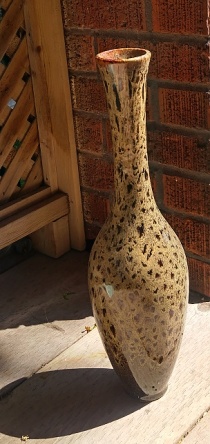
Picked up in April 2021

I’ve been an avid freecycler since March of 2006. One of the first items I received was a bar fridge, and I kept that until just a few years ago, when I passed it on to a friend whose fridge had broken.

Wandering thru my Freecycle email folder is like a trip down memory lane, as I note all the items, big and small, I’ve received or donated in the last 15 years.

When we lived in Scarborough, I usually ttc’ed to wherever I needed to be to pick up the goodies. I’ll never forget struggling home from Woodbine and Queen with an enormous, queen sized magnet mattress pad. Took me hours, by bus, subway, and GO train. Thankfully it was in November; I’d never have survived the trip in the summer.

I once ttc’ed all the way to Jane and Steeles to pick up some used medical supplies that we needed as props for a film we worked on. In 2016, Shawn and I somehow wrestled a treadmill into our van, and we’ve been wrestling with it ever since. It’s living in the shed these days.

A new treasure – just freecycled this week!

In 2018 I needed a cane after sustaining a back injury. I’d hardly typed in the request before a senior care group was organizing to bring one to my home that very evening, and asking if there were any other items I might need, or help they could give.

I’ve been gifted so many items, and I’ve donated just as many through the years. Early on, I was happy to clear out excess plants and gardening utensils, outgrown clothing, unused cosmetics and hair products, and out of date computer parts. After breaking my ankle twice, I decided it was time to dispose of my stage stilettos – it just broke my heart to see them go. Particularly when one of the people who’d requested his pick of the fancy shoes and boots arrived in a Mercedes Benz, wearing a $600 business suit, and announced he wanted something pretty for his wife. I just hoped my used footwear wasn’t earmarked for her Mother’s Day present.

More recently, I saw how hard the city has been hit by the pandemic. I offered up a couple of bags of ‘gently’ expired food items after purging my pantry, and was flooded with requests for the food. I finally wound up splitting the goodies (and adding a bunch more, freshly purchased treats) between two families who were happy to have the foodstuff.  

I’ve always had an intimate awareness of economic inequality. I came from a family that, by today’s standards, would be considered extremely poor. We were often ‘food insecure,’ but my mother made sure we were never short of love. 

I grew up hypervigilant, ever aware of how close to the bone we were, financially. It made me determinedly, even doggedly, self-sufficient. I knew, from a very young age, that some people had a lot of good things, while others had less, and that, for the unfortunate few, having food and shelter at the end of the day could revolve around having the luck of finding a chair at the table when the music stopped.

Our city, like so many others, has been hit hard by the pandemic, which has only highlighted the extreme economic inequity we’re soaking in. Our ‘essential workers’ are lucky if they make minimum wage, yet many have either had their hours drastically cut, or lost their jobs completely. The skyrocketing real estate values have exacerbated the already out of control shortage of affordable housing. And while those businesses that were allowed to stay open have raked in billions, by January 2021, more than 200,000 small businesses in Canada had closed their doors forever, and will never reopen.

In the long-term, even band aid solutions to these issues will have to come from governments, but unfortunately, we’re not exactly blessed with capital L Leaders or Leadership at the moment.

And that means that all we can do to help those who need our help is to be aware of the resources, big and small, that concerned people have provided that we can access. 

There’s Freecycle, of course, and also a bunch of similar groups that have sprung up on the internet, including Toronto-ReUseIt (GoogleGroups.com,) FreeTOReuse (yahoo,) TrashNothing.com, and many more that you can find on Google or Facebook.

Toronto has always been a city with a big heart. There are many charitable groups that feed and clothe our homeless and vulnerable, and there are some great social media groups, including Caremongering-TO, that sidestep the usual bureaucracy to get funds and food directly into the hands of the needy.  

There’s also something called the Really Really Free Market that has been on hold during COVID, but is apparently going to be revived soon. They gather on the first Saturday of every month at Campbell Park (Dupont/Lansdowne) and usually attract a good crowd. As they say on their Facebook page:

Basically, it’s a community-space for sharing – where people bring what they have to give, take what they need, and leave the rest. It’s kind of like a potluck, but for goods and services!

How it works:

You can drop stuff off, pick something up, or stick around! This could include both items and services, such as:

-clothes, books, music, furniture, household and kitchen wares, pet supplies

-homemade goods, such as crafts, art, artisan goods, and baked goods (don’t forget to list the ingredients!)

-services, such as haircuts, yoga classes, music/dance lessons, massage, or gardening help.

All unclaimed items will be donated at the end of the day.”

Really Really Free Market, Toronto

Every little bit that we do to help others counts. I found out recently that there are a few people who are still making face (COVID) masks, and leaving them outside to be taken by anyone who needs or wants a face covering.

I just love the Little Free Libraries that have sprung up in cities and towns across North America in the last few years. There’s about a dozen within crawling distance of me, and they get my full support.  (LittleFreeLibrary.org)

Many have diversified as needed, now carrying CDs, DVDs, and the odd video or audio tape for sharing. A few also allow little luxuries like perfume and hand creams to be shared.     

Some of those Little Libraries have morphed into Little Free Pantries during the pandemic. There’s at least two near me, one just above Kingston Road, on Hunt Club, and another just north of Danforth Avenue, at Woodbine. There people can share non-perishables, and get information on how to get help with their food and shelter needs. Every little bit helps.

There are eight places to leave books and other items in my immediate area, including a small box for food donations at a local church. Yesterday I headed out for my afternoon walkabout with a can of Spam, a can of corned beef, three tins of Mandarin oranges, 6 DVDs, an expensive shampoo and conditioner set I hadn’t liked, a small container of Estee Lauder’s “Pleasure’ body lotion, a couple of still sealed lipsticks, some hair clips, and of course, a half dozen books, and made the rounds of these drop off points. While on the way, I twice spotted boxes of books on the curb, and added those to my stash for distribution. Sharing these items is a great way to do a little something for others, without feeling any kind of deprivation of one’s own.

Just as with the spirit of Freecycling,  “each of us can make a concrete difference in our community, both in the environment, and by helping people.”

All we have to do is the hardest part … and start. 

Carry That Weight


by Roxanne Tellier

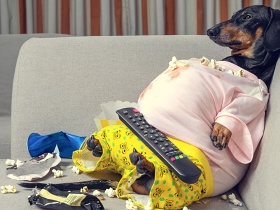
If you have recently gone from having a little trouble getting into your skinny jeans, to contemplating buying your whole new summer wardrobe from Omar the Tentmaker, you may have fallen prey to that other pandemic within the pandemic known as “The Pandemic 15,” fifteen pounds being the median amount of weight that many of us have piled on in the last year.  

 It’s not your imagination; you HAVE gained weight, and most of it is sitting uncomfortably around your middle. A year of uncertainty, stress, and endless lonely hours when food seemed as good a companion as any, has broadened our behinds more than it has our minds.

Surveys have shown that the average adult has unwillingly gained weight since the onset of COVID 19, up to more than 50 lbs in some cases. You can chalk a lot of that gain up to mindless grazing, with 1 in 4 adults also reporting that they’ve been drinking more alcohol to cope with their stress. Two in three people say they’ve had unwanted changes in their sleep patterns, either sleeping more or less than usual.  

The majority of essential workers have told surveyors that they’ve been uncharacteristically indulgent in their food and drink consumption, simply to cope with long term stress, while the incidence of those seeking treatment for mental health disorders has risen about threefold.

For those of us who haven’t had much social contact in the last 14 months, personal habits have also changed, with people being less likely to ‘make an effort’ to be showered, made up, and properly dressed when the likelihood of coming into physical contact with other humans has become nearly non-existent. There’s a fortune waiting to be made by the company that properly markets “Pyjama Power Suits.”

It’s not about will power. The epidemic of obesity that hit the planet around the late eighties, and which has soared over the last 40 years, wasn’t a sudden drop in mental strength that led to everyone over-indulging, rather, it was attributable to many different ideas and habits coinciding in this new century, but fully attributable to corruption and greed beginning in the last.

You came by that junk in your trunk honestly; and if you’re American, you paid for it with your tax dollars. You own it, baby.

So what changed? Oh, so very much, and so insidiously. 

Remember when ‘healthy snacks’ suddenly became a thing? All of a sudden, we were encouraging our kids and each other to avoid hunger pangs by adding a couple more meals to our day. Instead of breakfast, lunch and dinner, we were now enjoying breakfast, snack, lunch, snack, dinner, snack. And – I hate to break it to you, but most of the snacks just weren’t as healthy as suggested. In fact, they were more likely to be indulgences that packed on the calories, carbs and sugars.

What was also breaking down was the amount of time in which our bodies were able to process those calories and sugars. If there was traditionally 4 to 5 hours between meals, we’d now shortened that to about two and a half, or three hours. The mean number of minutes between eating forced our digestive systems to work harder, with less down time to get the body ready for its next feeding. 

Some call this way of eating ‘grazing,’ but what it actually does is create a state in which the body is constantly awaiting more material to process internally, without pause. And that’s not the way the human body was meant to consume and digest comestibles. 

If anything, it’s more akin to the way geese are overfed to produce foie gras, with a very similar result developing in the human liver.

This and other changes to when we anticipated a sweet or salty treat sprang from clever marketing and merchandising that taught our brains to expect certain things when combined with external events. We’ve been programmed.

When you go to the movies, you probably feel like the experience will be poorer if it’s not accompanied by popcorn and a large drink. Maybe some chocolate as well. Hmm… I wonder why that is?

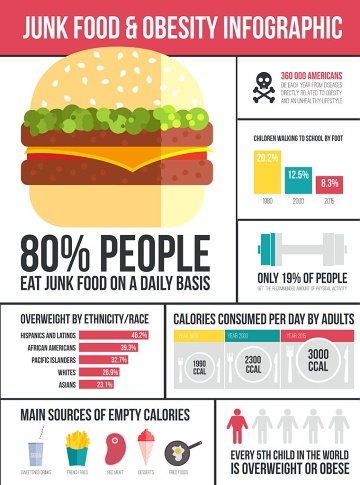
The average adult female needs between 1600 and 2400 calories PER DAY, while men can eat about 2000 to 3000 calories.

Assuming you are likely to grab the large fountain soda (370 calories) and one large buttered popcorn (1200 calories, 120 mg of salt, and 60 grams of fat) you will have consumed not only the equivalent of a day’s caloric intake, but have also blown out your fat intake for the day by a factor of four. (The Mayo Clinic advises that people aim for around 15 grams of fat in their diet on a daily basis.)

Multiply that indulgence by all the other little moments in the day that are linked in your brain to ‘treating’ yourself. Mid-morning break calls for a little something to keep you going until lunch – a coffee and a danish sounds nice! And how about a little break in the afternoon? Gonna need a snack to tide you over til dinner! 

And then, later that night, relaxing in front of the tv or computer, it seems only fair, after the day you’ve had, to reach for a couple of cold ones, to wash down the Doritos.

By that point, all those little treats have added up to about 6000 calories, or the equivalent of eating for three or four.

And you wonder why you just can’t lose weight? There are billions spent on getting you to buy this junk food, and even more billions to be made on the other side, when you try to lose the weight you gained while you filled your boots and bootie with ‘fun’ foods.

I won’t go into a huge song and dance about the evils of Big Agriculture, Big Dairy, and Big Junk Food, but if you’ve got an interest in the subject, I can highly recommend a new book written by Mark Bittman, American food journalist and fellow at the Union of Concerned Scientists. In Animal, Vegetable, Junk: A History of Food, From Sustainable to Suicidal, Bittman outlines how junk food, aka engineered edible substances, have created a “public health crisis that diminishes the lives of perhaps half of all humans.” Dependence on agriculture that “concentrates on maximizing the yield of the most profitable crops, “it has done “more damage to the earth than strip mining, urbanization, even fossil fuel extraction.”

Worse still, taxpayers in the U.S. subsidize the growing of these products.  

Congress and the Department of Agriculture are spending more than $1.28 billion annually to subsidize the crops that are used as additives in manufacturing cookies, candies, soda pop and other highly popular junk food that arguably are among the primary contributors to childhood obesity. The sweet, fatty and calorie-rich Hostess Twinkies alone contain 14 ingredients made with highly subsidized processed ingredients, including corn syrup, high fructose corn syrup, corn starch and vegetable shortening.”  (Business Insider, 2012)

That was in 2012. So, how we doing these days, after the trump trade wars?

“Farmers got more than $22 billion in government payments in 2019 — and most of the money came through a program that Congress never approved. It’s the highest level of farm subsidies in 14 years” (Whitehouse archives.gov)

All of which brings us back to Bittman’s book, and his words on how all of this jiggery pokery has stolen the dollars from tax payer wallets, and repaid them in blubber.

The ability to produce massive quantities of a few commodities—wheat, corn, and corn syrup—has enriched not farmers but a few giant middlemen (companies like Archer-Daniels-Midland and Cargill) and implement dealers (John Deere makes four times as much money providing credit to struggling farmers as it does selling tractors). And it has created a new problem: what to do with the massive amount of calories that this commodity-focused agriculture produces. “The system,” Bittman explains, now “delivers a nearly uninterruptible stream of food, regardless of season,” and in the process it has created junk: the processed food that now dominates the Western diet and, increasingly, many other diets around the world. “Junk made it possible to encourage people to—really, [made] it difficult for them not to—eat too much non-nourishing food over a prolonged period.”

As Bittman notes, “the calories have to go somewhere, and—thanks in no small part to the advertising industry, which attached itself to the food industry like a remora to a shark—they went inside us; we look the way we do because of the need for the Krafts and Heinzes of the world to keep their profit margins growing by finding new ways to get us to consume their limited line of basic commodities. “Global sugar consumption has nearly tripled in the past half-century,” he writes, and so has obesity; the number of people worldwide living with diabetes has quadrupled since 1980. “Two thirds of the world’s population,” Bittman tells us, “lives in countries where more people die from diseases linked to being overweight than ones linked to being underweight.”“

Scientific studies of the US in the 90s showed a rate of about 10-14% of obesity. By 2019, the average rate of obesity was anywhere from 30 to 40%. And a lot of those suffering, physically, and emotionally, from being overweight – are kids.

“As of 2019 it is estimated that over 150 million children in the world are obese and that this will increase to 206 million by 2025. Without intervention, overweight infants and young children will likely continue to be overweight during childhood, adolescence and adulthood.”

As I slide into my later years, I feel the literal weight of all the wrong food and drink choices I made in my own health care over the years. While I can’t turn back the clock, I can go forward with better options for what I consume, and try and relieve some of the strain my choices put on my body.

Cutting out the junk food and the carbs will go a long way towards lightening the load all that grazing assembled. After all, we’re gonna want to look our best when we can finally gather together again!

30 Days in the Hole


by Roxanne Tellier

 A little over a week ago, I was browsing through some posts on a Facebook group page. Some of the comments were interesting, but there was one peculiar troll who was obviously looking for a fight, strewing crazy conspiracy theories along the thread like poisoned bread crumbs.

He was adamant that the planet is just 5000 years old, that masks are murder, and that there is no virus. I should have simply let him rave, but I took the bait, and foolishly put a few site links in the post. The barrage of insults began. “You need to get your old crust ass moving alone down your pathetic life and go suck your buttons dick maybe he will give you a cabinet job.” “You’re a diaper wearing stupid idiot.” And then … “You seem to be the one reporting me like the crybaby you are.”

I said that I wondered what it felt like to walk around with a big L on one’s forehead – and then the penny dropped. He’d reported me for bullying.

And I was about to get … 30 days in the hole.

Thirty days, because suspension days are compounded by multiple offenses. Two months ago, in a conversation with a friend about trump lawyer, Sidney Powell, who had defended her seditious remarks about the ‘stolen’ election by saying that no reasonable person would believe her lies, I quoted Shakespeare’s “First, kill all the lawyers.”

And got a week in solitary for the offense of not following community standards.

There IS an appeal process, but Facebook also explains, ad nauseum, that their moderators are far too busy, because of the pandemic, to handle all the requests for justice. Also, regardless of whether your appeal is granted or even acknowledged, and the offense pardoned or not, your Facebook history is still stained by the charge. Each successive charge escalates the amount of time the user is suspended from the services of Facebook.

Collect ’em all!

At some point, and I honestly don’t know when, but it was definitely after Mark Zuckerberg snowed – sorry, I mean ‘spoke’ to Congress last year, and defended Facebook’s business practices concerning the spread of false information, the call went out to the site’s internal censors and security guards already in place; it was time to get tough.

Well, not with their advertisers, or the people they wanted to see re-elected. Those people were sacrosanct.

But the average user, those who may have snickered at some anti-establishment cartoons, or ‘shared’ a photo of a nursing mother … those people were now firmly in Facebook’s crosshairs.

And just like with the ‘real’ police, or the IRS, there would be a tightening of restrictions, and hundreds of charges and sanctions imposed – on the lowest hanging fruit. Facebook would not be going after the trolls, the rabble rousers, the political parties, or the criminals. They were after your mother and grandmother. By not targeting the protected Big Fish, and instead scooping up all the little fishies in their net, the site censors could soon point, with truth, to large numbers of people and offenses that had been tagged, suspended, or deleted, with almost no blowback on themselves.

Nearly every one I know has a story of getting sidelined for 24 hours or more for silly offenses, even for sharing a photo they posted as far back as nine years previous. The fallout from Zuck’s Congressional appearance included instituting new filters that searched back, apparently through the entire history of the site, for certain key words or triggers to purge.  

(Filters have been around since the early days of bulletin board systems – it’s Internet 101 stuff that could have, and should have, been woven into the fabric of Facebook’s social messaging from its debut.)

If you notice the three little dots to the right of posts on Facebook, you’ll find, way down at the bottom of the options, this choice.  

“Find support or report post.”  

By adding this option, the site also added the ability for internal policing of it’s users by other users. Anyone with a grudge against another user, or a wish to silence others, could simply report a message as harassment or bullying. Since the definition of bullying is pretty loosie goosy, the mere act of reporting immediately defines the words as being aggressive in the reporter’s opinion. And if someone decided that everything you said offended them, they could bombard you with accusations that would keep you off the platform for months on end.

Very Big Brother of them.

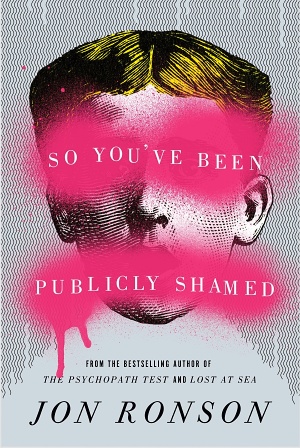
Back in 2015, Jon Ronson published So You’ve Been Publicly Shamed, a book that explained what to do if you got ‘caught’ doing something frowned upon in polite society. At the time, the odds of being someone caught in an international scandal seemed about as likely as winning a lottery.

But in truth, as we’ve seen in the last several years, ‘the internet is forever,’ and things we say or do under current circumstances, or in our past, may find re-entry into our future, by chance or by malice.

Magazines like Forbes, that focus on career mobility, have been warning for ages about how easy it is to get tripped up by our past posts.  Your online presence can be a negative, and wreak havoc on your professional life. Online posts can flare up into huge news, Twitter feuds can call attention to faux pas moments, and corporations can find themselves in the middle of a social media disaster, brought about by those with a talent for internet deep diving.

If you happen to be in the middle of a life change, job searching, or just looking to move on with your life, you may want to take a sandblaster to your social media, to get your profiles squeaky clean.

Luckily, there are some apps out there to do just that. You can find info on SimpleWash right on Facebook. SimpleWash purports to be able to scrub your Facebook and/or Twitter content squeaky clean, by scanning all of the content on your Facebook profile – including comments by other people on photos or posts – to locate key words you may want removed. The app will flag things like allusions to drugs, alcohol, profanities, even negative comments you may have made about a company you’re targeting for a job interview.   

I’m sure there are similar apps available for every computer platform – keeping your social media profile bland and clean is necessary to secure employment in many professions.

So what exactly can you do, if you need to do a little damage control on your social media brand?

First off, you might want to check on just who can see your posts, tweets or photos. If you wake up the morning after the night before to discover photographic proof of your indiscretions, you’ll want to get an idea of exactly how viral that message or tweet has become. What pops up in our news feeds is largely determined by those with whom we engage the most. If you haven’t interacted with many of your work friends in the last few months, it’s unlikely they’d come across your post. However, you may never know who all saw the ‘evidence’ unless it’s been liked, shared or has been commented upon.

While the Internet IS forever, delete the offending post or photo as soon as possible. If you are social media friends with others who were in on the ‘crime,’ check their accounts for incriminating posts or photos, and ask them to delete or untag your presence. If what you’ve done is really egregious, you may want to delete your entire account, and start over anew. But if someone has taken a screen shot of your offense, even account deletion may not really scrub off the stain.

If that’s the case, and you’re found out, there’s only one thing left to do. Keep your eyes and ears peeled for any office gossip that might allude to your errors, and then apologize to anyone who is offended by your post. Take full responsibility for your actions (WITHOUT using the expression, “If I offended someone … “) and assure your friends and/or work superiors that you intend to use better judgment in the future.   

Life will go on, even though it might be uncomfortable for a while. You’ll be looking over your shoulder for a bit, and you’ll find yourself self-censoring more than you might have in the past, but life will go on, and you’ll soon find yourself back in your normal swing of posting your thoughts to your friends and followers, sadder but wiser for the experience.

Personal security experts always advise that it’s best to be aware of your privacy settings on your social media accounts, and monitor what’s posted on your pages to prevent unwanted retweets or shares.

If you’re intent on turning over a new social leaf, it might also be wise to comb through your past posts to monitor for things that could smudge your social brand. Delete those duck-faced selfies, along with any nasty comments you may have made about others, after a couple of bevvies. Nobody needs to be reminded that they can go all Mean Girl after a hard day and a few adult beverages.

 And lastly – and this may seem weird, but you just never know – Google yourself on a regular basis. Even if you’ve never been the subject of a newspaper article, or had a Wiki page dedicated to you, it’s a good idea to keep an eye out for false or unflattering comments you might find attached to your name.

We are all works in process. Our society is a work in progress. Social Media is both a blessing and a curse, allowing us to connect to each other for good – or for ill.

Post wisely. All the Big Brothers are watching.

The Hardest Job


by Roxanne Tellier

Happy Mother’s Day to all those who play that role in their family, no matter their gender.

“Being a mother actually has very little to do with birthing a child from your body. That might be the most obvious scenario, but motherhood is so much more than a physical happening. I have known some expert ‘mothers’ who never birthed or raised any children of their own, and I have known some mothers with a brood of children who shouldn’t be allowed to come anywhere near them. I don’t think motherhood can be simply defined by having or not having little people under your care.

A mother is someone who nurtures – someone who cares for the deepest places of your heart. Anyone can throw a meal at you, or give you a bed to sleep on, but a mother makes a place for you. A mother sees the deepest, truest you and treats you like you are already that person. A mother cares about your hurts and fears, but also your dreams and successes. She is a cheerleader, a coach, a trainer, and a fan, all at the same time.” 

Gather and Crow.co

Every mother is different. The way your mother mothered you, informed your life, for good or ill. We are born dependent on those that care for us, until we are able to care for ourselves. Some mothers are able to be Super Mothers, right out of the gate, and spread before us a buffet of happy days and events. Others struggle with the work. Either way, most mothers try to do what’s right – but not all of them are successful.     

After all, some mothers are little more than grown-up children themselves, when they give birth. They’re learning the job on the job, while simultaneously working through the last of their own childhoods. It’s not until we ourselves are in our child bearing years that we can look back at our own childhood in perspective, and consider how much our adulthood is formed and influenced by our mother’s character.

There’s a wonderful new book just released that focuses on the lives of the mothers of three famous men. Anna Malaika Tubbs’s new book is called “The Three Mothers: How the Mothers of Martin Luther King, Jr., Malcolm X, and James Baldwin Shaped a Nation.” 

Ms Tubbs makes the point that we tend to gender our parent/child relationships. We hear, “oh, she’s just like her mother!” or “that boy is his father’s son.”

“Coincidentally, I gave birth to a boy, my incredible little boy, and I have already faced others’ attempts to erase my influence on his identity. Phrases like “He’s strong, just like his father!” or “He’s already following in his dad’s footsteps” when he reaches a milestone cause more harm than people think. By choosing three mothers of sons, I do not want to erase daughters or other children. I am instead making the point that no matter our gender, everything starts with our birthing parent.” 

“Louise (Little), Berdis (Baldwin), and Alberta (King) were well aware of the dangers they and their children would be met with as Black people in the United States, and they all strove to equip their children not only to face the world but to change it. With the knowledge that they themselves were seen as “less than” and their children would be, too, the three mothers collected tools to thrive with the hopes of teaching their children how to do the same. They found ways to give life and to humanize themselves, their children, and, in turn, our entire community. As history tells us, all of their sons did indeed make a difference in this world, but they did so at a cost. In all three cases, the mothers’ worst fears became reality: each woman was alive to bury her son. It is an absolute injustice that far too many Black mothers today can say the same thing.

In the face of such tragedy, each mother persisted in her journey to leave this world a better place than when she entered it. Yet their lives continued largely to be ignored. When Malcolm X was assassinated, when Martin Luther King, Jr., was killed shortly after, and even when James Baldwin died from stomach cancer years later, their works were rightly celebrated, but virtually no one stopped to wonder about the grief their mothers were facing. Even more painful to me is the fact that their fathers were mentioned, while their mothers were largely erased.”

The inequities and cruelty that the mothers of these men suffered while continuing to care for their children, informed and molded the men who would go on to have such huge impacts on their own communities, and then America.

Reading about the women that gave Malcolm X, Martin Luther King Jr, and James Baldwin to the world, opens a small window into the hidden lives of mothers everywhere.   

Another interesting read on how mothers shaped historical figures is Mothers of Famous Men, by Archer Wallace, published in 1999. The author states in the introduction, “My purpose in writing this book was not to extol a few mothers but to pay tribute to the countless number of unselfish, devoted mothers everywhere.”

This tome focuses on the loving care, or lack thereof, provided by the mothers of Booker T. Washington, John Quincy Adams, Abraham Lincoln, George Washington, and J.M. Barrie, amongst others, framed as a look at how the Christian character of these mothers shaped their sons’ lives. 

My own mother has been gone for 29 years now, and still there are days when I reach for the phone, eager to tell her some little tidbit of gossip, or to ask for her opinion on an issue. You never really get over losing your mother.  

In a 2018 column, I wrote about an encounter I had had with a small boy who, along with a few other people, was waiting for the #12 bus. He was holding a plant pot that held one battered pansy, and he told me, with great joy, that he also had a poem he’d written for her, in French! And he’d also drawn her a card! His little face lit up as he told me, “She’s gonna have so many presents!” 

There was such a lot of delight in his expression as he tallied up the riches he’d prepared for his precious mama. We forget, over the years, how good it used to feel to be able to gift our loved ones with something we’d made especially for them. It might have been a paper plate with some glittered macaroni pasted to it, or a wobbly cut out cardboard heart, on which our shaky handwriting proclaimed our love, but it was what we had to give, and we gave it from our hearts.  

And the best mothers accepted those gifts as the precious treasures that they were.

Happy Mothers Day to ALL mothers. May you be showered with love and appreciation for the job that begins on the day that your child draws it’s first breath, and only ends when you breathe your last, still worrying about them, and still hoping and praying that you’ve done all that you could to help your child be happy and safe.

………………………………………………………………………………………………………

Your moment of Zen ….

Aging and Changing


by Roxanne Tellier

Teenaged me wasn’t very smart.  “Hope I die before I get old.”Never trust anyone over 30.” I’d not yet heard of the 27 Club, but if I had, I might have aspired to joining it, thus avoiding becoming untrustworthy.   

I was an idiot, as we all are when we are young, dumb, and believe we are the first creatures to experience the banquet of life. I was certain that no one had ever understood fashion, been in love, or known the glories of sex, before my existence.

Yet, by 30 I was having the time of my life! When I think about how much I’ve learned, and how much I’ve accomplished since the days of my ignorant youth, I am so very glad that I survived long enough to find out how very wrong I was about just about everything I thought I knew when I was legit dumber than a box of rocks.  

The fifties and sixties were very different times from present day. Older people got older faster – my grandmother seemed much older than her years when she was in her mid 50s, and bowed down by grief and loss. Older women were expected to be very fragile, and older men were best left to their spooky lairs. (Come to think of it, why did I live amongst all these very odd people?)

But in reality, the seniors of the 50s and 60s were often true survivors. They had lived through the Spanish Flu, two world wars and a bunch of smaller skirmishes, and the Great Depression. They’d seen the world change from being largely agricultural to a more technological economy, might themselves have been child labourers, had seen the onset of unions and labour laws, and had had to change how they worked right along with it. They’d paid some heavy dues, and it showed, especially in their health.
Today’s seniors, on the other hand, are very different. We’ve had a lot of advantages, and few of us were involved in any wars except peripherally. In Canada, we’ve had access to pretty good health care across the board since 1984, when the Canada Health Act was passed. In the heady days when every halfway decent job came with ‘benefits,’ we could count on our teeth being cared for, and often even other small mercies were covered, like massages and rehab.   

Many of us segued from mullets to middleclass, and worked decent jobs with the possibility of retiring with a little financial cushion to enjoy in our ‘golden years.’ And many, many of us bought houses, which exploded in value over the decades, and provided us with either a roof over our heads, or a nice nest egg, post-sale.

Whether we invested wisely or not, we are still guaranteed a small pension on which we can live, if not like kings, then not like paupers either. Before 1965, that didn’t exist. The Canada Pension Plan was passed to replace the original old age pensions for those who lacked pension plans from their pre-retirement days. Older, single, women often suffered the most on those plans, since they generally were paid significantly less than men during their prime working years. While I believe there needs to be a rethinking of how the Plan is currently administered, I am aware of how many are blessed to have this financial security in their lives.

As a rule, boomers have much better educations than their parents had. My parents both left school around the 8th or 9th grade, to help support their families.

Beyond the benefits of having more education, money, and security than our grandparents could have dreamt of, boomers were also a generation that could let their minds fly free in dreams of a progressive future. In the late 50s, the sci fi magazines and even the kiddie cartoons promised us a future in the stars. Flying cars! Robot maids!

Radical ideas were being approved at government levels, and marvels like underground trains, the wonders of Expo 67 and it’s manmade islands, McLuhan’s Geodesic Dome, and Ontario Place rose around us, in a brave new world.

The world, including what we could watch on our new tv sets, themselves a huge jump from the world of radio, went from black and white to colour, almost overnight.

Our world got much smaller, even as we got bigger. Our trips overseas went from being week long journeys on steamers, to eight-hour plane rides, to a zippy 2 hours, 53 minute jaunt, New York to London, via the Concorde.

Our reach got longer, as we began to embrace the foods, customs, and musics of far away places.

So much progress, of unimaginable proportions, happened between 1940 and 1980. There’s a meme going around that says, “2020 is now as far from 1980 as 1980 was from 1940″ and I just can’t stop thinking about that. I mean, the 60s made the 40’s unthinkable. Just a few decades later, the North American world we lived in was virtually unrecognizable.

(What happened from the 80s to today, I cannot explain. We seem to have entered a  cultural void reeking of political correctness that prevents forward movement. I’m hoping we’ll eventually emerge from this costly stasis.)    

While there are stories of sadness, despair and deprivation from those who lived then, as there are in nearly every other time in history, I would still love to be able to spend a few days back then, when we all seemed to be younger, fitter, healthier and sexier. Those were good times for most of us, on many levels.

Nevertheless, life can only be lived forward; looking back might occasionally be pleasant, but living in the past would impoverish my present.

If you have the luxury of aging, there is an opportunity for mental and emotional growth. Personalities don’t really change with the years, but our traits tend to become more pronounced and entrenched. If you were a miserable middle-aged person, you may not ever be happy. But assuming no drastic and/or damaging mental or physical changes come along, you’ll really be pretty much the same person you always were, only more so.   

You CAN teach an old dog new tricks; studies have shown that older people tend to be more responsible overall, more empathic, and more caring of their work and the people around them. Those prone to social fears tend to become less willing to socialize, but more engaged in others when they choose to do so. Quality over quantity becomes the rule.

In some cases, getting older means getting better. Most research shows that as people get older, they are not more agreeable — they just don’t care as much what others think. We develop a higher sense of personal identity as we age, a better understanding of who we are, and what we stand for.

Our personalities are always changing, right along with the calendar, but the change is very subtle, and unlikely to be noticed in the short term. Our reactions to emotional situations tend to become calmer over the years, as we develop self-confidence, leadership abilities, and social sensitivity.

The internet and social media have had a lot of impact on those who are easily persuaded by those they admire. Especially politically, sadly. But there’s also a real positive aspect to social media, when it’s used to connect with friends and loved ones, allowing those that have less physical interaction with others to become engaged in constructive activities and self education. The Internet – it giveth and it taketh away.

Getting older is not for sissies. There’s a lot of entropy involved, for one thing, and most of us swear that we’d have taken better care of our teeth and backs, had we known we were going to have to use them for so long.

But aging is a luxury not all will enjoy. Aging gracefully means accepting your age, living your best life, and hopefully, having the physical and mental health to enjoy it. It means loving yourself enough to be kind to your body and mind, in hopes of having many enjoyable years to spend with family and friends.

Aging well means keeping your mind sharp, and your attitude positive. It’s time to do the things that bring you joy, and to spend time with people of like minds. Mindfulness, and living in the moment by focusing on the present has many proven health benefits that will lower stress and increase immune functions.

For myself, I hope to continue being creative, and to never stop learning. The world is full of wonders, if we are open to seeing them.

Because, as they say, getting older is inevitable. But aging poorly is optional.