Time Enough at Last


by Roxanne Tellier

When it comes to excuses, I’ve got a million of ‘em. Even now, as I should be writing this column, I am thinking of two dozen other things that I should be doing first – like alphabetizing the vitamins in the bathroom cabinet or swinging up to the grocery store for some spices that I won’t need until Halloween.  

Successful procrastination doesn’t just ‘happen’ – no, you have to work at it. I’ve made it into such a fine art that you can still find unpacked boxes from our 2017 move, marked ‘important’, underfoot and unopened. A tall bedroom dresser squatted in the living room from last November to last week. There are two shelves in the middle of the kitchen that desperately need to get gone, and I can’t decide where they’ll go. I mean, who’s gonna see it anyway, amirite?

The struggle to actually complete the multitude of tasks I set myself every day is real. Quite obviously, the smart thing to do would be to tackle one job, and keep at it until it’s done, damn the torpedoes. But there are so many other, more interesting things, I’d rather do.   

I honestly thought that the pandemic and subsequent ‘lockdowns’ would do the trick, finally forcing me to knuckle down and get stuff done, but no. Turns out, no matter how much time I have at my disposal, I’m capable of finding a multitude of unimportant, frivolous time wasting activities to steal that time and then, for those little niggling skivers to demand that I give them even more attention, ensuring that the timely arrival of this column, or indeed, trifling matters like taxes, is backburnered until sirens are blaring and the police car’s strobe lights are scaring the cats.

My lack of discipline has cost me tens of thousands of dollars over my lifetime, but apparently, I can’t be bribed or fined into completing tasks in a timely fashion. Nothing seems to work, though many have tried different tactics, from cajoling to yelling to threats of bodily harm. Nope. Unmoved. It’ll get done when it gets done.

My heel dragging and lolly gagging on some issues is in sharp contrast to my almost manic approach to fresh projects. If I’m fully immersed in a new venture, I’ll work 16-hour days for weeks, to birth this new interest as quickly as I can. Everything will be everywhere, but I’ll make sharp progress ….

Until the day I decide it’s time to take a break. And at that point, sorry, but I just can’t tell you when I’ll be ready to finish – or tidy – the mess that I started. Many times, I’ve considered speaking to the Pope about canonizing my husband for his saintly ability to simply dwell within the chaos, uncomplaining

On the other hand, he’s also long been the beneficiary of my need to “do it all myself,” AND to do it in the hours when he’s elsewhere, like at work. Thing is, since he retired, I tend to get a lot less done, because there never seems to be a time when what I’m trying to do won’t be a disturbance to what he’d like to do. And I really don’t like or want observers when I’m constructing or deconstructing a ‘thing.’  

Between a retired husband and two incredibly spoiled cats, I’m run ragged before I even add on any projects of my own that will take up time, space, and sound. It’s always something. Phones are ringing. Cats are yowling to be let out or let in. Delivery people pound on the door with packages for neighbours. Memes must be shared across a crowded room. It’s madness, I tell you!  

And living in a very tiny cottage with barely enough room to swing a cat, if one dared to risk the cat scratch fever, or could lift the weight of either of these spoiled felines, isn’t much help. All the articles on how to live in increasingly small spaces advocate using vertical space, but when you’re already surrounded by tall, filled to the brim, book shelves, it appears that the ceiling, rather than the sky, may indeed be the limit.

I really did think that having all sorts of spare time during COVID, what with the lining up to get into some stores, and the downright closure of so many places where I might have whiled away the time being coiffured, manicured, or massaged, not to mention the lack of places to dine, drink or dance, would have freed up so much time that I’d be able to finally set all earthly things to rights, while tossing off a magnus opus or two, without breaking a sweat.

Sadly, I was very wrong.

As it turns out, living through a global pandemic is a little tiring. Worry, fear, and depression can wear the edges off even the nicest, most positive, non-whining person you’ve ever known, so why would you think that someone like me could keep their sunny side up indefinitely? Have you met me?

We’re living through some really rough times, and even Canadians, some of the most easy-going and long-suffering people you could ever hope to find, are on their last nerve. They’ve had it up to their tonsils with poor leadership, restrictions that are often nonsensical and seem more punitive than effective, and the sense that those nominally in charge are in fact spinning completely out of control. Patience wears thin as Year One morphs into Year Two (second verse, same as the first.)

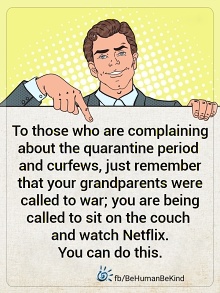
Even a mild form of depression will have an effect on what you’re able to accomplish, even if all you’re trying to do is just limp along doing routine tasks. The world is not easy to cope with, these days, and the things we used to do to cope, like going to a movie, hitting the gym, or enjoying meals with friends, aren’t there to relieve the pressure.

Hey, if this ‘pause’ has allowed you to learn a new language, write a book, or start a business, more power to you! But for many of us, in a world filled with grief, depression and anxiety, putting one foot in front of the other, and remembering to shower occasionally, is all we’ve got left in the tank. And that’s okay too.  

Realistically, we’re in unprecedented times, and we need to cut ourselves some slack. You’re allowed to slow down, rest and reflect, and to just say ‘no’ when someone asks you to take on some of their burdens to lighten their own load.

Sometimes we have to let some things go, in order to soldier on in difficult times. Can’t bear to wash another dish? Buy paper plates. Ignore the dust bunnies – they’ll still be there when you’re ready to vacuum.

It’s not only okay, it’s imperative that you make room for a little joy and self-care in your day. You can’t help others if you’ve let all of your own energy drain away. Take the time to pamper yourself a little, even if it’s just having a spa day in your own bathroom with those little face, hand and feet masques you bought for a rainy day.

Just as when, in a flight emergency, we’re told to put on our own oxygen masks before we help others, we’re in a time and place where we have to find ways to put our own mental health first, lest we be in no shape to help those we love when they need us.

In the wonderful “Time Enough at Last” episode of the Twilight Zone, our hero, Mr. Bemis, becomes the last person on earth, with all the time in the world to read without interruption. But he stumbles, and breaks his glasses, leaving him unable to do so, and in so doing, he learns that having time enough can be a curse, not the blessing he’d hoped for. He wanted solitude, not isolation.

This planet is in kind of a similar place right now. We’re discovering that there’s far more to life than we thought, and that time off the grid comes at a cost.  

Give yourself a Mental Health Day. Take a load off. Relax in a bubble bath. After all, it’s not like we’re going anywhere, anytime soon. Be good to you. You deserve it.
What Do You Miss the Most?


by Roxanne Tellier

A couple of weeks into the start of the COVID pandemic, I asked my husband if he’d have done anything differently before we entered lockdown, now that we had a little experience with this way of life. We kicked around a few thoughts, but it all being so new, he couldn’t really think of much he could have done to prepare.

We’re pretty low maintenance. We’re retired, have a very small place stuffed with the goods of a lifetime of (my) conspicuous consumption, and really don’t need much to get by. But need is not want, and want is what drives our capitalistic society, which we are all a part of, whether we want to be or not. 

The pandemic made me realize that what I missed most about my pre-COVID life was the ability to do the things I had taken for granted – the ability to move through my city freely, meet with friends and family when I wished, stop for a coffee or lunch break without having to check that the location was open, and shopping leisurely without worrying about having to line up for entry first.

Oh, and to find an open public washroom when nature called. That turned out to be one of the little amenities most of us had never had to consider in the past.

I’ve lived in Canada all of my life, and I’ve seen things come and go, as times and society changes. I remember ashtrays affixed to supermarket carts, and when you only had to look up and around to find a clock attached to a wall, or a building, ticking away the hours of our lives. But for all the changes, both good and bad, that I’ve seen, what I’ve never seen is a curtailing of the basic things that keep Canada in the top or near top of “Best Places to Live” in the world.

We take our freedoms and rights for granted, rarely acknowledging how much work has gone into making Canada the free country others envy. Our ancestors mostly chose to leave the evils of their places of birth behind, and instead, to work together to create the society we enjoy today. Decade by decade, election by election, those who came before us made the health and well-being of citizens a priority, and they did it with the politeness that Canadians have always been famous for. 

What is the difference Why is Canada considered a Cultural Mosaic and not a Melting Pot Why is this important to our country’s population

We became a nation of shopkeepers, not a company of merchants. We were the vertical mosaic of different ethnic, language, regional and religious groupings, rather than the melting pot of America, where immigrants are expected to adopt and follow the American way, however it is currently defined. We retained our cultures and beliefs, and in a crisis, Canadians pulled together.

After one year of a global pandemic, the veneer of that civility is wearing thin. Oh sure, we appreciated those who sacrificed to keep us going, in the beginning, but as the months wore on, and as the information meted out to us morphed and changed as new knowledge about the virus was obtained, a lot of us started to show our fangs.

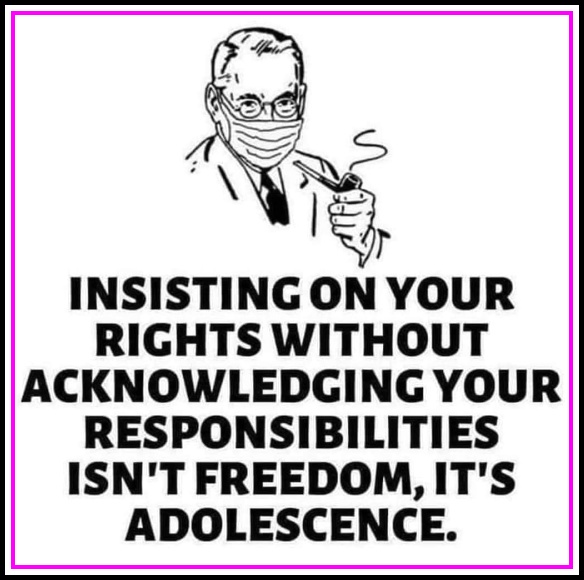
The constraints put upon us, to stay inside, wear a mask, wash your hands, social distance, and get the vaccine when it is available, those strictures that once would have been the only responsible adult choice, have become just too ‘demanding’ for many of us to bear.

After a little more than a year of living under Covid, important lessons have been learned by some countries, and have been completely ignored in others.

A successful response to Covid-19 turned out to depend on more than a country’s wealth, scientific prowess and history of public health successes. The U.S. enjoys all of these advantages but mounted one of the worst responses to the pandemic: 1 in every 990 Americans has died from Covid-19 since the pandemic began. Bad politics, quite simply, can trump good public health.

Other developed countries that did well initially, such as Canada and some European nations, have faltered during the second or third surge of infections, because their governments and people grew tired of implementing effective strategies. In many Asian countries, it has long been common for people to wear masks when feeling ill, so they adopted masks early and widely. “ 

The Wall Street Journal, January 2021  

Taiwan profited from early action, and the provision of intensive financial support to the ill, and to contact tracing, which kept Taiwan to less than 800 cases by the end of 2020.

American Samoa never saw a single case or death from the virus, due to the territory calling a complete halt to all incoming passenger flights. While the 55,000 inhabitants have been isolated from the rest of the world, they have not had to implement any sort of closures, distancing, testing, or strain on their health care.  

New Zealand crushed the curve early, first, by being an island better able to enforce travel bans, and secondly, by an aggressive pandemic influenza plan that began in February of 2020. Implementing a country wide lockdown in late March of 2020 essentially eliminated the virus entirely. By June, New Zealand was pandemic free, with only a few cases coming from international travelers, who were kept in quarantine for two weeks post-arrival. Jacinda Arden, the NZ Prime Minister, must be congratulated for her use of clear communication that worked to increase her people’s willingness to cooperate for the betterment of the nation.

Finland, South Africa, and Germany fared well by relying on clear, concise communication, that allowed people to understand their risks, and shoved aside any acceptance of the concept of ‘fake news’ that would confuse their people. German Chancellor Angela Merkel called for her citizens to have “patience, discipline and solidarity,” the three essentials to an effective pandemic response.  

“The European Dream” prize winning photo … Andrei Stenin

Many other countries, like Brazil, Moldova, India, Czechia, Bosnia and Herzegovina, and Bulgaria, have suffered far worse, with thousands of deaths, all while suffering with little modern conveniences or health care to give any comfort.  

In Canada, a very large segment of Canadians, a very large and VOCAL segment, did not take much of a financial hit. Those who had a decent job, with benefits, were generally in position to simply move their office into their home, thru the miracle of the internet and ZOOM. In fact, that group is said to have accrued quite a lot of extra money they didn’t expect to have, due to the lack of restaurants to visit, vacations allowed to be taken, and a focus on shopping by mail, rather than in person.

Scotiabank polled over 1,500 Canadians to learn more about their saving and spending habits since the pandemic began and found that one in four Canadians (25%) have been able to save more because of reduced spending in other areas of their lives. Canadians who are saving more say they are spending less on: eating out (75%), entertainment (81%), clothing and apparel (58%), and commuting costs (41%).  Also, more than a third (37%) who are putting more money aside have made saving a priority since COVID-19.” 

(Scotiabank Newsletter, November 2020)

For the first time in 50 years, I stopped spending about $50 every four weeks to get my hair coloured, and discovered that my ‘real’ hair colour made me look like a cross between a Shih Tzu and Blanche from Golden Girls.  

Lots of other people – those whom we call ‘essential’ but pay as if they aren’t – were the human tinder we threw on COVID’s fire. In March of 2020, people all over the world were urged to ‘make some noise’ to honour healthcare workers, by going onto our porches or balconies, or throwing open our windows to cheer, applaud, and bang pots. That lasted a few months, but as time wore on, I guess we just decided we didn’t really care how many of those in the healthcare field were exhausted or dying from having to care for hundreds, then thousands, and eventually, millions, of sick people.

Hazard pay” for those low on the totem pole, but highly likely to become infected, was discontinued by the fall. We stopped being grateful for those minimum wage earners who staffed the groceries, pharmacies, and Big Box stores, and started demanding that they serve us as though we were management, and they were grovelling for a raise in salary.

We cared about the seniors and sick who were dying by the hundreds, until it meant that the day when we had planned to get a haircut was pushed forward, again and again, until many of us just took the clippers to our manes and had at it, because, really, who would see it when you hadn’t anywhere you were allowed to go?

The herd immunity that initially shocked people by it’s callous cruelty, started to sound good to those who didn’t care how many had to die to get there, as long as it wasn’t themselves, and it meant that they could get out to see a band or a sports match. 

For a very short time, some businesses cared about those who were chafing under the pressure, those who made their living doing jobs that barely covered their needs during normal times, now having their hours drastically cut, while still being ineligible for supplements like CERB.

Ontario Hydro lowered their rates, but decided, in the fall, that they’d done enough to help, and that profits over people were more important.

““Last fall, our government introduced customer choice for all Ontario customers; we encourage customers who continue to work from home who are still paying time-of-use electricity rates to consider switching to the tiered rate option, offering a flat rate at all hours of the day,” the spokesperson from the Ministry of Health told Daily Hive. 

They added that customers who are unable to pay their electricity bills due to COVID-19 can apply to the COVID-19 Energy Assistance Program (CEAP) through their local utility. We have recently expanded eligibility for the CEAP program and residential customers can now receive up to $750 in direct electricity-bill relief.” 

The Daily Hive

Rents and mortgage rates, controlled provincially, have been entangled in regulations that have left many wondering if that roof over their head would be there in the near future, and at what cost. Banks upped their rates, eagerly collecting all those one-dollar-a-transaction fees from those being asked to make their purchases with bank debit cards rather than cash.

As the new year dawned, many companies, large and small, raised their prices and rates to reflect that they’d suffered financial losses in 2020, while ignoring the corollary, that their users and buyers had suffered just as much, if not more, in a turbulent economy.

This week, Ontario’s Premier Doug Ford added even more severe restrictions on Ontarians, some of which make little sense, from the standpoint of those in the medical field already coping with a flood of sick patients. Social scientists and medical professionals have called his latest declarations “an abandonment of science and common sense,” and warn that we will see “a completely foreseeable and preventable tragedy play out in this province.” 

Like a bad parent, unable to control a wayward child, Ford’s reliance on the ‘grounding’ of citizens is backfiring. Continually backing people into a corner only works for so long, before even the meekest amongst us will come out fighting.

Tippy toeing around the necessity for masking, and waiving fines for the scofflaws not only not masking, but organizing large super spreader events, has made even the most compliant of good citizens show their teeth.

And here’s the problem – we don’t have any answers, any other options. All the things we shoulda coulda done from the onset, including school, business, and airport closings, were off the table from the start in an attempt to appease Big Business, and keep the economy chugging along. 13 months in, the virus has dug deep into the soft under belly of its victims, and thrown off new, even more contagious and dangerous variants. Now, all we can do is hold on tight til the end of the ride.

At this point, there’s little we can do to stop this third wave beyond shutting down non-essential businesses and services, enforcing the necessary health mandates of masking and distancing, and getting ourselves vaccinated as soon as possible.

But I’m growing concerned that our leaders are oblivious to the roiling anger simmering underneath our lip service to containment that prioritized business over people, and the lack of policing of those who openly and publicly advocate and display civil disobedience that may prevent our country from ever completely eradicating this plague.

That, along with the pandemic fatigue that has left so many in pursuit of unrequited self-determination, and the sister pandemic of selfishness, may well be the death of many more of us.

Meanwhile, I’ve discovered that what COVID stole from me, what I miss more than anything else, is the belief that, in a crisis, Canadians would always pull together for the good of their country, and of their fellow Canadians. That’s something that I never thought I’d have to question. But it seems it only took a year of belt-tightening and restrictions to bring out the worst in too many of us.

Talking Points and Party Lines


by Roxanne Tellier

During the trump years, it was a staple of reporting; when asked for their opinion on something the Administration had done, all the top Republican Senators either brushed off reporters with a breezy, “hadn’t heard anything about that yet,”  or stopped just long enough to run whatever party line Mitch McConnell had broadcast to them earlier that day, into the microphone.

It was so common that comedy shows often ran clips of the beleaguered Senators, or of Conservative media talking heads, mouthing in lock stop whatever nonsense they’d been fed.

Fr’instance, remember the parroting of McConnell lies in 2016, when Senate Republicans said that the seat vacated by Justice Scalia’s death should not be filled in an election year, and refused to hold hearings to consider Obama’s nominee, Judge Merrick Garland? McConnell argued that the Senate had not confirmed a Supreme Court nominee by an opposing party’s President to fill a vacancy that arose in an election year since 1888. Of course, it was nonsense.

“The American people should have a voice in the selection of their next Supreme Court Justice. Therefore, this vacancy should not be filled until we have a new President,” McConnell said in 2016.

And at a Judiciary Committee meeting in March 2016, from Lindsey Graham

“I want you to use my words against me. If there’s a Republican president in 2016 and a vacancy occurs in the last year of the first term, you can say Lindsey Graham said, let’s let the next president, whoever it might be, make that nomination, and you could use my words against me and you’d be absolutely right. We’re setting a precedent here today, Republicans are, that in the last year, at least of a lame-duck eight-year term, I would say it’s going to be a four-year term, that you’re not going to fill a vacancy on the Supreme Court based on what we’re doing here today. That’s going to be the new rule.”

In 2020, Senate Democrats were outraged at the GOP, charging them with hypocrisy, when Trump and McConnell blithely chose to shove through a Supreme Court justice to fill the seat vacated by the death of Justice Ginsburg on September 18, 2020, mere weeks before the presidential election. 

“I therefore think it is important that we proceed expeditiously to process any nomination made by President Trump to fill this vacancy. I am certain if the shoe were on the other foot, you would do the same,” Graham said, with a perfectly straight face.

Trump’s “Big Lie,” accepted and repeated ad nauseum, by his supporters, and conservative social media, is another example of how blithely mindless people can become, as they parrot the words that contain the seeds of their society’s destruction.

Trump’s Big Lie … A Lincoln Project video

Party lines. Talking points. All political parties do it, in an effort to present a position of solidarity within their ranks. There are scripts written for the rank-and-file members to follow, if they are asked for their opinions. And their answers shape public opinion, especially within the ranks of those who believe their leaders are usually right in their decisions.

There’s a modicum of laziness, and of a lack of time or interest, in that approach. Though, I’ll admit, as someone not gainfully employed, I have a lot of time in which to fall down the Internet rabbit hole, ferreting out the details behind the party line.

When I hear about something that has happened that will affect other humans, I have an immediate gut reaction. I then process the new information by digging deeper into the issue; reading opinions, both pro and con, on the subject; and finally coming to a conclusion with which both my mind and heart can feel comfortable assuming. Even then, however, I retain the right to change my mind, should I receive newer, additional information that is pertinent to the issue.

But that’s not how everyone deals with the day’s data. Most people have a lot to do in the day, at work, with their families, getting through their own personal issues, and simply have neither the time nor the inclination to care.  

Which is where the ‘party lines’ come into play. It’s not just those in Parliament or on Capitol Hill (or the Kremlin, or Westminster) who lean on those talking points, it’s a lot of people who will eventually be charged with electing or re-electing the people who will be following those lines and points while in office, shaping the country.

The trouble with relying on talking points and party lines, rather than thinking for oneself, is that lazy judgments can have a huge impact on societies.

Take the rhetoric that I’m hearing from many whom I thought were less gullible, on the subject of Georgia’s new voter suppression laws. For two days, Morning Joe Scarborough whitesplained and whatabouted that these laws were actually GOOD for voters, even as his guests, people of colour and women who would be aversely impacted by these changes, tried nervously to explain to him why his information was faulty.  (birx reacts to trump.jpg)

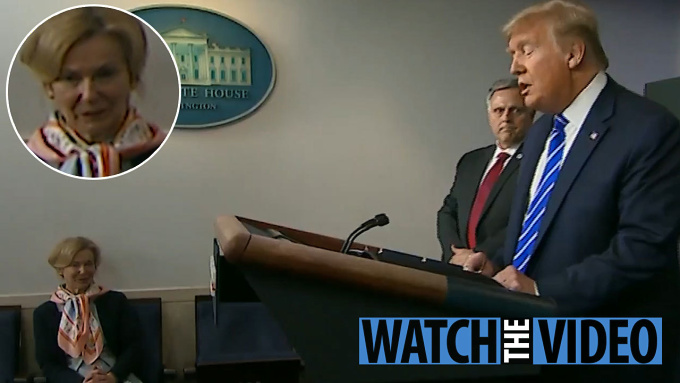
Seriously, it was like watching Dr Birx dealing with trump assuming she’d be all in on injecting bleach into oneself to prevent COVID. Deer in the headlights time.

Leaning heavily on the unfairness of major Georgia corporations, like Coca Cola and Delta Air Lines, condemning the new laws, as well as the decision of MLB to move the annual All Star Game, he inadvertently quoted Republican talking points (new laws make Georgia voting safer than that of New York) falsely claiming that these laws would actually make voting easier. He was wrong, but even after being schooled by those who had the correct information, he turned a deaf ear to their words.

A similar thing happened on Bill Maher’s Real Time on Friday, when Heather McGhee and Reihan Salam discussed the restrictive new voting laws in Georgia. Mr Salam is a conservative American political commentator, but in this case, he was reduced to simply mouthing the party lines, and being schooled on the truth, live and in colour. 

Something similar is going on right now with the increasing likelihood of international “Vaccine Passports.” Already several countries have started to lift lockdown restrictions for people who can show vaccine papers that prove they have been vaccinated.

There is a desire for opening up entertainment venues and travel after a year of isolation, but liability laws make owners of those venues nervous about allowing the non-vaccinated to enter. This isn’t about dictating to consumers, it’s about Free Enterprise doing what they must to turn a profit, and it’s as legal as demanding that your customers wear shoes and shirts to receive service.

In countries with a universal health care program, a reputable record of vaccination is fairly easy to produce; the vaccines are under the auspices of each province’s health care registry.

The same cannot be said for the United States, and this has created a bit of a conundrum. If there is no central processing point to be had by the government, then it leaves a hole that will be filled by …  Big Business.

And if you thought you mistrusted the government, just imagine how sorry you’ll be if all of your personal and private health care information is put under the auspices of some massive corporation that has no need to worry about re-election at some point in the future. Be very afraid.

Enter talking points and party lines. The Republicans down south are already working themselves into another ‘rights’ lather, at the very idea of their country becoming a ‘papers please’ nation.

And that’s pretty rich, coming from the party that wrapped America in incredibly restrictive security measures, post 9/11, 2001, which have still not been rescinded, nearly twenty years later. Ah, but that was their own party, demanding that everyone show a passport, carry their shampoo in a one-ounce bottle, and remove their shoes to prove they didn’t have a shoe bomb hiding in there. So that made it okay.

There are some genuine concerns over these passports, which are essentially the same sort of vaccination documents that travellers to certain countries have had to produce for safe travel for decades.  

“People are trying to circumvent that (not being allowed entry into venues) by creating false documents, essentially putting the lives of others at risk,” Beenu Arora, founder of cyber intelligence firm Cyble, told the Thomson Reuters Foundation in an online interview.

Global news reported that “Fake COVID-19 vaccine passports are being sold online for “peanuts” in a fast-growing scam that has alarmed authorities as countries bet on the documents to revive travel and their economies, cyber security experts said.”

This is why we can’t have nice things.

“Last week, 45 attorney generals from the United States signed a letter calling on the heads of Twitter, eBay and Shopify to take immediate action to prevent their platforms from being used to sell fraudulent COVID-19 vaccine cards.

“The false and deceptive marketing and sales of fake COVID vaccine cards threatens the health of our communities, slows progress in getting our residents protected from the virus, and are a violation of the laws of many states,” it read.“ 

Global News Ca

There will always be a breed of selfish, greedy, psychopaths that delight in putting a stick in the spokes in the wheels of civilization. The pandemic seems to have brought many more out from under the rocks where they usually reside.

Party lines. Talking points. These are a sop for the lazy minded, since it prevents real thought and opinion from forming, based on further investigation of whatever it is a government wants to ‘sell’ to its people.

The repetition of these concepts is a form of gaslighting, a glitch in the human psyche that equates repetition with truth. The “illusory truth effect” is something that politicians and markets have been doing for decades, knowingly manipulating your mind by manipulating your cognitive bias.

Trump and his administration were masters of this kind of manipulation, pummeling lies and illogic into people’s minds non-stop before, during, and after his term in office. He’s still doing it now, with his “Big Lie” that the election was stolen from him by Biden. He can’t seem to stop doing it, and a lot of people can’t seem to stop believing him.

“Repetition makes things seem more plausible. And the effect is likely more powerful when people are tired or distracted by other information.”  Lynn Hasher, a psychologist at the University of Toronto whose research team first noticed the effect in the 1970s.  

It’s not a new concept. Adolf Hitler knew of what he spoke when he wrote, “Slogans should be persistently repeated until the very last individual has come to grasp the idea,” in Mein Kampf.  

Repetition is a staple of political propaganda. It sells fake news. It sells toothpaste. It drums in concepts that most often are so outlandish that we can’t believe we’re repeating them. And yet, we wondered where the yellow went, when we brushed our teeth with Pepsodent.

We’re slowly coming out of a terrible, traumatic, time, and we’re all a little fragile. Still, it’s not the time to be spoonfed platitudes. What we need now are not party lines and talking points, but intelligent, common sensical directives on how to get back safely into our lives and world, ensuring that the rights of everyone are considered and protected.